TEL:+86 132 6656 7067


I. Introduction
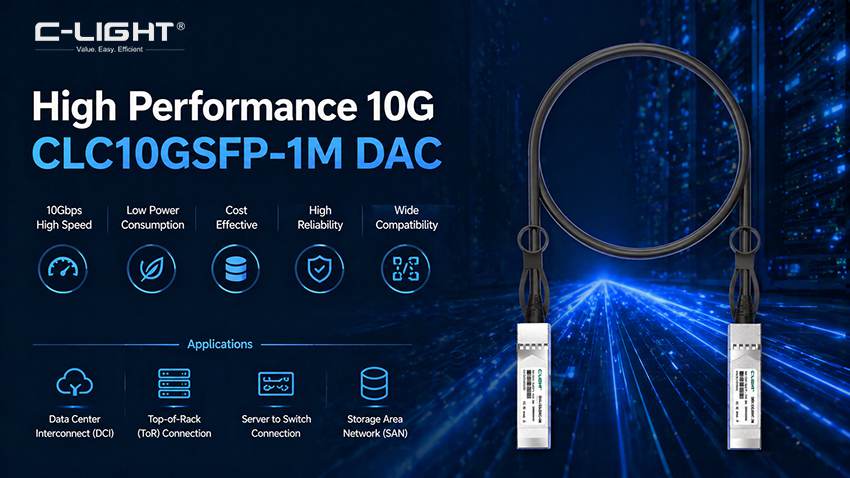
In data center and enterprise network architectures, 10G Ethernet remains one of the most widely deployed speed standards for access and aggregation layers. Facing high-density, short-distance interconnect requirements within racks and between adjacent racks, 10G SFP+ DAC (Direct Attach Cable) has become the preferred alternative to traditional "optical transceiver + fiber patch cord" solutions due to its outstanding performance advantages and highly competitive cost structure. The HPE Aruba J9281D, a standard 10G SFP+ DAC model within the Aruba switch ecosystem, is extensively used across Aruba 1930, 2930F/M, 3810, 5400R, 8320, and 8400 series switches. This article focuses on the C-LIGHT 10G SFP+ DAC high-speed copper cable compatible with J9281D, providing a comprehensive performance analysis from multiple perspectives.
II. Physical Construction and Technical Specifications
2.1 Physical Construction
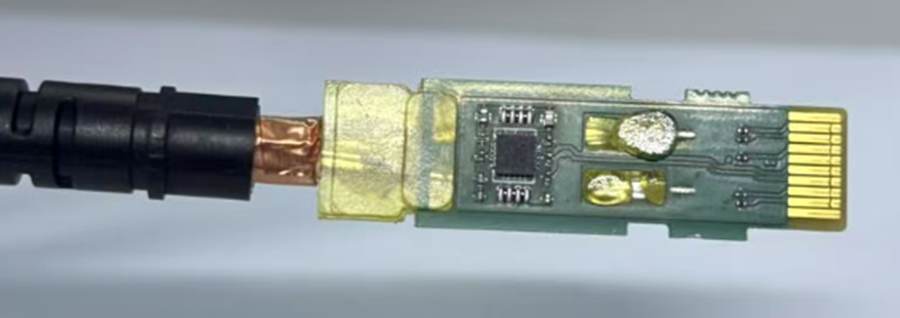
The 10G SFP+ DAC high-speed copper cable is a factory-preterminated twin-axial copper cable assembly with SFP+ connectors integrated at both ends; the module heads and the cable are permanently attached and non-separable. The C-LIGHT 10G SFP+ DAC utilizes a shielded twin-axial cable structure, employing silver-plated conductors and foam-insulated core wires. Through individual pair shielding and overall shielding, the cable achieves excellent attenuation performance, low latency, and strong interference immunity, enabling high-frequency broadband transmission.
2.2 Technical Specifications
According to C-LIGHT official product documentation, the technical specifications of the 10G SFP+ DAC high-speed copper cable are as follows:
The C-LIGHT CLC10GSFP-1M DAC strictly follows the SFP+ MSA (SFF-8431) and 10G Ethernet transmission protocol (10GSFP+Cu), ensuring physical compatibility with standard SFP+ ports. In terms of compatibility, the product supports switches from over 100 brands and has undergone specialized EEPROM coding compatibility testing for HPE Aruba equipment.
| Parameter | Specification |
| Communication Protocol | IEEE 802.3ae compliant |
| Interface Protocol | SFF-8431/8432/8472 compliant |
| Form Factor Protocol | SFP+ MSA compliant |
| Data Rate | 10Gbps, backward compatible with 1Gbps |
| Transmission Distance | 1m, 2m, 3m, 5m, 7m, 10m |
| Wire Gauge (AWG) | 30AWG for 1–3m, 26AWG for 3.5–5m, 24AWG for 5.5–10m |
| Cable Impedance | 100Ω |
| Operating Temperature | Commercial grade 0–70°C |
| Supply Voltage | 3.3V single power supply |
The C-LIGHT CLC10GSFP-1M DAC strictly follows the SFP+ MSA (SFF-8431) and 10G Ethernet transmission protocol (10GSFP+Cu), ensuring physical compatibility with standard SFP+ ports. In terms of compatibility, the product supports switches from over 100 brands and has undergone specialized EEPROM coding compatibility testing for HPE Aruba equipment.
III. Core Performance Indicator Analysis
3.1 Data Rate and Multi-Rate Support
The C-LIGHT 10G SFP+ DAC supports a wide range of data rates from 1G to 10G, accommodating various application scenarios. With reference to the general specifications of compatible products, the supported data rates and applications include: 10G Ethernet (10.31Gbps), Gigabit Ethernet (1.25Gbps), 10G Fiber Channel (10.52Gbps), 8G Fiber Channel (8.5Gbps), 4G Fiber Channel (4.25Gbps), 2G Fiber Channel (2.125Gbps), 1G Fiber Channel (1.0625Gbps), and CPRI option 2/3, among others. The per-channel data rate can reach up to 10.3125Gbps, satisfying the full bandwidth requirements of 10G Ethernet.
The multi-rate support capability means that the same DAC copper cable can be flexibly used among network devices operating at different speeds without replacing the cable, significantly simplifying data center inventory management and operational complexity.
3.2 Latency Performance
Latency is one of the core metrics for evaluating DAC copper cable performance. The CLC10GSFP-1M DAC transmits electrical signals directly over copper media without the need for optical-to-electrical conversion, thereby achieving extremely low link latency. Specifically:
The latency of a passive SFP+ DAC link is approximately 0.1 microseconds, which is 15 to 25 times lower than that of a 10GBASE-T link.
A typical ToR switch combined with DAC exhibits a latency of about 0.3 microseconds per link, whereas 10GBASE-T is close to 3 microseconds per link.
Compared with active optical cables (AOCs), DACs avoid electrical-optical-electrical conversion time, delivering strictly lower latency.
For latency-sensitive application scenarios such as high-frequency trading, AI training clusters, and real-time data analytics, the sub-microsecond latency advantage of the C-LIGHT CLC10GSFP-1M DAC is critical. C-LIGHT products employ a passive design with no active signal conditioning components, allowing signals to be transmitted directly in electrical form, which further compresses link latency.
3.3 Power Consumption
Power consumption is a significant component of data center operating costs. The C-LIGHT CLC10GSFP-1M DAC uses a passive design without any active electronic components, so it generates virtually no additional power consumption during operation. With reference to typical industry data, the power consumption of a passive SFP+ DAC is usually less than 0.1W, and some products are even close to zero power consumption. In comparison:
10G SFP+ Active Optical Cable (AOC) power consumption is approximately 0.6W to 1W per end.
10GBASE-T switch power consumption ranges from 1.5 to 4W per port.
Traditional SFP+ fiber transceivers also require extra power to drive the laser.
In actual deployment, if 40 10G links are used within a single 42U rack, the passive DAC solution can save hundreds of watts of continuous power consumption annually compared with the 10GBASE-T solution. Multiplied across the entire network, the low power consumption characteristic of DACs can significantly reduce data center electricity costs and cooling loads. The C-LIGHT product achieves this advantage through its passive design, and the natural heat dissipation of the copper cable itself is also superior to that of fiber assemblies.
3.4 Bit Error Rate and Transmission Reliability
Bit Error Rate (BER) is a key parameter for measuring link transmission reliability. The industry-standard BER for 10G SFP+ DAC copper cables is typically better than 10⁻¹⁵ (1E-15), meaning that at a rate of 10Gbps, only one erroneous bit may occur approximately every 100 trillion transmitted bits. In contrast, some early-generation direct attach copper cables had a BER around 10⁻¹², potentially causing a bit error every 1 to 2 minutes.
Through high-quality shielded twinaxial cable design and precise manufacturing process control, the C-LIGHT 10G SFP+ DAC ensures long-term stable operation in high-density deployment environments. Every product undergoes a three-stage quality control process consisting of 100% initial testing, final testing, and factory inspection to guarantee consistent delivery quality.
3.5 Signal Integrity and Electromagnetic Compatibility
At a high-speed signal transmission rate of 10Gbps, signal integrity and electromagnetic compatibility are critical. The C-LIGHT 10G SFP+ DAC ensures excellent signal quality through the following designs:
Impedance Control: The cable characteristic impedance is controlled at 100Ω, matching the SFP+ port input impedance to reduce signal reflection.
Shielding Structure: A dual-layer shielding scheme of pair shielding and overall shielding effectively suppresses external electromagnetic interference (EMI) and crosstalk.
Low Attenuation Design: For longer distances (5–10m), a thicker 24AWG conductor gauge is used to reduce high-frequency attenuation.
Enhanced EMI/EMC Performance: Compliant with international electromagnetic compatibility standards such as IEC/EN 61000-4-2.
Signal integrity testing is typically evaluated through eye diagram analysis—the larger and clearer the eye opening, the better the signal quality and the stronger the receiver's ability to identify data. C-LIGHT products undergo signal integrity inspection before shipment to ensure sufficient eye diagram margin, guaranteeing stable transmission in actual deployments.
3.6 Test Environment and S-Parameters
| Test Instrument: | Agilent |
| Model: | E5071C |
| Description: | 4 Port 20G (TDR Option) |
| Picture: | 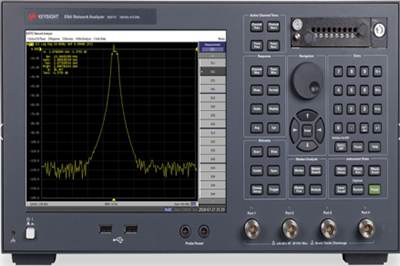 |
| Test Item | |
| 1.Differential impedance (Tdd11/Tdd22) Ohm | |
| 2.Differential return loss (Sdd11/Sdd22) dB | |
| 3.Common return loss (Scc11/Scc22) | |
| 4.Mode conversion return loss (Scd11/Scd22) dB | |
| 5.Insertion loss (Sdd21) dB | |
| 6.Mode conversion and insertion loss difference (Scd21-Sdd21) dB | |
| 7.Near end crosstalk (NEXT) dB | |
IV. Performance Comparison with Optical Transceiver Solutions
To comprehensively evaluate the performance positioning of the C-LIGHT 10G SFP+ DAC, the following table compares it with the traditional "SFP+ optical transceiver + fiber" solution:
| In data center applications, a comparison between DAC/ACC/AEC and optical transceivers: | ||
| Comparison Dimension | DAC/ACC/AEC Solution | Optical Transceiver Solution |
| Connection Structure | Integrated cable (built-in chip + copper cable) | Optical transceiver + fiber |
| Typical Application Distance | DACs ≤3m; ACC ≤5m; AEC ≤7m | 100m – 120km |
| Transmission Medium | Copper (Twinax) | Fiber (multimode/singlemode) |
| Optical-Electrical Conversion Required | No | Yes |
| Latency | Extremely low (no conversion delay) | Relatively low (with optical-electrical conversion delay) |
| Power Consumption (per port) | ≈0.1W – 0.5W (low power, energy-saving) | ≈1W – 5W (higher power, typically >50% higher) |
| Bandwidth Capability | Supports 100M – 1.6T | Supports 100M – 1.6T |
| Typical Service Life | 5–10 years. Simple structure, no laser, more stable over long-term use, life more predictable | 3–7 years. Affected by laser aging and optical component attenuation. |
| Bit Error Rate (BER) | Stable at short distances, best suited for data centers | Superior stability over long-distance transmission |
| Reliability | High (simple structure, no optical components) | Medium (optical components are more sensitive) |
| Interface Maintenance | Essentially maintenance-free, high reliability | Optical interfaces require cleaning (dust sensitive), affecting reliability |
| Deployment Complexity | Plug-and-play, low matching difficulty | Requires matching transceiver and fiber types, time-consuming |
| Cabling Difficulty | Simple (short-reach direct connection) | Relatively complex (higher fiber management requirements) |
| Cooling Pressure | Extremely low, reduces cooling costs | Higher (transceiver heat generation noticeable) |
| Impact on Equipment Port Density | Favorable (low power supports high density) | Density limited by power and cooling |
| Compatibility | C-LIGHT supports multi-brand compatibility including Mellanox (NVIDIA), Aruba, etc. | Higher chip dependency, stricter device identification requirements |
| Troubleshooting Difficulty | Low (replace cable) | High (requires professional optical test equipment) |
| Typical Application Scenarios | In-rack/ToR connections/Server interconnects (preferred for short links) | Cross-rack / Cross-room / Long-distance transmission |
| Certification Qualifications | Validated on numerous brands such as NVIDIA, CISCO, ARUBA | Validated on numerous brands such as NVIDIA, CISCO, ARUBA |
| Initial Cost (CAPEX) | Low | High (combined cost of transceiver + fiber) |
| Long-term Cost (TCO) | Low (low maintenance cost) | Higher (higher maintenance + replacement cost) |
| In short-reach interconnect scenarios within data centers (in-rack / ToR), DAC is the better choice. Compared with the optical transceiver solution, DAC eliminates the need for optical-electrical conversion, significantly reducing power consumption and latency, while also saving substantial initial investment and long-term operational costs in large-scale deployments. Its simple structure and fewer failure points bring higher stability and lower maintenance requirements. In addition, DAC offers more flexible compatibility and easier deployment, helping to improve overall delivery efficiency. Under the premise of meeting performance requirements, choosing DAC essentially means reducing cost, power consumption, and complexity. | ||
V. Typical Application Scenarios
Based on the above performance characteristics, the C-LIGHT CLC10GSFP-1M DAC high-speed copper cable compatible with Aruba J9281D is mainly suitable for the following scenarios:
Server to ToR Switch Connections: 10G short-reach links between servers inside a rack and the Top-of-Rack switch, typically within a distance of 1–3m. The low cost, low latency, and low power consumption of DAC perfectly match the requirements of this scenario.
Switch Stacking and Cascading: 10G interconnections between multiple switches within the same rack or adjacent racks, used to expand port density or achieve redundant links.
Storage Area Networks (SAN): 10G high-speed interconnections between storage devices and the switching network. The low latency characteristic directly improves storage I/O performance.
High-Performance Computing (HPC) Clusters: High-speed interconnections between computing nodes. Sub-microsecond latency significantly impacts the overall efficiency of parallel computing tasks.
Enterprise Campus Access Layer: Short-reach 10G uplink connections between switches in wiring closets.
VI. Compatibility and Reliability Assurance
A third-party DAC compatible with Aruba J9281D needs to address the coding verification issue that Aruba switches perform on SFP+ modules. C-LIGHT products ensure seamless compatibility with Aruba equipment through the following measures:
EEPROM Code Adaptation: Each DAC cable is individually programmed so that its EEPROM data is functionally equivalent to the original Aruba J9281D cable.
Compatibility Testing: Compatibility verification with mainstream Aruba switch platforms (such as 1930 series, 2930 series, 3810 series, etc.) is completed before shipment.
Multi-Brand Support: Besides Aruba, the C-LIGHT CLC10GSFP-1M DAC is compatible with switches from over 100 brands, greatly simplifying cabling management in heterogeneous network environments.
3-Year Warranty and Technical Support: C-LIGHT provides a 3-year warranty and long-term repair services, along with professional free technical guidance to help customers reduce operating costs.
It is worth noting that using third-party compatible modules on Aruba switches will not void the original equipment warranty—mainstream network equipment vendors' warranty terms explicitly state that failures caused by quality issues of third-party modules are the responsibility of the module supplier, but this does not exempt the equipment vendor from their warranty obligations.
VII. Conclusion
From a performance perspective, the C-LIGHT CLC10GSFP-1M DAC high-speed copper cable compatible with Aruba J9281D achieves industry-leading levels in core metrics such as data rate, latency, power consumption, bit error rate, and signal integrity. At the same time, through rigorous compatibility testing and factory quality control processes, it ensures seamless collaboration with Aruba network equipment. The ultra-low latency (approximately 0.1–0.3μs) and near-zero power consumption (< 0.1w) by its passive design make it the most cost-effective choice in high-density, short-reach interconnect scenarios within data centers.
For data center network engineers and IT procurement professionals, choosing the J9281D-compatible C-LIGHT 10G SFP+ DAC high-speed copper cable for short-reach 10G links not exceeding 7m can significantly reduce deployment costs and long-term operational overhead while ensuring equivalent performance.
 >
>

 >
>
 >
>
 >
>
 >
>
 >
>
 >
>
 >
>