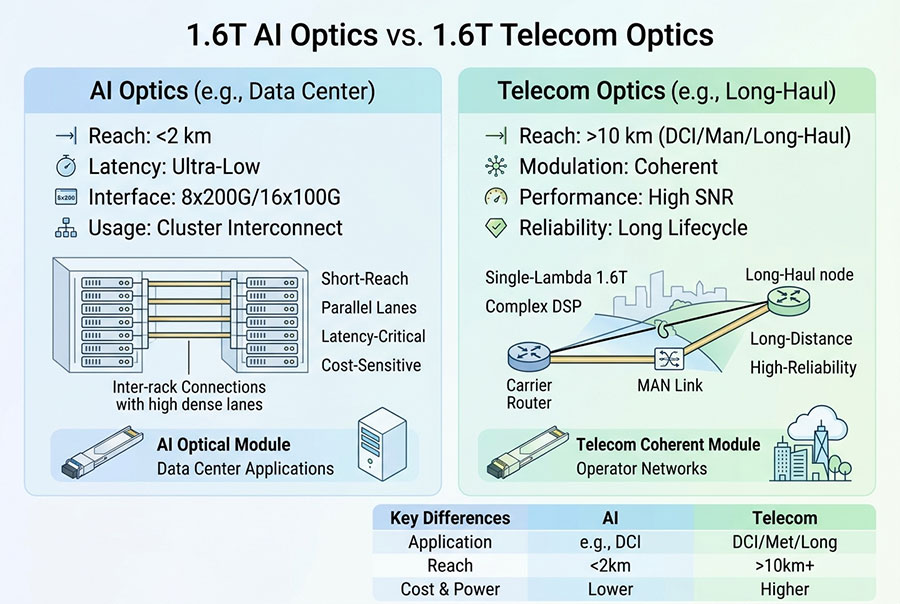
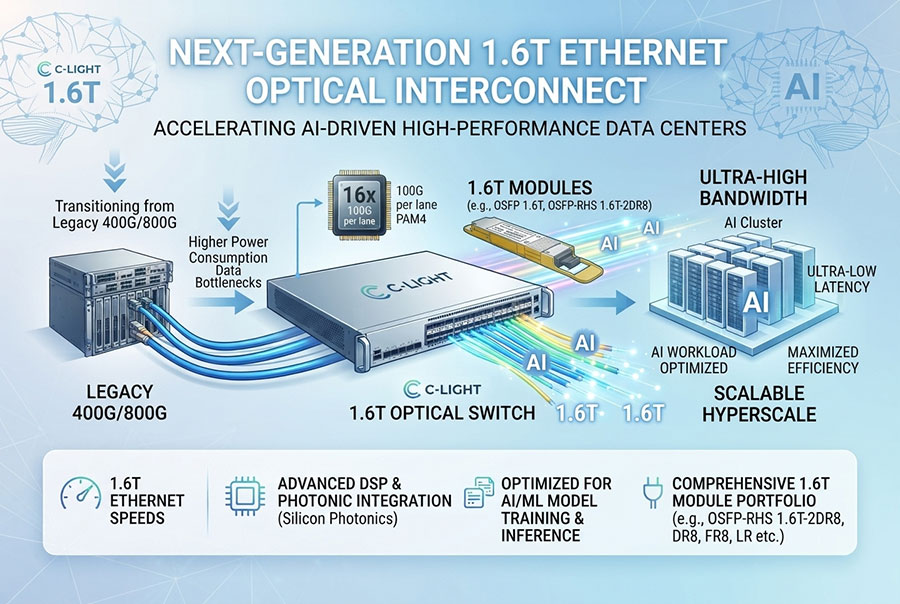
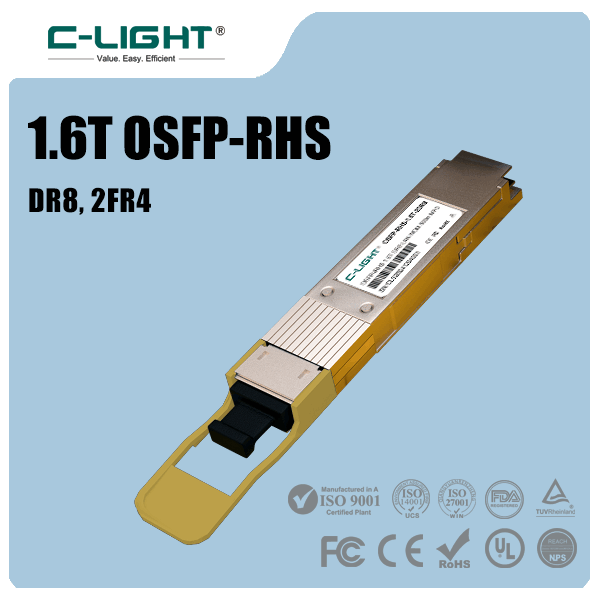
1.6T AI optics focus on high-density accelerator fabrics, while 1.6T telecom optics target transport reach, wavelength efficiency, and optical line-system integration.
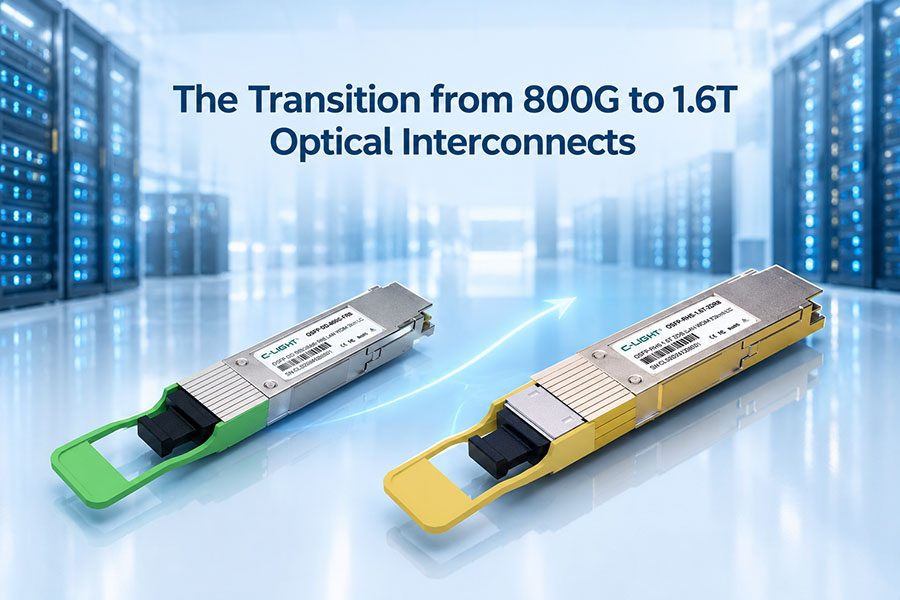
The transition from 800G to 1.6T optical interconnects: 200G per lane signaling, OSFP and OSFP-XD form factors, 1.6T Ethernet standards, FEC, fiber and cabling changes, thermal and power limits, and s...
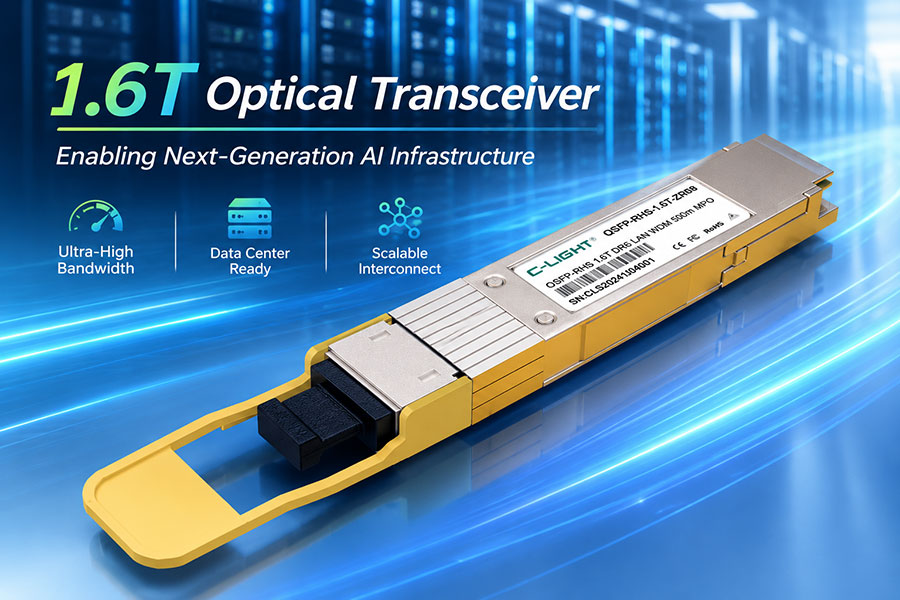
1.6T optical transceivers use high-speed PAM4 signaling, advanced DSP, and parallel or wavelength-multiplexed optics to scale AI data center bandwidth.
CPO reduces electrical interconnect power and signal loss in 1.6T networks by placing optical engines close to switch ASICs, supporting higher bandwidth density for AI data centers.
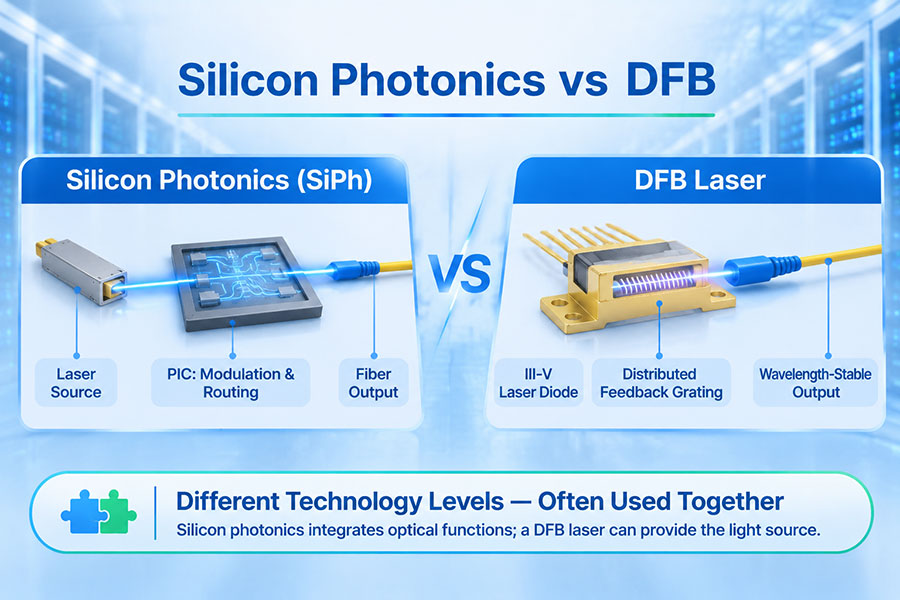
Compare VCSEL, DFB, EML, DML, and silicon photonics technologies for 400G, 800G, and 1.6T optical modules, including fiber types, transmission distances, power efficiency, and AI data center applicati...
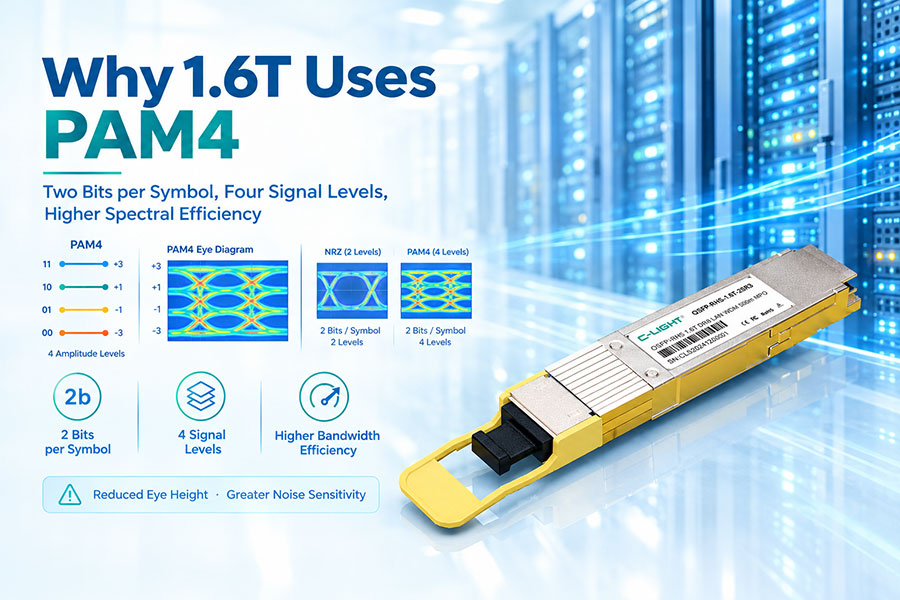
PAM4 enables 1.6T Ethernet by doubling bits per symbol versus NRZ. Explore the modulation trade-offs, SNR challenges, DSP role, and why PAM4 remains the standard for 1.6T optical interconnects.