TEL:+86 132 6656 7067


PAM4 optical transceivers are becoming a core technology for high-speed data center networks as 400G, 800G, and 1.6T optical connectivity expands. The market is being driven by AI infrastructure, higher bandwidth requirements, 200G-per-lane architectures, and the transition toward higher-density optical interconnects.
1. PAM4 Optical Transceiver Market 2026–2030
The PAM4 optical transceiver market is closely connected with the rapid growth of high-speed datacenter optical connectivity. PAM4 enables higher data rates per electrical and optical lane than NRZ, making it a key signaling technology for 400G, 800G, and emerging 1.6T optical transceivers.
There is no single universally accepted market-size category called the “PAM4 optical transceiver market.” Different research companies use different scopes, including PAM4 chipsets, optical transceivers, AI optical transceivers, or the broader datacenter optical market. Therefore, market figures should be compared according to their definitions.
2. Why PAM4 Is Important to Optical Transceivers
PAM4 uses four signal levels to transmit two bits per symbol, increasing the amount of information carried by each symbol compared with NRZ.
This allows higher aggregate bandwidth without simply doubling the number of physical lanes. The technology has therefore become an important foundation for the transition from 100G and 200G to 400G, 800G, and 1.6T optical connectivity.
3. PAM4 Optical Transceiver Market Growth Drivers
Several factors are accelerating demand for PAM4-based optical transceivers:
AI and GPU cluster expansion
Higher switch port speeds
Growth of 800G optical connectivity
Commercialization of 1.6T optical modules
Higher bandwidth per electrical lane
Increasing data center traffic
Expansion of hyperscale infrastructure
Demand for higher port density and lower cost per bit
4. AI Data Centers Drive PAM4 Demand
AI training and inference systems require large amounts of data to move between GPUs, switches, servers, and storage systems. As cluster sizes increase, the optical network must provide higher bandwidth while controlling power consumption and latency.
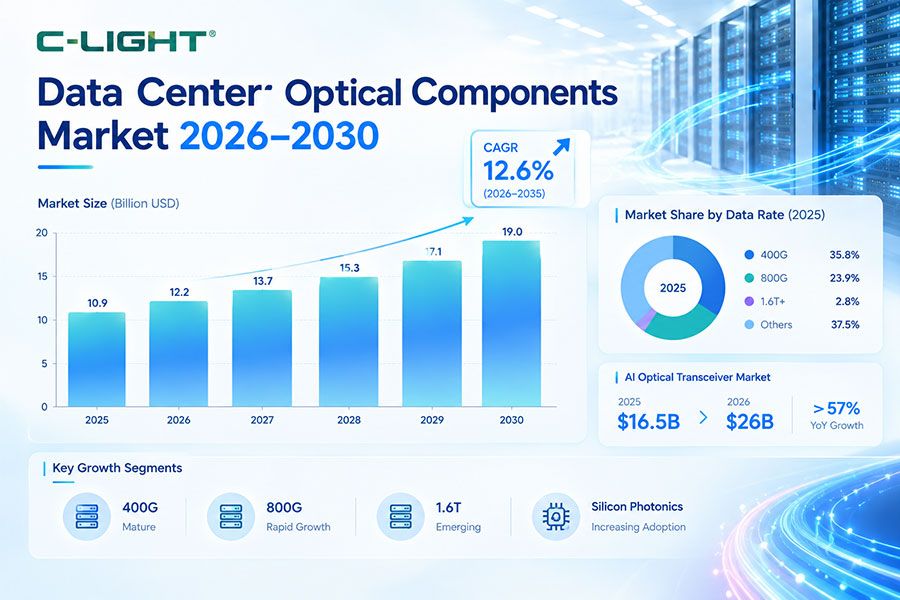
TrendForce projected the global AI optical transceiver market to grow from approximately US$16.5 billion in 2025 to US$26 billion in 2026. The same research indicates that demand is increasingly concentrated around 800G and higher-speed optical transceivers.
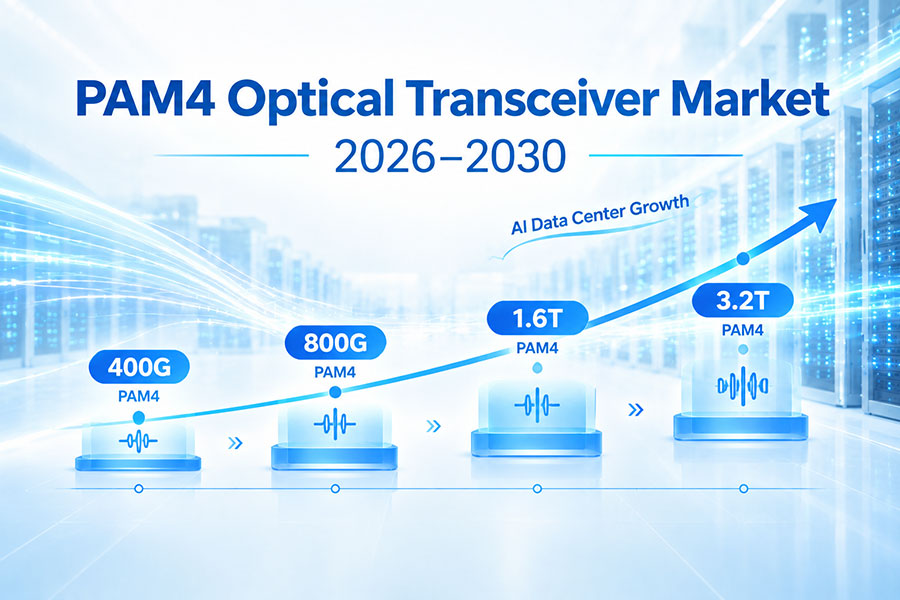
5. 400G, 800G and 1.6T PAM4 Evolution
| Generation | Aggregate Bandwidth | Typical Lane Architecture | Market Position |
|---|---|---|---|
| 400G | 400Gbps | 8 × 50G PAM4 | Established high-speed connectivity |
| 800G | 800Gbps | 8 × 100G PAM4 | Major AI and hyperscale deployment |
| 1.6T | 1.6Tbps | 8 × 200G PAM4 | Next-generation AI networking |
| 3.2T | 3.2Tbps | Higher-rate lanes | Future high-bandwidth architecture |
6. PAM4 Market Development From 2026 to 2030
The period from 2026 to 2030 is expected to be an important transition period for PAM4 optical connectivity. 800G moves toward broader deployment, while 1.6T increasingly enters production and qualification programs.
| Period | Primary PAM4 Focus | Market Trend |
|---|---|---|
| 2026 | 800G and early 1.6T | Rapid AI infrastructure expansion |
| 2027 | 800G / 1.6T | Higher 200G-per-lane adoption |
| 2028 | 1.6T | Higher-density AI networking |
| 2029 | 1.6T and advanced architectures | Continued bandwidth scaling |
| 2030 | 1.6T and next-generation interfaces | Transition toward 3.2T-class networking |
7. 800G PAM4 Optical Transceiver Market
800G is currently one of the most important PAM4 optical transceiver segments. An 800G module can use eight 100G-class electrical and optical lanes, allowing high bandwidth while maintaining a manageable lane count.
LightCounting reported that 800G PAM4 chipset shipments nearly tripled in 2025 and expects 800G optical transceiver shipments to more than double in 2026.
8. 1.6T PAM4 Optical Transceiver Market
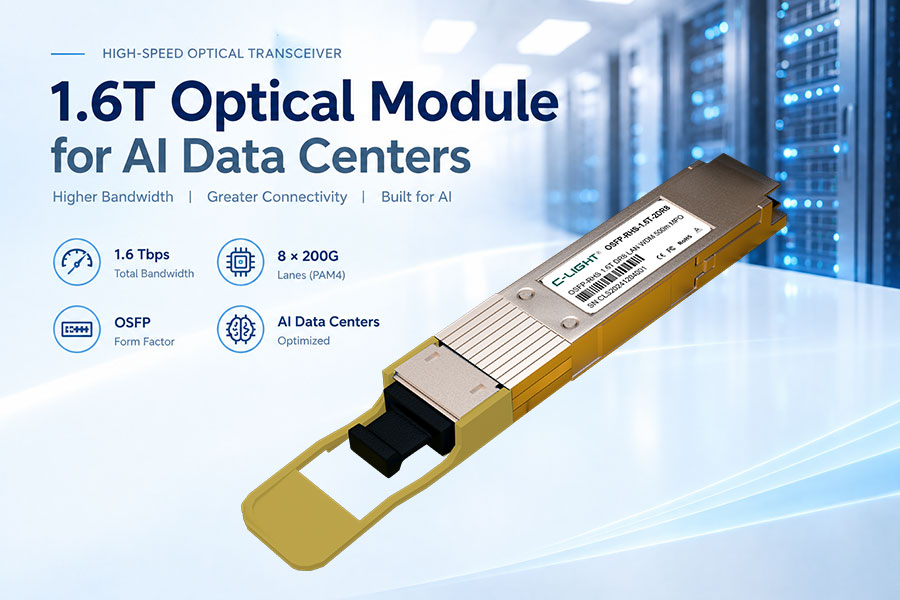
1.6T represents the next major bandwidth step. A common architecture uses eight 200G-class PAM4 lanes to provide an aggregate 1.6Tbps connection.
LightCounting expects 1.6T optical transceiver shipments to grow from a small base in 2025 to tens of millions of ports, while 1.6T chipset sales are expected to exceed US$2 billion in 2026.
9. 800G vs 1.6T PAM4 Optical Transceivers
| Feature | 800G | 1.6T |
|---|---|---|
| Aggregate bandwidth | 800Gbps | 1.6Tbps |
| Common lane architecture | 8 × 100G | 8 × 200G |
| Modulation | PAM4 | PAM4 |
| Primary applications | AI and hyperscale data centers | Next-generation AI clusters |
| Technology maturity | Broad deployment | Commercialization and rapid expansion |
10. PAM4 and Optical DSP
PAM4 creates tighter signal-quality requirements than NRZ because four voltage or optical levels must be distinguished reliably.
Optical DSPs can provide functions such as equalization, signal recovery, clock recovery, FEC support, and compensation for transmission impairments. DSP technology has therefore played an important role in commercializing high-speed PAM4 optical modules.
11. PAM4 and LPO Optical Transceivers
PAM4 is also closely associated with Linear Pluggable Optics. LPO removes or reduces the amount of signal processing performed inside the optical module and relies more heavily on the host ASIC, switch, or retimer.
This architecture can reduce module power and latency, but it places greater requirements on electrical channel quality, host compatibility, equalization, and system-level signal integrity.
12. PAM4 vs NRZ
| Feature | NRZ | PAM4 |
|---|---|---|
| Signal levels | 2 | 4 |
| Bits per symbol | 1 | 2 |
| Signal complexity | Lower | Higher |
| Typical high-speed use | 100G-class legacy architectures | 200G, 400G, 800G and 1.6T |
| Signal margin | Generally higher | Generally tighter |
13. PAM4 and 400G Optical Transceivers
400G optical transceivers commonly use eight 50G PAM4 lanes or other lane configurations depending on the optical architecture.
400G PAM4 modules are widely used in data center switching, AI clusters, high-performance computing, server-to-switch connections, and short- to medium-reach optical networks.
14. PAM4 and 800G Optical Transceivers
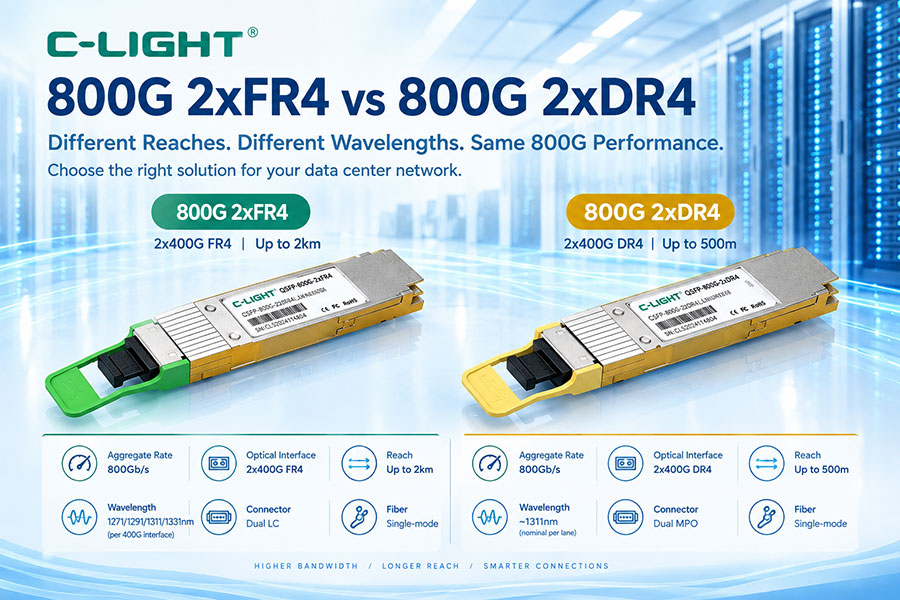
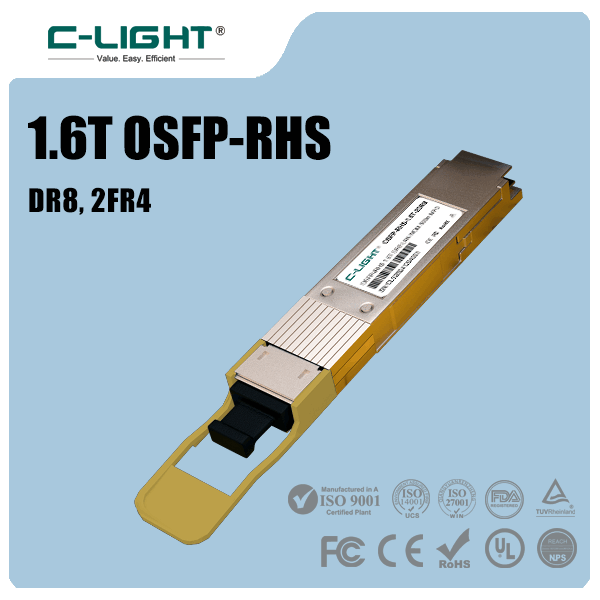
800G significantly increases bandwidth density by using higher-speed PAM4 lanes. Common architectures include 8 × 100G electrical lanes, with optical configurations such as SR8, DR8, 2×DR4, and 2×FR4 depending on reach and application.
15. PAM4 and 1.6T Optical Transceivers
The move to 1.6T requires approximately 200G-class signaling per lane in common eight-lane architectures. This creates significantly higher requirements for optical engines, EML or VCSEL technologies, DSPs, FEC, PCB design, connectors, thermal management, and testing.
16. PAM4 Optical Transceiver Form Factors
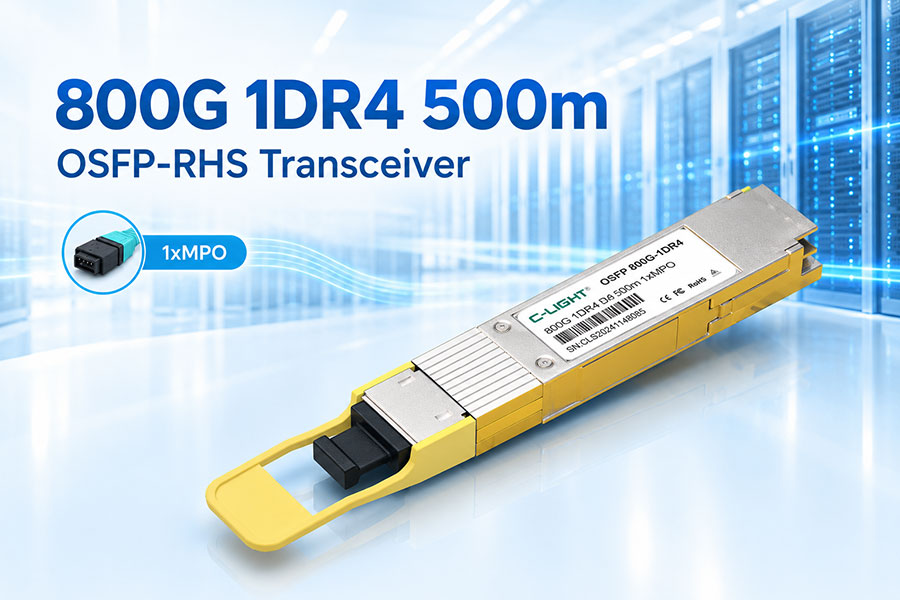
PAM4 optical transceivers are available in several form factors, including QSFP-DD, OSFP, QSFP112, OSFP112, and newer higher-speed form factors.
OSFP has become particularly important for 800G and emerging 1.6T applications because of its larger thermal envelope and suitability for high-power optical modules.
17. PAM4 Optical Transceiver Applications
Major application areas include AI data centers, hyperscale cloud infrastructure, high-performance computing, Ethernet switching, GPU clusters, data center interconnects, storage networks, and high-density server connectivity.
18. PAM4 in AI GPU Networks
AI GPU clusters create extremely high east-west traffic. Optical connections are increasingly used between GPUs, switches, racks, and network fabrics as electrical copper links become more difficult to scale over longer distances.
The combination of PAM4 signaling and high-speed optical transceivers provides a practical path toward higher bandwidth without continuously increasing the number of physical network connections.
19. PAM4 Optical Transceiver Reach
| Architecture | Typical Reach | Common Medium |
|---|---|---|
| SR8 | Up to around 100m | Multimode fiber |
| DR4 / DR8 | Up to around 500m | Single-mode fiber |
| FR4 / 2×FR4 | Up to around 2km | Single-mode fiber |
| ZR / ZR+ | Long-distance DCI and metro | Single-mode fiber with coherent technology |
20. PAM4 Optical Components
The PAM4 optical transceiver supply chain includes lasers, modulators, photodetectors, TIAs, drivers, DSPs, FEC engines, optical coupling components, connectors, PCBs, thermal solutions, and module packaging.
As data rates increase, the performance of each component becomes increasingly important to overall module performance.
21. PAM4 and EML Lasers
EML technology is widely used in high-speed optical transceivers, particularly where higher modulation bandwidth and longer transmission distance are required.
As 800G and 1.6T architectures move toward higher per-lane speeds, high-performance laser technologies become increasingly important to module scalability.
22. PAM4 and VCSEL Technology
VCSELs remain important for short-reach multimode applications such as 400G and 800G SR optical links.
Short-reach AI and data center connections can benefit from the cost and integration advantages of VCSEL-based optical engines, although higher lane rates increase requirements for bandwidth, packaging, thermal performance, and signal integrity.
23. PAM4 and Silicon Photonics
Silicon photonics is becoming increasingly important as optical bandwidth and integration requirements increase. Silicon photonic platforms can integrate multiple optical functions and support higher-density optical engines.
The technology is particularly relevant to future 800G, 1.6T, LPO, NPO, and CPO architectures.
24. PAM4 Optical Transceiver Power Consumption
Power consumption is becoming one of the most important factors in high-speed optical networking. Higher data rates increase the requirements for DSPs, lasers, drivers, thermal systems, and electrical interfaces.
LPO, improved DSP architectures, silicon photonics, better optical engines, and CPO are being developed partly to improve the power efficiency of future optical interconnects.
25. PAM4 and FEC
Because PAM4 has smaller level spacing than NRZ, transmission errors can become more challenging at high data rates. Forward Error Correction is therefore an important part of many high-speed PAM4 systems.
FEC can correct a portion of transmission errors and improve the effective link performance without requiring retransmission.
26. PAM4 and BER
Bit Error Rate is an important metric for evaluating PAM4 optical links. High-speed PAM4 systems are commonly evaluated using pre-FEC BER, post-FEC BER, receiver sensitivity, eye quality, and other performance parameters.
27. PAM4 and TDECQ
TDECQ is an important transmitter-quality metric for PAM4 optical systems. It evaluates the effective eye closure of a PAM4 transmitter and provides an indication of how closely the transmitted signal approaches the performance requirements of the reference system.
28. PAM4 Optical Transceiver Market Comparison
| Market Segment | 2026 Trend | 2026–2030 Outlook |
|---|---|---|
| 400G PAM4 | Established | Continued deployment |
| 800G PAM4 | Rapid growth | Major high-speed segment |
| 1.6T PAM4 | Early commercial expansion | Strong growth potential |
| LPO PAM4 | Qualification and deployment | Increasing system adoption |
| CPO/NPO | Early-stage expansion | Long-term high-density opportunity |
29. PAM4 Optical Transceiver Market Challenges
Despite strong market growth, PAM4 optical transceivers face several technical and manufacturing challenges.
Higher baud rates reduce signal margin and increase sensitivity to insertion loss, crosstalk, reflections, thermal variation, connector quality, and PCB performance.
At the same time, shortages or capacity constraints in lasers, DSPs, optical engines, and advanced packaging can affect production schedules and market supply.
30. PAM4 Market Supply Chain
The PAM4 ecosystem extends from semiconductor and optical component suppliers to module manufacturers, system vendors, switch ASIC suppliers, data center operators, and hyperscale customers.
Successful 800G and 1.6T deployments require close coordination between the optical module, host switch, electrical channel, fiber infrastructure, thermal system, and software or firmware environment.
31. PAM4 Optical Transceiver Market Outlook 2026–2030
The overall direction of the market is moving from 400G toward 800G and 1.6T. AI infrastructure is accelerating this transition by increasing both bandwidth requirements and the number of optical ports deployed in large-scale clusters.
Market data from 2026 indicates that 800G shipments are entering a period of rapid expansion, while 1.6T is moving from early deployments toward larger-scale production.
The next stage of PAM4 development will focus on 200G-per-lane technology, lower-power optical engines, advanced DSP and FEC, LPO architectures, silicon photonics, and eventually higher-speed lane technologies for 3.2T-class networking.
32. PAM4 Optical Transceiver Market and Data Center Upgrades
Data center operators increasingly need to upgrade network bandwidth without proportionally increasing rack space, power consumption, and cabling complexity.
PAM4 enables higher bandwidth per lane and therefore supports higher-density network architectures. This makes it an important technology for data center upgrades from 100G and 200G toward 400G, 800G, and 1.6T.
33. PAM4 Optical Transceiver Market and AI Networking
AI networking is expected to remain one of the strongest growth areas for PAM4 optical transceivers through 2030. Large GPU clusters require high-bandwidth, low-latency interconnects between compute and networking layers.
The increasing adoption of 800G and 1.6T optical connectivity will continue to create demand for PAM4-based optical modules, active cables, optical engines, DSPs, lasers, and related components.
34. Conclusion
PAM4 has become a fundamental signaling technology for high-speed optical transceivers. Its ability to transmit two bits per symbol makes it well suited to the rapid bandwidth evolution from 400G to 800G and 1.6T.
From 2026 to 2030, AI data centers, hyperscale networks, higher-speed switch ASICs, 200G-per-lane technology, LPO, silicon photonics, and advanced optical engines will continue to shape the PAM4 optical transceiver market.
 >
>

 >
>
 >
>
 >
>
 >
>
 >
>
 >
>
 >
>