TEL:+86 132 6656 7067


A Point-to-Multipoint (P2MP) All-Optical Network (AON) is a communication architecture where a single central node (e.g., an Optical Line Terminal, OLT) connects to multiple remote nodes (e.g., Optical Network Units, ONUs) using optical fiber. This architecture is highly efficient for scenarios requiring high bandwidth, low latency, and scalability, such as broadband access, smart cities, and industrial IoT.
Key Components in AON provided by C-LIGHT
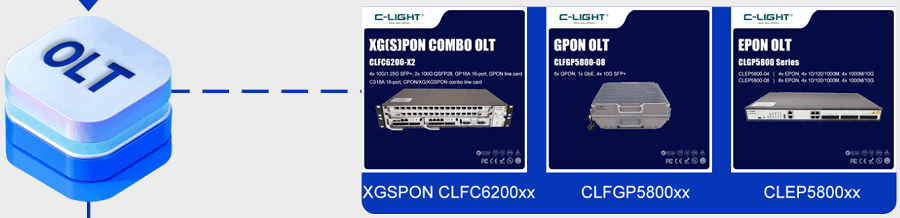
-Central Node (OLT): Aggregates and distributes data to multiple endpoints.
https://c-light.com/products/FTTx_OLT_Switch.html
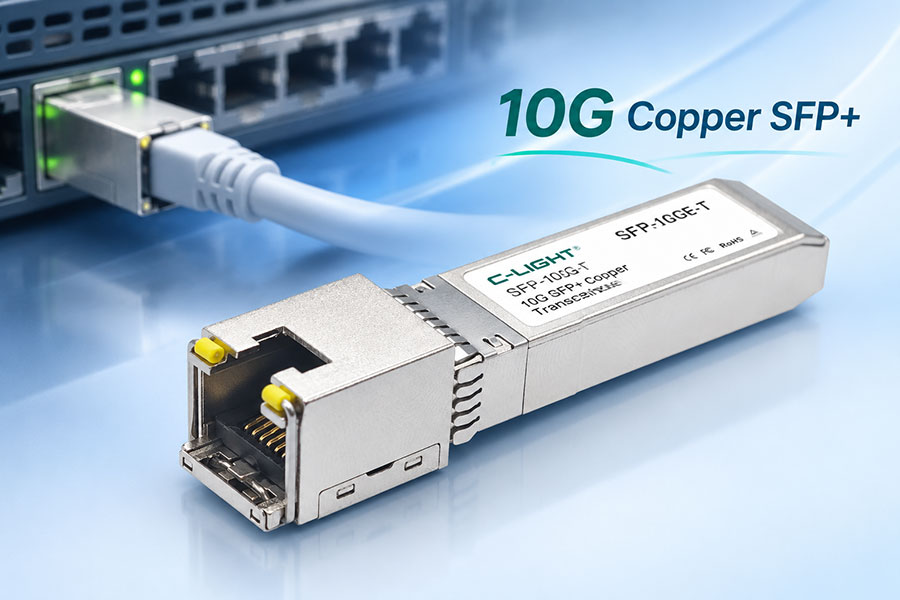
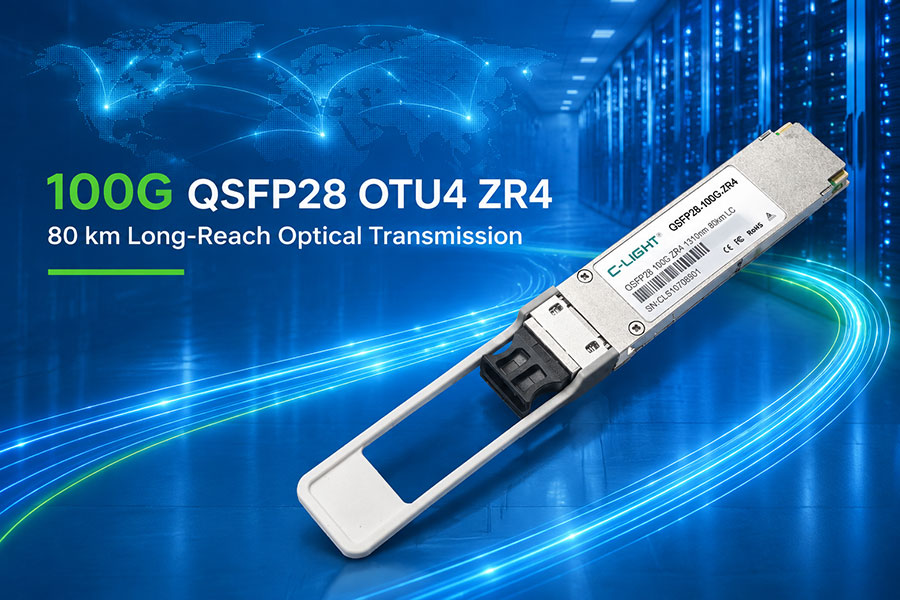
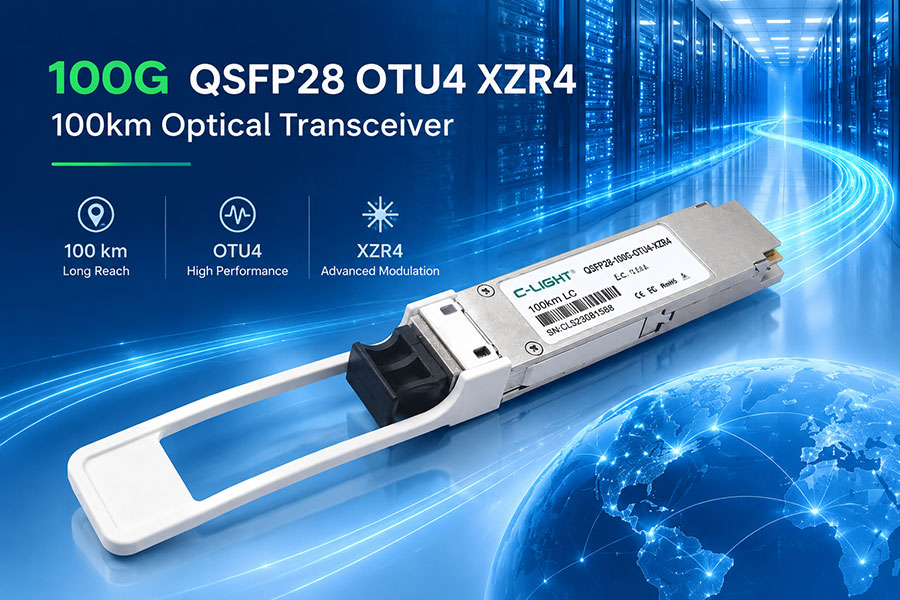
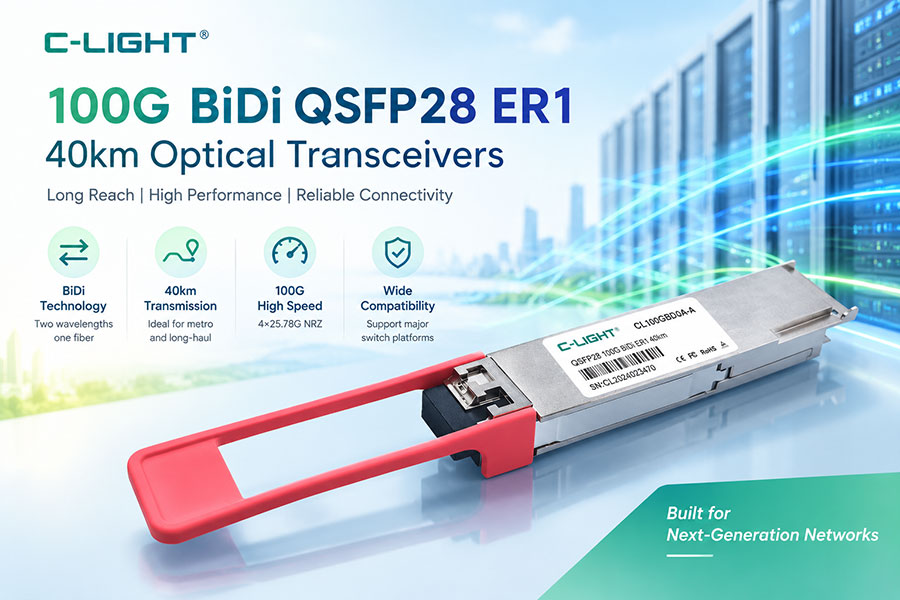
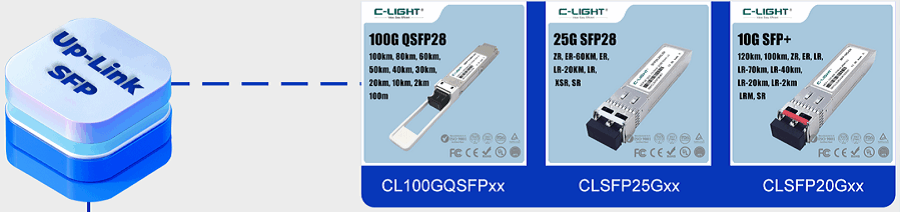
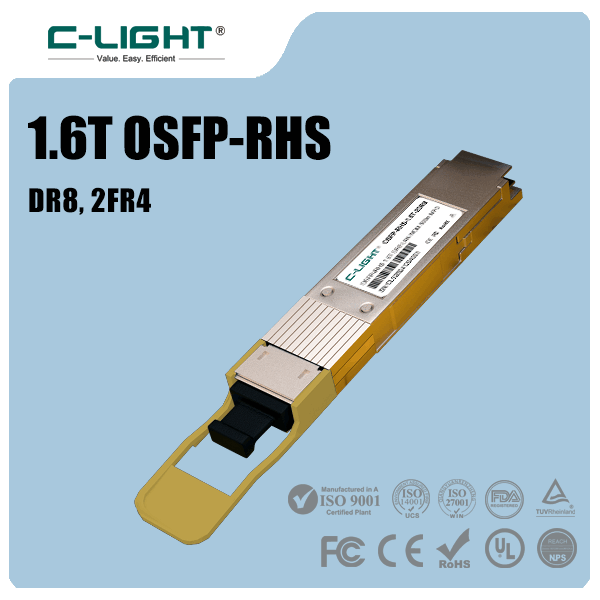
-Optical Transceiver Modules (SFP/QSFP): Convert electronic data to optical data.
https://c-light.com/products/Optical_Transceiver.html
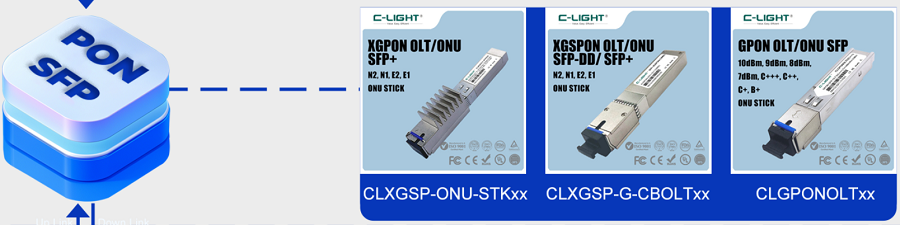
https://www.c-light.com/products/Optical_Transceiver/PON.html
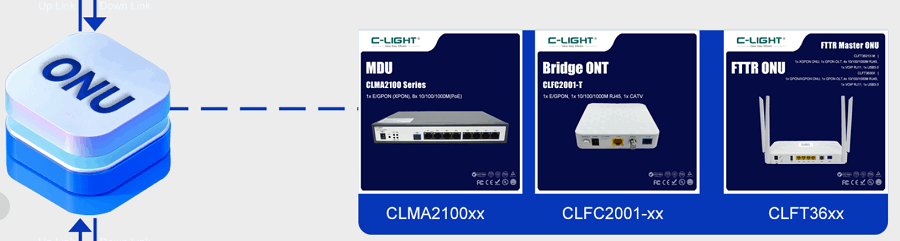
-Terminal Nodes (ONUs): Connect end-user devices to the network.
https://c-light.com/products/FTTx_ONU_Switch.html
-Power over Ethernet (PoE) Switch: Provide PoE to terminal devices like Wi-Fi/Cam/Light
https://c-light.com/products/Ethernet_Switch.html
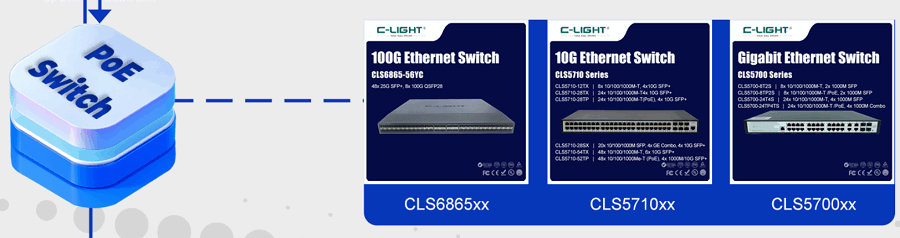
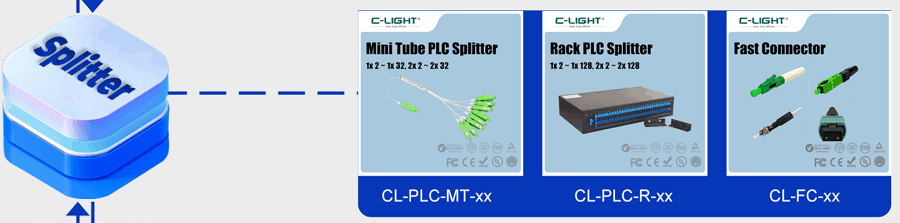
-Passive Optical Splitters: Enable a single fiber to serve multiple endpoints.
https://c-light.com/products/cables/PLC_Splitter.html
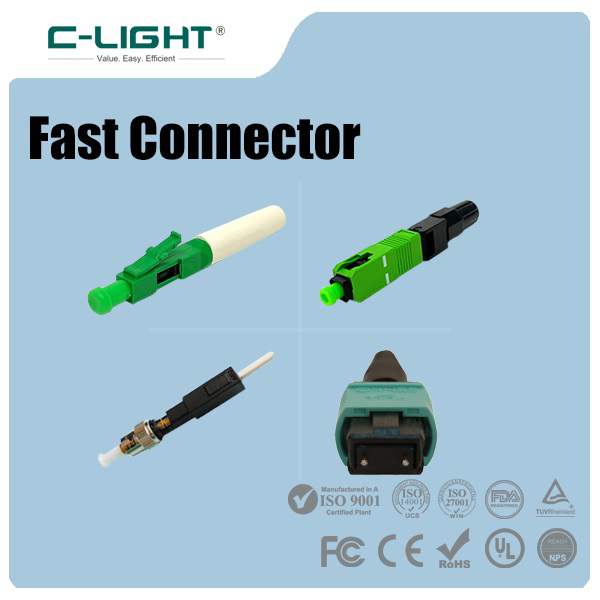
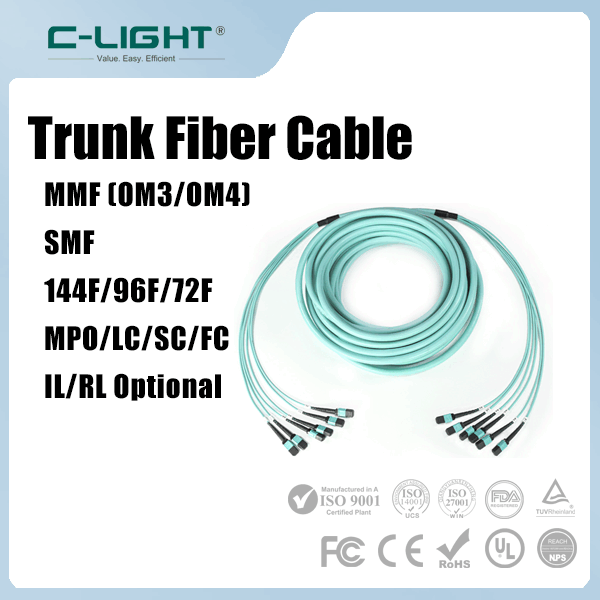
-Optical Fiber & Fast Connector: Provides high-speed, low-latency data transmission.
https://c-light.com/products/details/Fast_Connector.html
-Terminal devices connected by PoE or Wi-Fi

Applications of P2MP AON
P2MP AON is widely used in various sectors due to its scalability and efficiency.
Broadband Access Networks of Telecom
-Fiber-to-the-Home (FTTH): Delivers high-speed internet to residential users.
-Fiber-to-the-Building (FTTB): Connects entire buildings or complexes to the network.
-Fiber-to-the-Room (FTTR): Connects all family rooms by Master ONT and Slave ONUs.
-Fiber-to-the-Curb (FTTC): Brings fiber closer to end-users, with final connections using copper or wireless.
5G Backhaul of Telecom
P2MP AON will play a critical role in supporting 5G networks by providing high-capacity backhaul connections.
Smart Cities
-Public Wi-Fi: Provides internet access in public areas like parks, streets, and transportation hubs.
-Smart Lighting: Connects and controls streetlights for energy efficiency and maintenance.
-Traffic Management: Supports real-time traffic monitoring and control systems.
Industrial IoT
-Factory Automation: Connects sensors, machines, and control systems for real-time monitoring and control.
-Remote Monitoring: Enables remote monitoring of equipment and processes in industries like oil and gas, mining, and utilities.
Healthcare
-Telemedicine: Supports high-bandwidth applications like video consultations and remote diagnostics.
-Hospital Networks: Connects medical devices, patient records, and communication systems within hospitals.
Education
-E-Learning: Provides high-speed internet for online learning platforms and virtual classrooms.
-Campus Networks: Connects multiple buildings within a university or school campus.
Advantages of P2MP AON Components from C-LIGHT
-One Stop Support: C-Light has professional support teams to give fast response and advise to project hardware consultant service free.
-High Bandwidth: Supports 100Gbps uplink QSFP ports and 10G downlink XGSPON ports data-intensive applications.
-Scalability: Easily accommodates additional users through HGU/ SFU/ MDU without significant infrastructure changes.
-Low Latency: Ideal for real-time applications like life video sales and online gaming.
-Cost-Effective: Reduces infrastructure costs by sharing fiber resources among multiple users, especially for 40km or less range projects.
-Reliability: Optical fiber is immune to electromagnetic interference, ensuring stable connections.
P2MP AON (Point-to-Multipoint All-Optical Network) FAQ
A: A P2MP (Point-to-Multipoint) All-Optical Network is an optical communication architecture where one central optical node connects multiple remote terminals through fiber networks.
Unlike traditional point-to-point connections, P2MP architecture allows one optical access point to serve multiple users or devices through optical distribution components.
A typical P2MP AON consists of:
Optical Line Terminal (OLT)
Optical Network Units (ONUs)
Optical Distribution Network (ODN)
Optical Splitters
Fiber Optic Cables
Optical Transceiver Modules
P2MP AON is widely used in:
Fiber access networks
Smart cities
Industrial IoT
Enterprise campus networks
5G infrastructure
A: A P2MP AON uses a centralized optical access architecture to distribute high-speed data from one location to multiple endpoints.
The basic transmission process includes:
The OLT receives network data from the core network.
Optical signals are transmitted through fiber.
Optical splitters distribute signals to multiple branches.
ONUs receive and convert optical signals into electrical data.
End devices access network services through Ethernet, Wi-Fi, or PoE connections.
This architecture enables efficient fiber sharing while maintaining high bandwidth and low latency.
A: A complete P2MP AON solution includes several important components.
1. Optical Line Terminal (OLT)
The OLT works as the central network equipment responsible for:
Data aggregation
Optical signal transmission
User management
2. Optical Network Unit (ONU)
ONU devices provide network access for:
Homes
Buildings
Industrial terminals
3. Optical Transceiver Modules
Optical modules perform:
Electrical-to-optical conversion
Optical-to-electrical conversion
4. Passive Optical Splitters
Splitters allow one fiber connection to serve multiple endpoints.
5. Fiber Infrastructure
Includes:
Fiber cables
Fast connectors
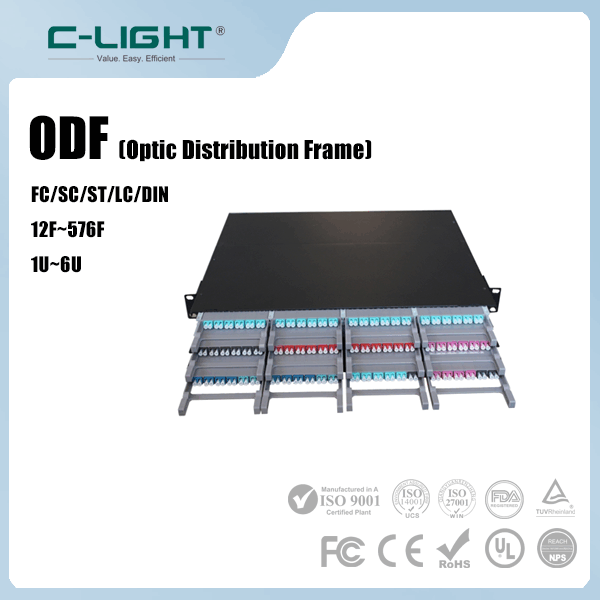
Distribution equipment
A: P2MP AON provides several advantages for large-scale optical deployments.
| Feature | P2MP AON | Traditional P2P Network |
|---|---|---|
| Fiber Usage | Shared fiber resources | Dedicated fiber per connection |
| Scalability | Easy expansion | More fiber required |
| Deployment Cost | Lower infrastructure cost | Higher cabling cost |
| Management | Centralized management | More distributed |
| Application | Large user networks | Dedicated connections |
The main advantages include:
Higher fiber utilization
Lower deployment cost
Easier network expansion
Simplified maintenance
Better scalability
A: P2MP AON is suitable for various high-bandwidth optical network scenarios.
Fiber Access Networks
Applications:
FTTH (Fiber-to-the-Home)
FTTB (Fiber-to-the-Building)
FTTR (Fiber-to-the-Room)
FTTC (Fiber-to-the-Curb)
5G Backhaul Networks
Supports:
Base station connectivity
High-capacity mobile networks
Smart Cities
Applications include:
Public Wi-Fi
Smart lighting
Traffic monitoring
Industrial IoT
Supports:
Factory automation
Remote monitoring
Industrial control systems
Healthcare and Education
Applications include:
Hospital networks
Campus networks
Digital learning platforms
A: P2MP AON and PON both use point-to-multipoint optical architectures, but they differ in network implementation.
| Feature | P2MP AON | PON |
|---|---|---|
| Signal Type | Active optical network | Passive optical network |
| Equipment | Active switching elements | Passive splitters |
| Management | More flexible control | Simpler deployment |
| Application | Enterprise, industrial, customized networks | Broadband access |
PON is mainly optimized for cost-effective broadband access, while AON provides greater flexibility and active network management capability for specialized applications.
A: Increasing demand from cloud computing, smart cities, industrial automation, and 5G services requires networks with:
Higher bandwidth
Lower latency
Better scalability
Efficient fiber utilization
P2MP AON helps address these requirements by providing:
High Bandwidth
Supports high-speed optical uplinks and multiple user connections.
Flexible Expansion
Additional users can be added without major infrastructure changes.
Reliable Transmission
Fiber communication provides:
Low signal loss
Immunity to electromagnetic interference
Stable performance
Cost Efficiency
Shared fiber resources reduce overall deployment complexity.
A: Selecting a P2MP optical solution depends on several factors.
1. Application Scenario
Determine whether the network is designed for:
FTTH access
Enterprise campus
Industrial IoT
Smart city
5G backhaul
2. Bandwidth Requirement
Evaluate:
Current traffic demand
Future expansion requirements
3. Network Distance
Consider:
Fiber length
Optical budget
Split ratio
4. Equipment Compatibility
Confirm compatibility with:
OLT systems
ONU devices
Optical modules
Network switches
A properly designed P2MP AON solution provides scalable and reliable optical connectivity for future network growth.
 >
>

 >
>
 >
>
 >
>
 >
>
 >
>
 >
>
 >
>