TEL:+86 132 6656 7067


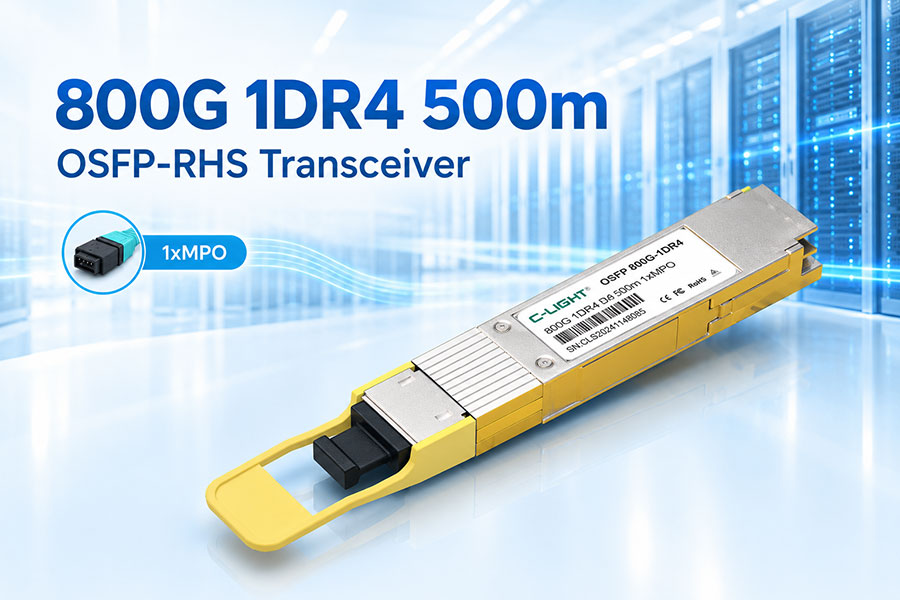
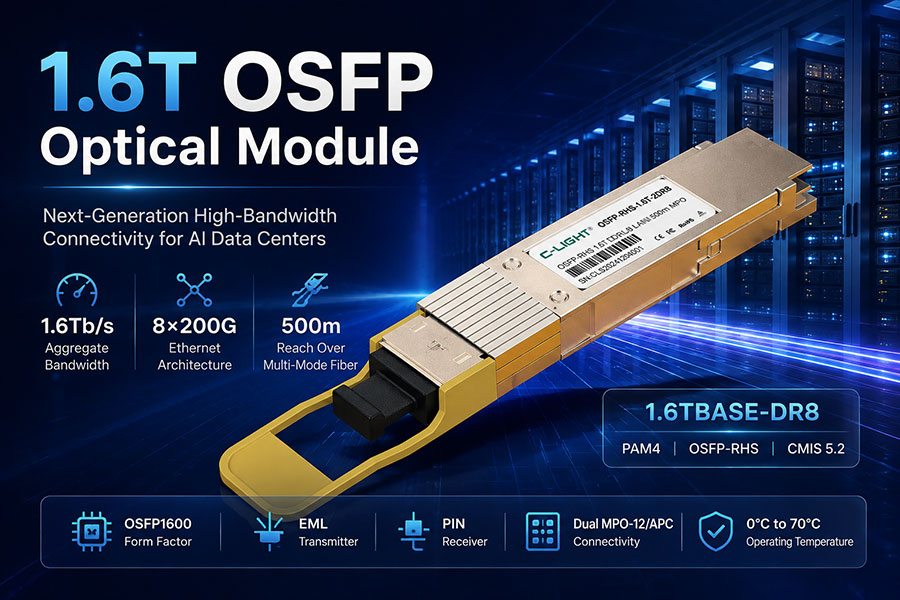
The 800G 1DR4 500m OSFP-RHS Transceiver is an 800Gb/s Ethernet optical transceiver designed for high-bandwidth data center and AI networking applications. It supports 800GBASE-DR4, 800GAUI-8, PAM4 signaling, an EML transmitter, PIN photodetector receiver, and a dual MPO-12/APC optical interface.
1. What Is the 800G 1DR4 500m OSFP-RHS Transceiver?
The 800G 1DR4 500m OSFP-RHS is a high-speed optical transceiver for 800Gb/s Ethernet connectivity. It uses an OSFP-RHS form factor and is designed for 500m-class single-mode fiber links.
2. Key Features
800Gb/s aggregate data rate
1x800G Ethernet
800GBASE-DR4 optical interface
800GAUI-8 C2M electrical interface
EML transmitter and PIN PD receiver
Dual MPO-12/APC optical receptacle
OSFP MSA Rev 5.1
CMIS Rev 5.2
0°C to 70°C operating temperature
Digital Diagnostic Monitoring
3. 800G 1DR4 Optical Interface
The transceiver complies with the 800GBASE-DR4 optical interface specified in IEEE 802.3dj. The 1DR4 architecture provides four optical lanes for 800G-class transmission over single-mode fiber.
4. 800GAUI-8 Electrical Interface
On the host side, the module supports an 800GAUI-8 C2M electrical interface. The eight electrical lanes provide the high-speed connection between the host system and optical transceiver.
5. OSFP-RHS Form Factor
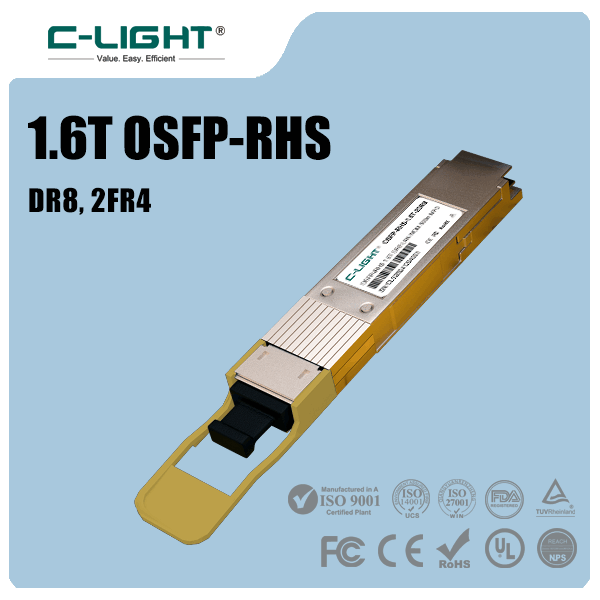
The module uses an OSFP800 form factor with a reduced-height housing. The OSFP-RHS design is intended for systems where optical module height and mechanical clearance are important considerations.
6. Dual MPO-12/APC Interface
The optical interface uses dual MPO-12/APC receptacles. This connector configuration provides a compact multi-lane connection suitable for high-density 800G data center deployments.
7. EML Transmitter
The 800G 1DR4 uses an EML transmitter designed for high-speed optical transmission. The transmitter supports four optical lanes operating in the 1304.5nm to 1317.5nm wavelength range.
8. PIN Photodetector Receiver
A PIN photodetector is used on the receiver side to convert incoming optical signals into electrical signals. The receiver supports the same 1304.5nm to 1317.5nm lane wavelength range.
9. PAM4 Optical Transmission
The module specifications include PAM4 transmitter and receiver performance parameters such as TDECQ, TECQ, and stressed receiver sensitivity. PAM4 enables higher data rates per electrical and optical lane while maintaining practical lane counts.
10. 800G Data Rate
The transceiver supports an aggregate data rate of 800Gb/s and is designed for 1x800G Ethernet applications. It provides the bandwidth required for modern high-performance data center and computing networks.
11. 500m Transmission Application
The product is specified as a 500m 1DR4 transceiver, making it suitable for short- to medium-reach single-mode fiber connections within data center environments and high-performance computing infrastructure.
12. Optical Specifications
| Parameter | Specification |
|---|---|
| Data Rate | 800Gb/s |
| Optical Interface | 800GBASE-DR4 |
| Electrical Interface | 800GAUI-8 C2M |
| Transmitter | EML |
| Receiver | PIN PD |
| Lane Wavelength | 1304.5–1317.5nm |
| Optical Connector | Dual MPO-12/APC |
| Operating Temperature | 0°C to 70°C |
13. Transmitter Performance
The transmitter provides an average launch power of -3.3dBm to 4dBm per lane. The specified maximum TDECQ and TECQ are both 3.4dB, while the side mode suppression ratio is specified at a minimum of 30dB.
14. Receiver Performance
The receiver supports an average receive power range of -6.3dBm to 4dBm per lane. The specified stressed receiver sensitivity is up to -0.9dBm OMAouter under the defined test conditions.
15. Digital Diagnostic Monitoring
The module provides a two-wire serial interface with digital diagnostic monitoring. This allows supported host systems to monitor important operating parameters and assist with network maintenance.
16. Operating Temperature
The case operating temperature range is 0°C to 70°C. This commercial-temperature range makes the transceiver suitable for controlled data center and networking environments.
17. Standards and Compliance
The 800G 1DR4 OSFP-RHS transceiver is specified to comply with IEEE 802.3dj D1p2, including 800GBASE-DR4 and 800GAUI-8 C2M. It also complies with OSFP MSA Rev 5.1 and CMIS Rev 5.2.
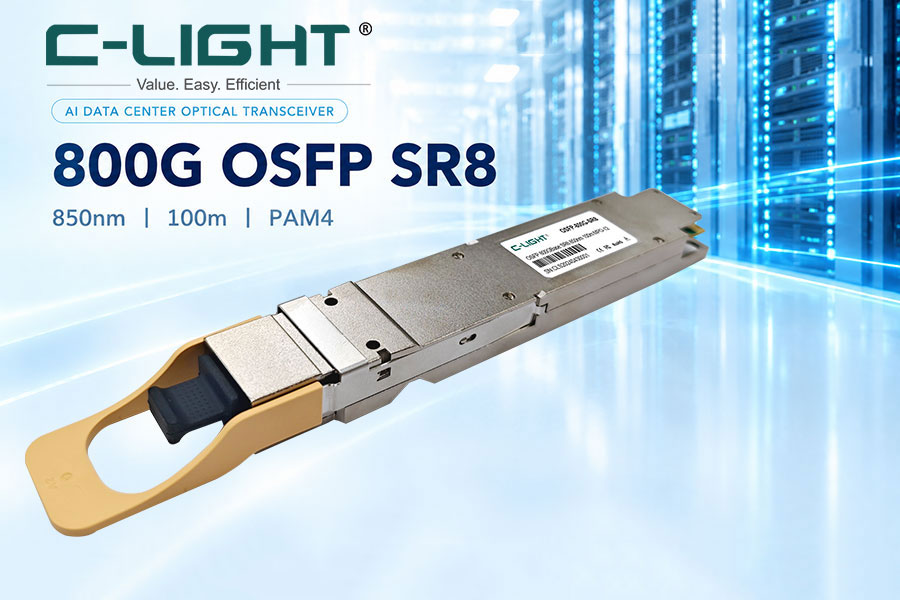
18. 800G 1DR4 vs 800G SR8
| Feature | 800G 1DR4 | 800G SR8 |
|---|---|---|
| Fiber Type | Single-mode fiber | Multimode fiber |
| Typical Reach | 500m class | Up to 100m |
| Optical Technology | EML | VCSEL |
| Connector | Dual MPO-12/APC | MPO-based |
| Typical Application | Longer-reach data center links | Short-reach data center links |
19. 800G 1DR4 vs 800G 2DR4
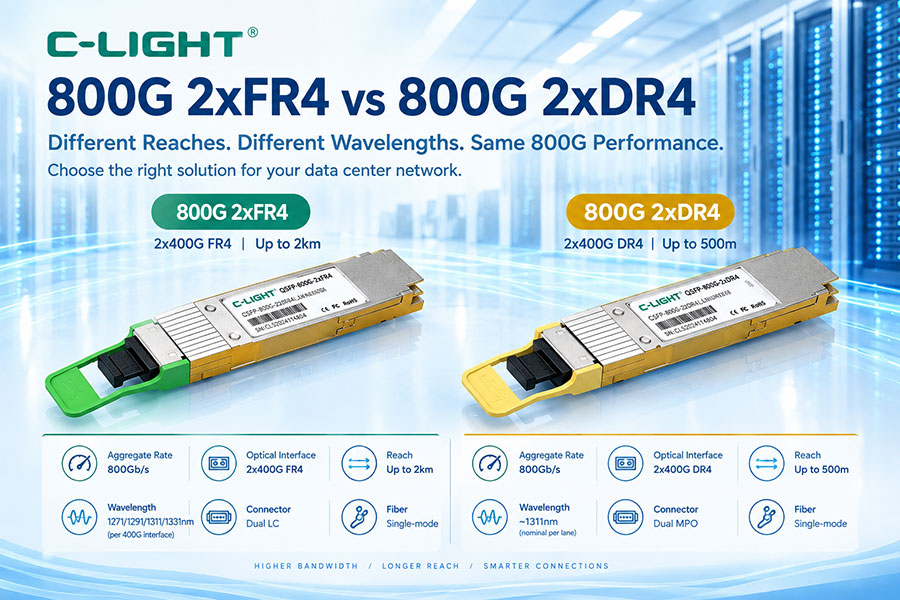
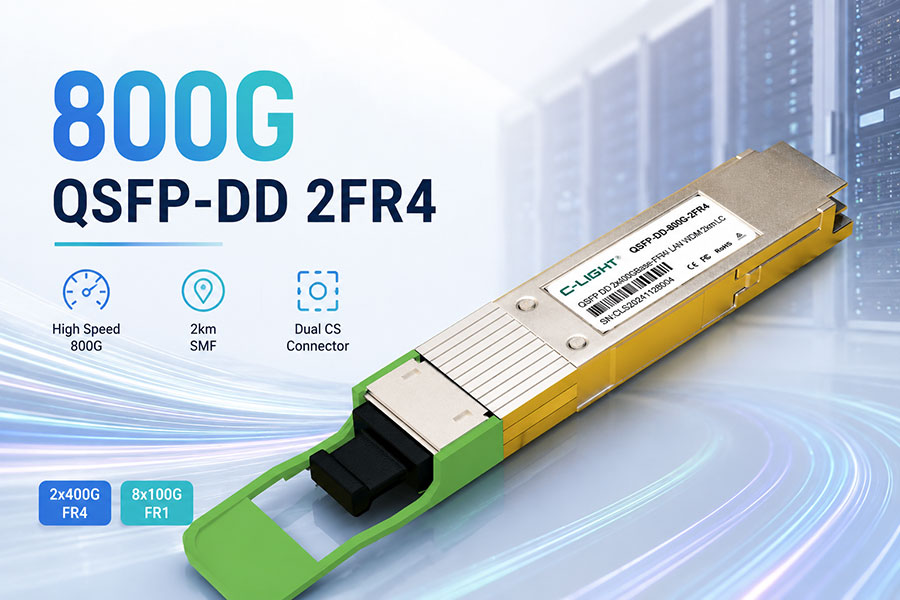
The main difference is the optical architecture. A 1DR4 configuration uses four optical lanes, while a 2DR4 architecture generally divides the 800G interface into two 400G optical groups. The appropriate solution depends on the host architecture, optical interface, connector configuration, and network design.
20. Applications
| Application | Purpose |
|---|---|
| AI Data Centers | High-bandwidth GPU and switch connectivity |
| Hyperscale Data Centers | High-density 800G network connections |
| HPC | High-speed computing network interconnects |
| Data Center Switching | 800G switch-to-switch and switch-to-server links |
| High-Performance Networks | Short- and medium-reach SMF connectivity |
21. Advantages of the OSFP-RHS Design
The OSFP-RHS form factor provides an 800G optical interface while reducing the module housing height compared with conventional high-profile OSFP thermal designs. This can help address mechanical clearance requirements in high-density systems.
22. High-Speed Data Center Connectivity
As data center networks move toward 800G and beyond, optical modules must provide higher bandwidth while maintaining suitable power, thermal, and mechanical characteristics. The 1DR4 OSFP-RHS architecture addresses these requirements through a compact high-speed optical design.
23. Optical Lane Wavelength
Each optical lane operates within the 1304.5nm to 1317.5nm wavelength range. The wavelength characteristics are designed for the 800GBASE-DR4 optical interface and single-mode fiber transmission.
24. Module Reliability and Monitoring
Digital diagnostic monitoring provides visibility into module operating conditions. Combined with standards-based management through CMIS, this supports easier deployment, monitoring, and maintenance of 800G optical links.
25. Why Choose an 800G 1DR4 OSFP-RHS Transceiver?
The 800G 1DR4 OSFP-RHS combines 800Gb/s bandwidth, 500m-class reach, an EML transmitter, PIN photodetector receiver, dual MPO-12/APC connectivity, and a reduced-height OSFP design. It is well suited to high-bandwidth single-mode fiber connections in AI, HPC, and data center networks.
26. Conclusion
The 800G 1DR4 500m OSFP-RHS Transceiver provides a high-bandwidth optical solution for 800G Ethernet networks. With 800GBASE-DR4, 800GAUI-8, EML and PIN technology, dual MPO-12/APC connectivity, and OSFP-RHS packaging, it is designed for high-density data center and next-generation computing applications.
 >
>

 >
>
 >
>
 >
>
 >
>
 >
>
 >
>
 >
>