TEL:+86 132 6656 7067


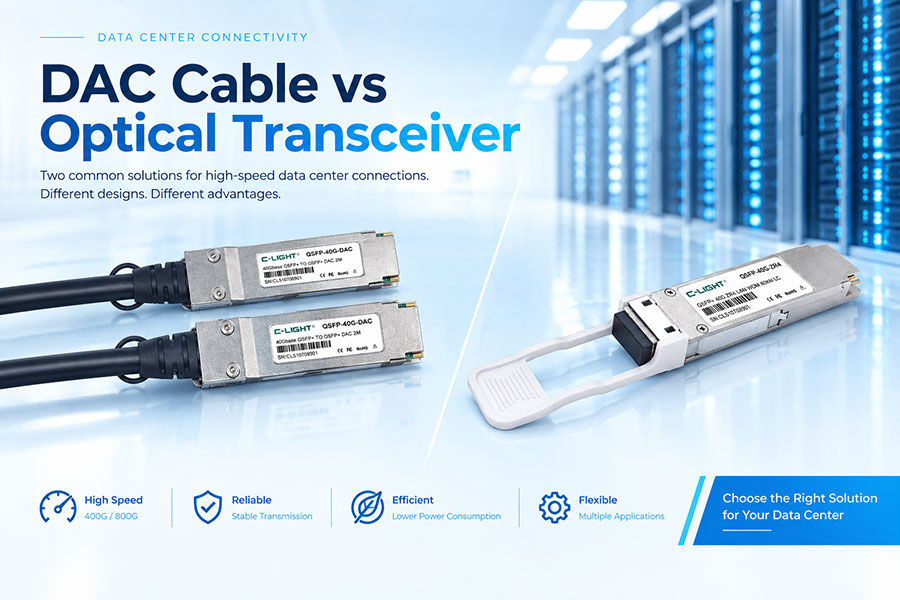
400G networks require high-speed interconnects with reliable signal integrity, efficient power usage, and practical deployment options. DAC cables are designed for short-distance electrical connections, while 400G optical transceivers use fiber to support longer and more flexible links. The choice depends on transmission distance, cost, power consumption, cable density, and network architecture.
1. DAC and Optical Transceiver in 400G Networks
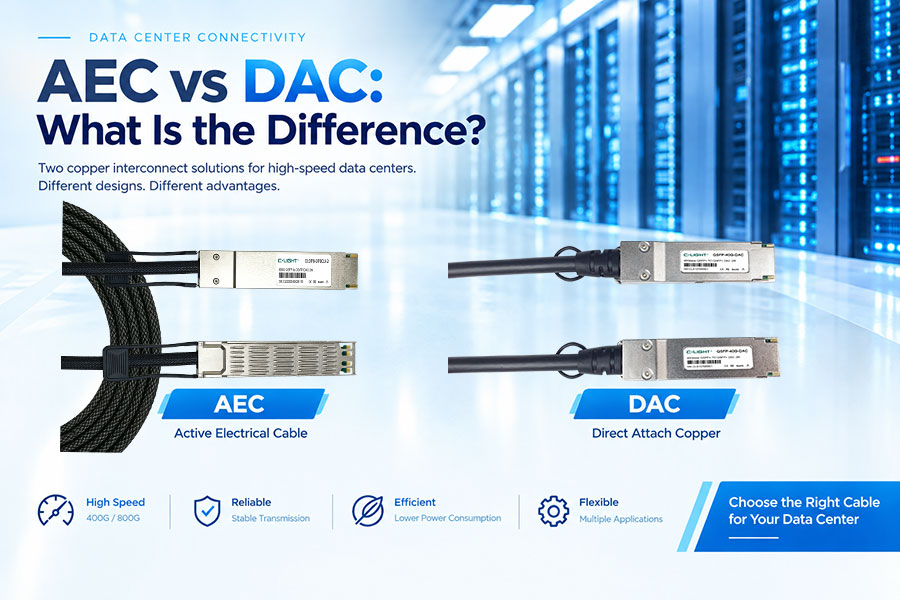
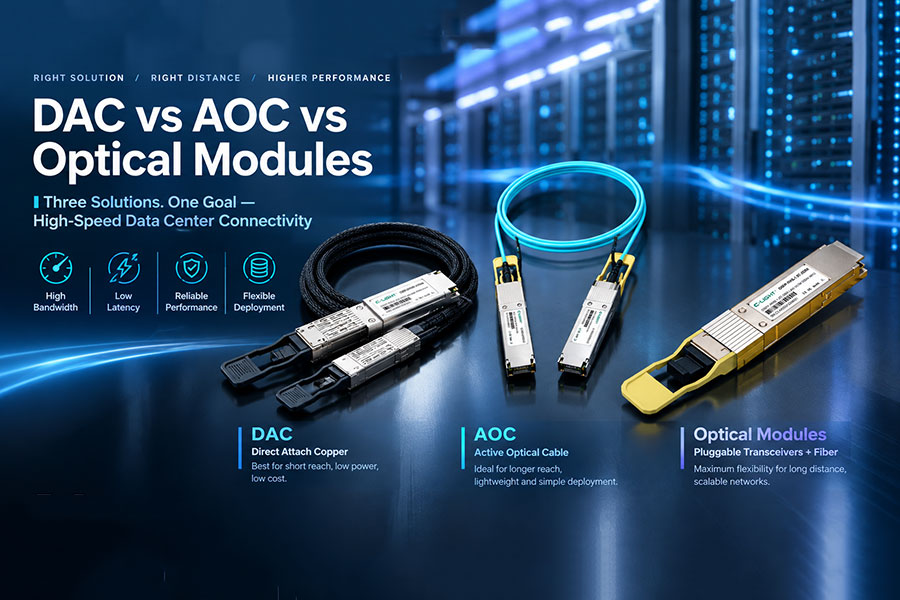
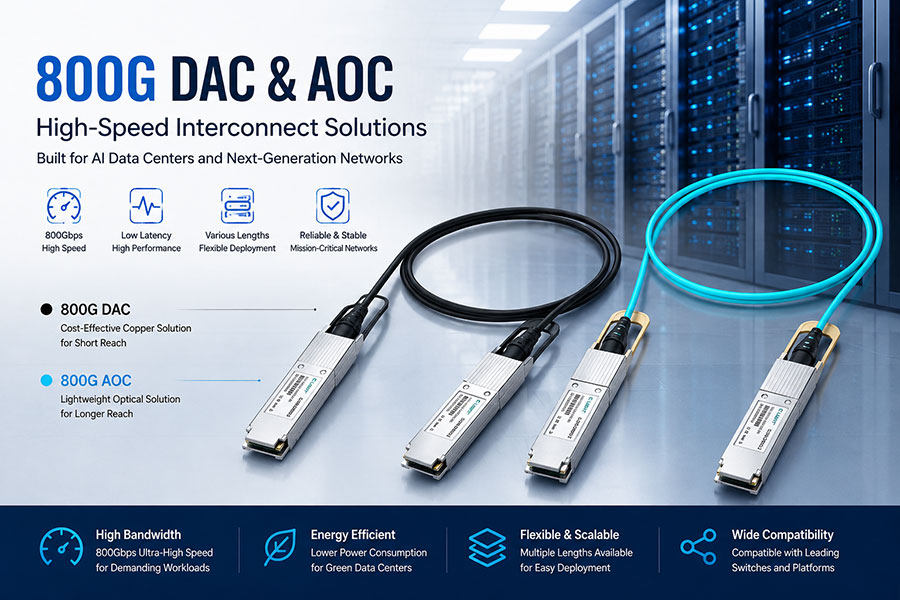
400G DAC is a copper-based direct attach cable with fixed connectors at both ends. It provides a simple electrical connection between two compatible high-speed ports.
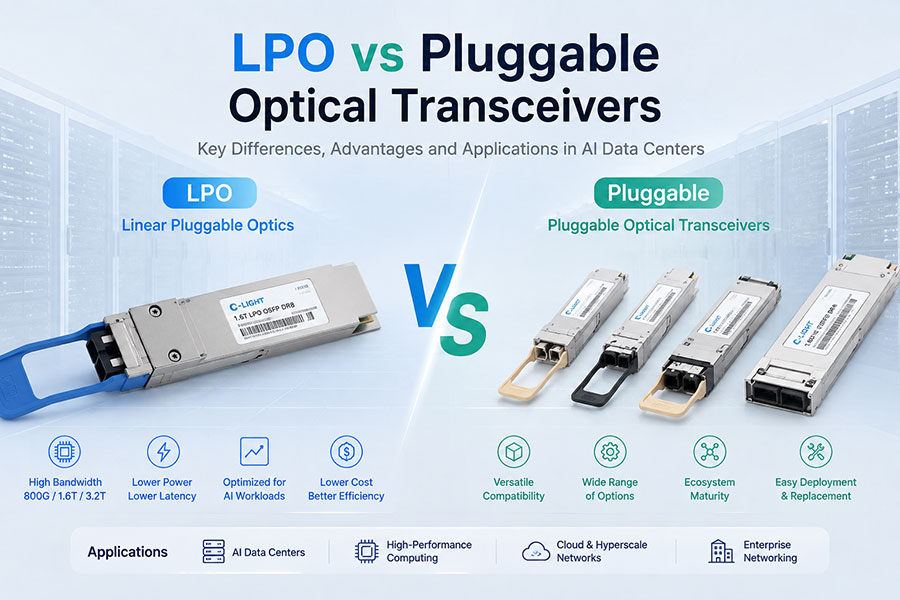
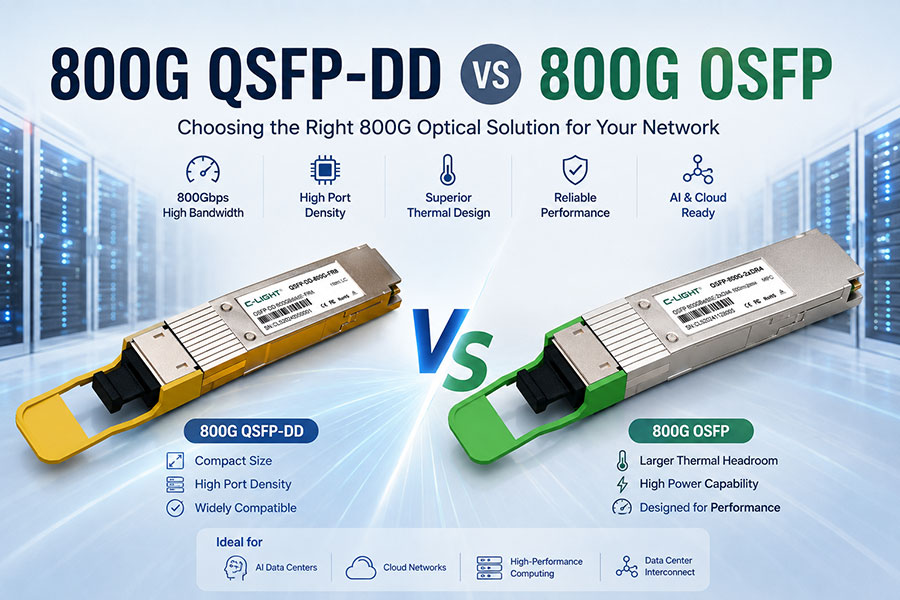
400G optical transceivers are pluggable modules that convert electrical signals to optical signals and connect through fiber optic cables. They are available in different form factors and reach options for data center and high-performance networking applications.
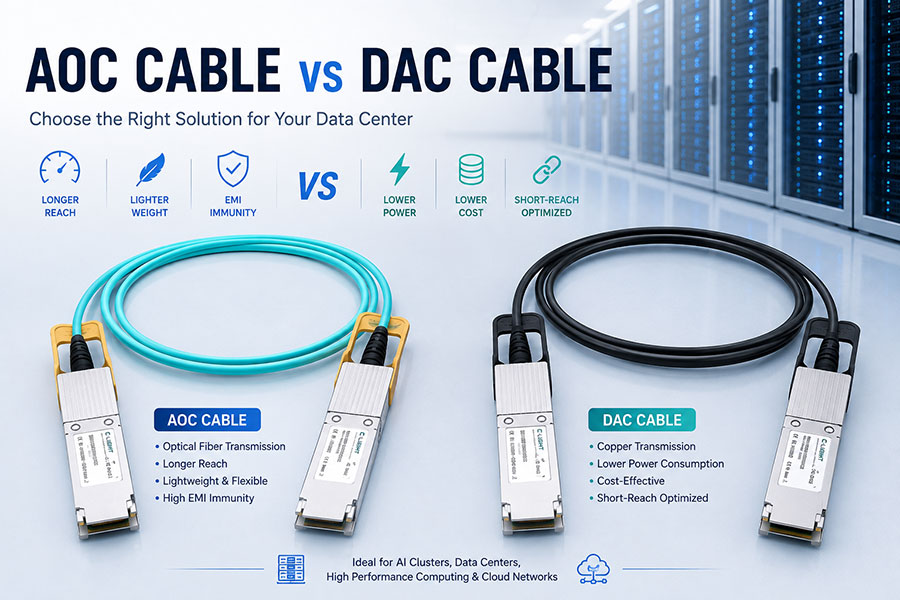
2. 400G DAC vs Optical Transceiver: Basic Comparison
| Feature | 400G DAC | 400G Optical Transceiver |
|---|---|---|
| Transmission medium | Copper | Optical fiber |
| Typical reach | Short | Short to long |
| Power consumption | Very low for passive DAC | Depends on module type |
| Cost | Lower for short links | Higher initial cost |
| Cable weight | Higher | Lower |
| Installation | Simple | Requires separate fiber |
| Flexibility | Limited | High |
| Typical application | Short data center links | Longer and flexible 400G links |
3. 400G DAC Transmission Distance
400G DAC is mainly designed for short-reach connectivity. Common configurations range from approximately 0.5m to several meters, depending on the cable construction, connector type, and electrical performance requirements.
DAC is particularly suitable when the connected devices are located in the same rack or very close to each other.
4. 400G Optical Transceiver Transmission Distance
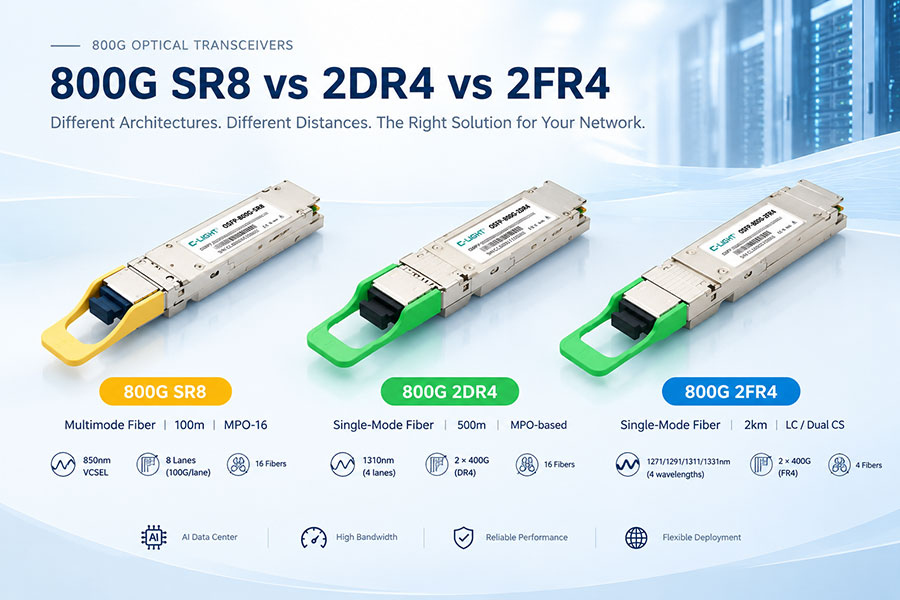
400G optical transceivers provide a much broader reach range than DAC. The actual distance depends on the optical technology, wavelength, fiber type, and transceiver design.
Short-reach multimode solutions can be used inside data centers, while single-mode 400G transceivers can support significantly longer links.
5. Power Consumption
Passive 400G DAC generally has a major advantage in power consumption because it does not require optical conversion.
400G optical transceivers contain active optical components and, depending on the design, DSP or other signal-processing circuitry. Their power consumption varies by module type and reach.
For very large 400G deployments, the cumulative power consumption of network interconnects can therefore be an important consideration.
6. Cost Comparison
For short connections, 400G DAC is generally more economical than an optical transceiver solution because the cable assembly integrates the connectors and does not require separate optical modules and fiber cables.
Optical connectivity has a higher initial component count, but its modular structure provides greater flexibility and can simplify network expansion across different distances.
7. Cable Management
Copper DAC cables are generally thicker and heavier than fiber optic cables. This can become an issue in high-density 400G environments with many connections installed within the same rack.
Fiber-based optical connectivity is lighter and easier to route over longer distances, making it attractive for high-density leaf-spine networks and rack-to-rack links.
8. Signal Integrity at 400G
400G electrical interfaces place significant demands on signal integrity. In DAC applications, cable loss, connector performance, impedance control, crosstalk, jitter, and other electrical characteristics directly affect link performance.
Optical transceiver systems move the transmission path from copper to fiber, reducing the impact of copper-channel losses over longer distances.
9. 400G DAC for AI Data Centers
AI data centers use large numbers of high-speed connections between GPUs, servers, and network switches. 400G DAC is well suited to short connections where low power, low latency, and simple deployment are important.
Typical applications include GPU-to-switch, server-to-switch, and intra-rack connections.
10. 400G Optical Transceivers for AI Data Centers
400G optical transceivers are useful when the network requires longer links between racks, switches, or network layers.
They also provide more flexibility when different transmission distances or fiber infrastructures must be supported within the same data center.
11. 400G DAC for GPU-to-Switch Connections
GPU-to-switch connections are often physically short, which makes DAC a practical solution for many AI cluster architectures.
Using DAC can reduce connection cost and power consumption while providing a direct high-speed electrical path between compatible devices.
12. 400G Optical Transceiver for Rack-to-Rack Connections
When the distance between racks increases, optical connectivity becomes more attractive.
A 400G optical transceiver paired with fiber can provide a longer and lighter connection than a comparable copper cable. This is especially useful in environments where cable density and routing are important design considerations.
13. 400G DAC vs 400G Optical Transceiver Latency
Passive DAC offers a very simple electrical path and can provide extremely low latency.
400G optical transceivers also support low-latency networking and are widely used in performance-sensitive data center environments. However, total link latency depends on the complete system, including switches, FEC, DSP, retimers, and other components.
14. Flexibility and Scalability
DAC cables have fixed connectors and cable lengths, which makes them simple but less flexible for future changes.
Optical transceiver systems separate the transceiver from the fiber cable. This makes it easier to select different module types, fiber configurations, and transmission distances as the network evolves.
15. 400G DAC vs Optical Transceiver for Short Links
For short links, DAC is often the more practical option. It offers simple installation, low power consumption, and competitive cost.
When the connection is short enough to meet the electrical requirements, there is often little reason to use an optical transceiver solely for the sake of transmission medium.
16. 400G DAC vs Optical Transceiver for Long Links
For longer links, optical transceivers are generally more suitable because fiber supports much greater reach than copper.
Optical connectivity also provides lower cable weight and greater flexibility for structured network deployment.
17. 400G Breakout Connectivity
400G DAC and optical solutions can both be used in breakout configurations, depending on the supported interfaces and network design.
Breakout cables can connect a higher-speed 400G port to multiple lower-speed ports, making them useful for server, switch, and AI cluster architectures that contain different port generations.
18. Choosing Between 400G DAC and Optical Transceiver
The decision can be based on several practical factors.
●Distance: Use DAC for short connections and optical transceivers for longer links.
●Power: Passive DAC generally provides lower power consumption.
●Cost: DAC is usually more economical for short connections.
●Cable density: Fiber-based solutions can offer better routing characteristics in dense deployments.
●Flexibility: Optical transceivers provide more options for future network changes.
19. C-LIGHT 400G DAC and Optical Solutions
C-LIGHT provides 400G DAC and optical transceiver solutions for high-speed data center networks.
C-LIGHT 400G DAC configurations are designed for short-reach connections such as server-to-switch, GPU-to-switch, switch-to-switch, AI data center, and HPC applications.
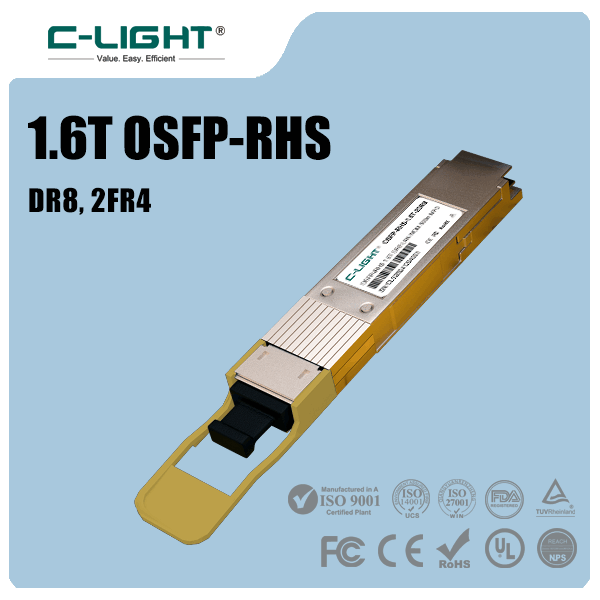
C-LIGHT 400G optical transceiver solutions support fiber-based connectivity for applications requiring greater reach and more flexible deployment.
20. DAC vs Optical Transceiver for 400G Networks: Conclusion
400G DAC and optical transceivers are both important connectivity technologies, but they serve different network requirements.
400G DAC is best suited for short connections where low power, low cost, low latency, and simple deployment are important.
400G optical transceivers are more suitable for longer links, lightweight fiber cabling, and network architectures that require greater flexibility and scalability.
In modern data centers, the two solutions can work together. DAC can handle short local connections, while optical transceivers provide the longer fiber links between racks and network layers.
 >
>

 >
>
 >
>
 >
>
 >
>
 >
>
 >
>
 >
>