TEL:+86 132 6656 7067


1. What is CWDM Optical Transceiver?
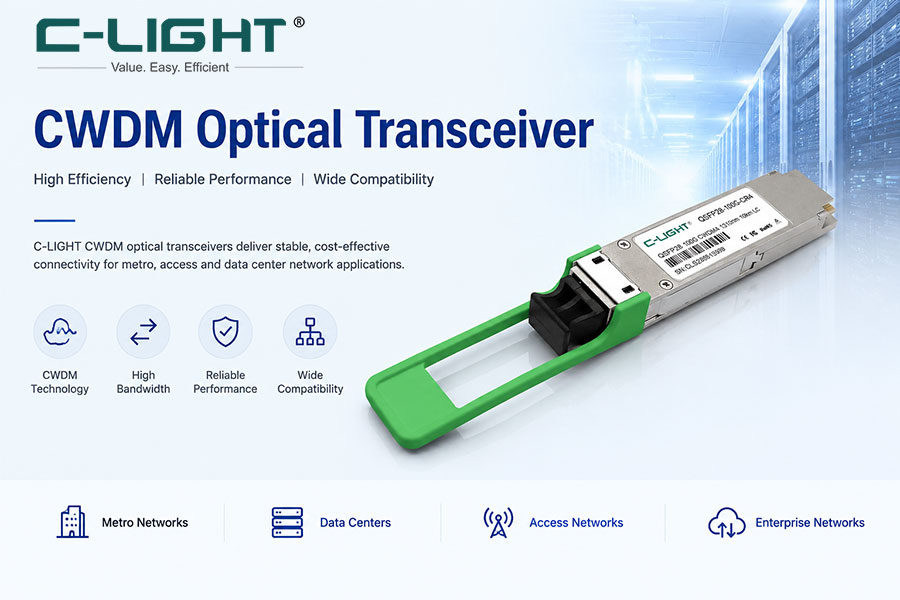
CWDM (Coarse Wavelength Division Multiplexing) optical transceiver is a high-performance optical module that uses different wavelength channels to transmit multiple optical signals over a single-mode fiber.
By combining CWDM transceiver modules with CWDM MUX/DEMUX devices, multiple independent data channels can share the same fiber infrastructure, significantly increasing fiber utilization and reducing network deployment costs.
C-LIGHT CWDM optical transceivers support multiple form factors including SFP, SFP+, SFP28, QSFP+, and XFP, providing flexible solutions for telecom networks, metro networks, 5G fronthaul, enterprise networks, and data center interconnection applications.
2. How Does CWDM Optical Transceiver Work?
CWDM technology uses wavelength multiplexing to transmit multiple optical channels through one fiber.
The working process includes:
Optical Transmission
The CWDM optical module converts electrical signals into optical signals through a laser transmitter.
Each module operates at a specific wavelength:
1270nm
1290nm
1310nm
1330nm
1350nm
1470nm
1490nm
1510nm
1530nm
1550nm
1570nm
1590nm
1610nm
Wavelength Multiplexing
Multiple CWDM wavelengths are combined through a CWDM MUX device and transmitted over a single optical fiber.
Optical Receiving
At the receiving end, the CWDM DEMUX separates different wavelengths and restores each optical channel.
3. C-LIGHT CWDM Optical Transceiver Product Portfolio
C-LIGHT provides a complete CWDM optical module portfolio covering different transmission rates, packages, and network applications.
3.1 CWDM 100G / 40G / 25G Optical Transceiver
Product Series:
CWDM 100G QSFP28
CWDM 40G QSFP+
CWDM 25G SFP28
Key Features:
Data Rate: 25Gbps / 40Gbps / 100Gbps
Transmission Distance:
10km
40km
Single-mode fiber transmission
Supports CDR
Industrial temperature option up to 85°C
Applications:
5G fronthaul
Metro network
Access network
High-speed optical transmission
3.2 CWDM 32G / 16G / 8G / 4G Optical Transceiver
Product Series:
| Product | Package | Rate |
|---|---|---|
| CWDM 32G SFP28 | SFP28 | 32Gbps |
| CWDM 16G SFP+ | SFP+ | 16Gbps |
| CWDM 8G SFP+ | SFP+ | 8Gbps |
| CWDM 4G SFP | SFP | 4Gbps |
Features:
Fibre Channel compatible
Long-distance transmission
10km / 40km options
CDR support
High-temperature CWDM solution
Applications:
Storage Area Network (SAN)
Enterprise network
Telecom communication
3.3 CWDM 10G / 2.5G / 1G / 100M Optical Transceiver
Product Series:
| Product | Package |
|---|---|
| CWDM 10G SFP+ | SFP+ |
| CWDM 2.5G SFP | SFP |
| CWDM 1.25G SFP | SFP |
| CWDM 100M SFP | SFP |
| CWDM XFP | XFP |
Features:
Multi-rate support
40km / 80km / 100km / 120km transmission options
CDR support
Telecom-grade reliability
Applications:
Access network
Metro Ethernet
Legacy network upgrade
3.4 CWDM BiDi Optical Transceiver
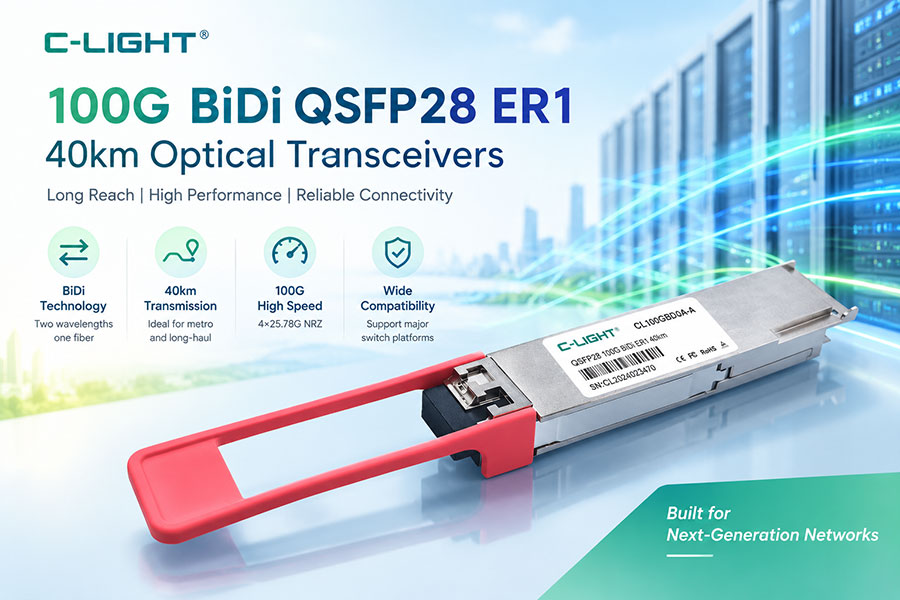
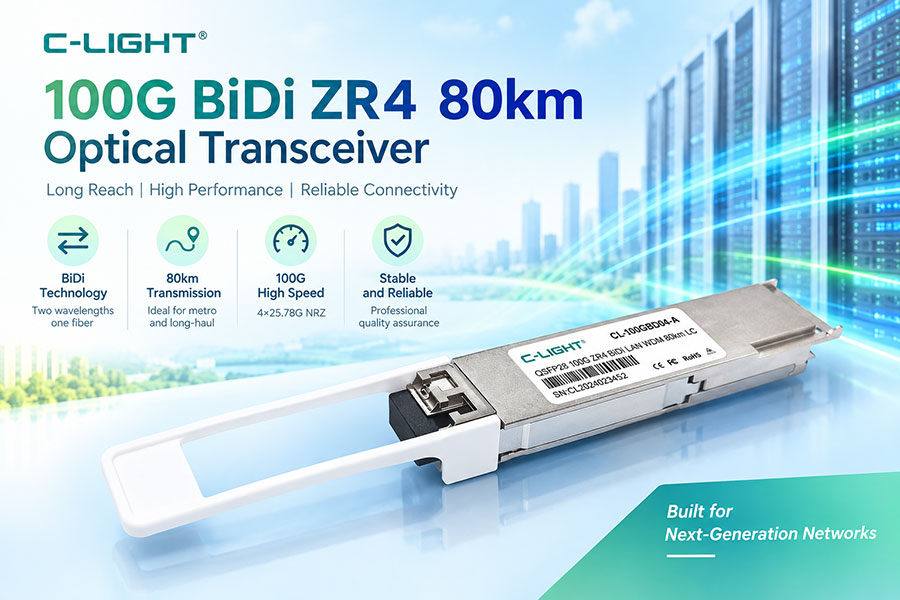
CWDM BiDi optical transceiver uses two different wavelengths for transmitting and receiving signals over one single-mode fiber.
Product Series:
| Product | Package |
|---|---|
| CWDM 100G BiDi | QSFP28 |
| CWDM 40G BiDi | QSFP+ |
| CWDM 25G BiDi | SFP28 |
| CWDM 10G BiDi | SFP+ |
| CWDM 2.5G BiDi | SFP |
| CWDM 1.25G BiDi | SFP |
Advantages:
Save fiber resources
Reduce cabling cost
Simplify network deployment
Applications:
FTTH
5G fronthaul
Access network
4. CWDM Optical Transceiver Key Advantages
High Fiber Utilization
One fiber can carry multiple wavelength channels, improving existing fiber capacity.
Cost Effective
Compared with DWDM solutions:
Lower optical component cost
Easier deployment
Lower maintenance requirement
Flexible Network Deployment
Supports:
Telecom
Data center
Enterprise
Industrial applications
High Reliability
Features:
Stable optical performance
Wide temperature operation
OEM compatibility
5. CWDM vs DWDM Optical Transceiver
| Item | CWDM | DWDM |
|---|---|---|
| Technology | Coarse WDM | Dense WDM |
| Channel Spacing | 20nm | 0.8nm/0.4nm |
| Cost | Lower | Higher |
| Channel Number | Up to 18 | 40/80+ |
| Distance | Short/Medium | Long Distance |
| Application | Access & Metro | Backbone Network |
6. CWDM Optical Transceiver Applications
5G Network
CWDM provides economical solutions for:
5G fronthaul
Base station connection
Fiber resource expansion
Data Center Interconnection
Used for:
Campus data center
Enterprise network
Cloud infrastructure
Telecom Metro Network
Supports:
MAN deployment
Optical aggregation
Fiber capacity expansion
Industrial Communication
Applications:
Smart city
Transportation
Industrial automation
7. CWDM Module Selection Guide
When selecting CWDM optical modules, consider:
Transmission Rate
Choose:
100G
40G
25G
10G
1G
Transmission Distance
Select according to:
Fiber length
Optical loss
Link budget
Available distance:
10km
20km
40km
80km
120km
Package Type
Available:
SFP
SFP+
SFP28
QSFP+
XFP
8. Why Choose C-LIGHT CWDM Optical Transceiver?
C-LIGHT provides professional CWDM optical solutions with:
✓ Complete CWDM Product Portfolio
✓ Multiple Data Rate Support
✓ Customized Wavelength Options
✓ OEM Compatibility
✓ Industrial Temperature Products
✓ High Reliability Testing
C-LIGHT focuses on providing customized optical communication solutions for telecom operators, data centers, and enterprise customers.
9. Frequently Asked Questions (FAQ)
Q1. What is a CWDM optical transceiver?
Answer: A CWDM optical transceiver is an optical module that uses Coarse Wavelength Division Multiplexing (CWDM) technology to transmit multiple optical signals over a single fiber by using different wavelengths, improving fiber utilization and network capacity.
Q2. What wavelengths does CWDM support?
Answer: CWDM commonly supports wavelengths from 1270 nm to 1610 nm with a standard 20 nm wavelength spacing. Different wavelengths can be combined through MUX/DEMUX devices for multi-channel optical transmission.
Q3. What is the difference between CWDM and BiDi?
Answer: CWDM uses multiple wavelengths combined through MUX/DEMUX technology to transmit multiple channels over fiber, while BiDi (Bidirectional) optical modules use two different wavelengths on a single fiber to achieve bidirectional transmission without requiring separate transmit and receive fibers.
Q4. Does C-LIGHT provide customized CWDM modules?
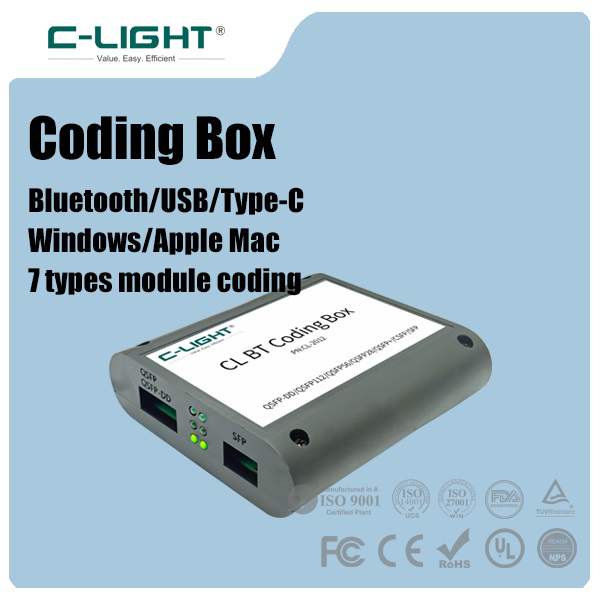
Answer: Yes. C-LIGHT provides customized CWDM optical transceiver solutions, including wavelength selection, transmission distance, operating temperature range, package type, EEPROM programming, and OEM/ODM requirements to meet different network deployment needs.
 >
>

 >
>
 >
>
 >
>
 >
>
 >
>
 >
>
 >
>