TEL:+86 132 6656 7067


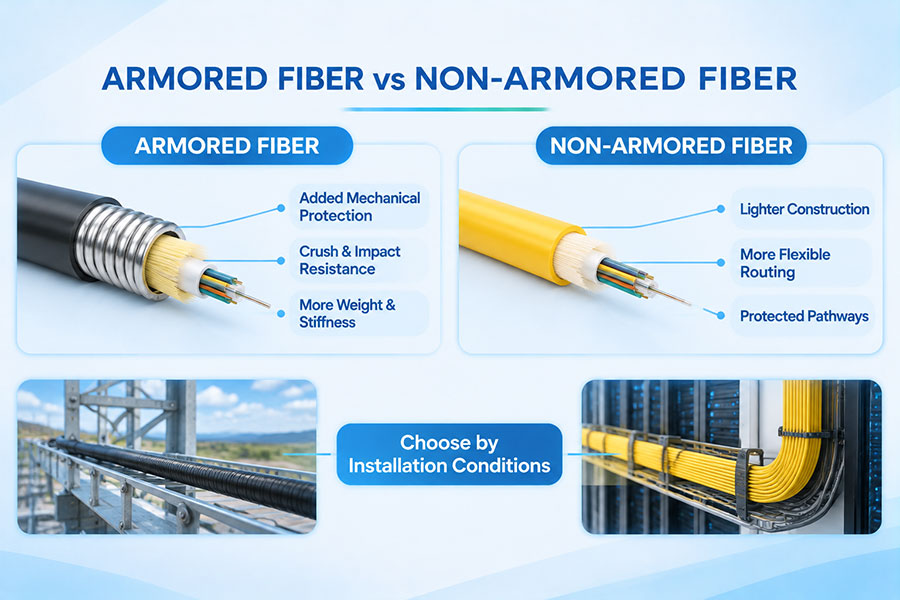
Fiber optic infrastructure is deployed in environments ranging from protected indoor equipment rooms to underground ducts, industrial facilities, outdoor cabinets, and data center pathways. The cable construction must match the physical conditions of each installation. One important design decision is whether to use armored or non-armored fiber optic cable.
Armored fiber cables incorporate an additional protective layer, commonly metallic or non-metallic, to improve resistance to mechanical damage. Non-armored cables use a simpler construction that generally offers lower weight, smaller dimensions, and greater flexibility. Neither design is universally better. The appropriate choice depends on installation conditions, mechanical protection requirements, cable routing, fire-safety regulations, and total deployment cost.
1. What Is Armored Fiber Optic Cable?
Armored fiber optic cable is designed with an additional protective structure surrounding the cable core. This structure helps protect optical fibers against external mechanical stress, including crushing, impact, and certain types of physical interference.
Depending on the cable design, the armor may consist of corrugated steel tape, steel wire, aluminum components, or non-metallic reinforcing materials. The armor is combined with other cable layers, such as fiber tubes, strength members, moisture barriers, and an outer jacket.
Common Armored Fiber Structures
Corrugated steel tape armor: Provides additional mechanical protection and is commonly used in outdoor and industrial cable designs.
Steel wire armor: Offers mechanical reinforcement and may be selected for demanding installation environments.
Aluminum armor: Used in certain cable constructions where metallic protection and weight considerations are important.
Non-metallic armor: Uses materials such as reinforced polymers or other composite structures to improve mechanical protection without introducing a conventional metallic layer.
Armored cables are available in different configurations for indoor, outdoor, direct-burial, duct, and industrial applications. The presence of armor alone does not automatically qualify a cable for every installation environment. Its full construction and applicable ratings must be checked.
2. What Is Non-Armored Fiber Optic Cable?
Non-armored fiber optic cable does not include the additional armor layer found in armored designs. Instead, it relies on its outer jacket, strength members, buffer tubes, and other structural components to protect the optical fibers.
Common non-armored constructions include tight-buffered indoor cables, loose-tube outdoor cables, and lightweight distribution cables. Their protection levels vary according to the materials and structural design.
Typical advantages include:
Lower cable weight and often smaller outside diameter.
Greater flexibility for routing through trays, conduits, and equipment spaces.
Easier handling during installation and maintenance.
Potentially lower material and installation costs.
Suitability for many controlled indoor environments.
Non-armored does not mean unprotected. Fiber cables still include structural elements designed to manage tensile loads, bending, moisture exposure, and other conditions according to their intended application.
3. Armored Fiber vs Non-Armored Fiber: Key Differences
The main difference is the additional mechanical protection provided by the armored construction. This affects cable weight, flexibility, installation requirements, and suitability for different environments.
| Comparison Factor | Armored Fiber Cable | Non-Armored Fiber Cable |
|---|---|---|
| Structure | Includes an additional metallic or non-metallic armor layer | Uses jacket, strength members, and internal cable structures without an armor layer |
| Mechanical protection | Generally offers stronger resistance to crushing and physical damage | Protection depends on jacket and internal structural design |
| Weight | Usually heavier | Usually lighter |
| Flexibility | Often less flexible, depending on armor type | Generally easier to route and handle |
| Outside diameter | Often larger | Often smaller |
| Installation | May require more careful handling and suitable termination accessories | Usually easier to install in standard indoor pathways |
| Rodent protection | Can provide additional protection when designed and tested for this purpose | Depends on jacket and other protective features |
| Cost | Generally higher due to additional materials and construction | Generally lower for comparable fiber count and application |
| Typical applications | Industrial facilities, exposed pathways, and demanding outdoor installations | Data centers, enterprise networks, equipment rooms, and protected pathways |
Actual performance depends on cable construction rather than the armored or non-armored label alone. For example, a properly rated non-armored outdoor cable may provide excellent moisture and environmental protection, while an armored cable may still require additional measures for fire safety, water blocking, or corrosion resistance.
4. Mechanical Protection and Crush Resistance
Mechanical protection is one of the primary reasons to select armored fiber. In industrial plants, underground pathways, utility infrastructure, and other exposed environments, cables may encounter external pressure, impact, vibration, or accidental contact with equipment.
Armor adds a protective structural layer that can distribute mechanical loads and reduce the likelihood of damage to the internal fiber elements. This is particularly useful where cable routes cannot be fully enclosed in protective conduits.
Non-armored cables can also provide substantial mechanical protection through reinforced jackets, strength members, and suitable cable designs. However, they may require additional conduit, tray protection, or other installation measures in areas exposed to physical hazards.
5. Flexibility, Weight, and Installation Requirements
Cable handling is an important consideration in large installations. The additional armor layer generally increases cable weight and may increase its outside diameter. This can influence pulling tension, pathway capacity, support spacing, and installation labor.
Non-armored cables are often preferred where compact routing and flexibility are priorities. They can be easier to install through equipment racks, cable trays, conduits, and building pathways with limited space.
During installation, engineers should consider:
Minimum bending radius specified by the cable manufacturer.
Maximum allowable pulling tension.
Cable weight and pathway loading.
Available conduit and tray capacity.
Connector and termination requirements.
Access for future maintenance and cable replacement.
Armored cable should not be bent beyond its specified limits. Excessive bending or improper termination can damage the cable structure and affect optical performance, even when the armor remains intact.
6. Indoor and Outdoor Application Differences
The installation environment is often more important than the cable's armor designation. Indoor and outdoor cable designs must meet different requirements for fire performance, moisture protection, temperature range, ultraviolet exposure, and mechanical durability.
Indoor Applications
Non-armored fiber is widely used in data centers, enterprise networks, telecommunications rooms, and building distribution systems. Its lighter structure and flexibility make it suitable for organized cable routing and high-density installations.
Armored indoor cables may be appropriate where pathways are exposed to mechanical damage or where additional protection is required by the facility design.
Outdoor Applications
Outdoor cables must be designed to withstand environmental conditions such as moisture, temperature variation, ultraviolet exposure, and installation-related stress. Both armored and non-armored outdoor cables are available.
Armored designs are often selected for routes with greater mechanical exposure, while non-armored outdoor cables may be installed in protected ducts or other engineered pathways.
Direct-Burial Applications
Direct-burial cables require a construction specifically rated for underground installation. Depending on the design, they may include armor, water-blocking materials, moisture-resistant jackets, and other protective elements.
Not every armored fiber cable is suitable for direct burial. The complete cable specification must explicitly support the intended installation method.
7. Rodent Protection, Moisture, and Corrosion
Rodent activity can damage fiber infrastructure, particularly in underground pathways, utility spaces, and industrial facilities. Certain armored constructions provide a physical barrier that can reduce the risk of rodent-related damage.
However, armor should not be treated as an absolute guarantee against animal damage. The effectiveness depends on the armor material, thickness, cable construction, and the nature of the external threat.
Moisture protection is another separate consideration. Outdoor fiber cables may use water-blocking tapes, gels, dry water-blocking materials, or other moisture-control structures. Metallic armor may also require corrosion-resistant materials or protective coatings in environments where moisture and chemicals are present.
When evaluating a cable, check these specifications independently:
Water-blocking and water-penetration performance.
Corrosion resistance of metallic components.
Rodent-resistance design and applicable test results.
Outer jacket material and environmental rating.
Operating and storage temperature range.
8. Grounding and Electrical Considerations for Metallic Armor
Metallic armor introduces electrical considerations that do not apply in the same way to all-dielectric cable constructions. Depending on the cable design and installation, metallic elements may require bonding, grounding, or other electrical protection measures.
Incorrectly handled metallic components can create potential differences, unwanted conductive paths, or safety concerns. Installation practices should therefore follow applicable electrical codes, project specifications, and the cable manufacturer's instructions.
All-dielectric armored cables use non-metallic protective materials and can be useful where electrical isolation is important. However, the term "armored" does not necessarily mean that a cable contains metal. The actual construction must be confirmed from its datasheet.
9. Fire Safety and Building Installation Requirements
Fire performance is determined by the cable's jacket materials and tested fire rating, not simply by whether it has armor. Indoor installations may require cables that meet specific flame-retardant, smoke, and halogen requirements.
Common cable classifications and designations vary by region and application. For example, building projects may specify flame propagation performance, low-smoke characteristics, or compliance with particular national and international standards.
When selecting fiber cable for buildings, data centers, and equipment rooms, verify:
Applicable flame-retardant or fire-resistance requirements.
Smoke emission and halogen characteristics where required.
Building code and project-specific cable classifications.
Compatibility with the intended installation pathway.
Whether the cable is approved for plenum, riser, or other designated spaces.
An armored cable is not automatically fire-rated for every building environment. Fire performance must be supported by the relevant product certification and test documentation.
10. Which Fiber Cable Is Better for Data Centers?
Data centers contain dense optical cabling between switches, servers, storage systems, and high-performance computing equipment. Cable selection must account for port density, routing space, bend management, connector accessibility, and maintenance efficiency.
For many rack-level and equipment-level connections, lightweight non-armored fiber cables are practical because they are easier to route through cable management systems and high-density pathways.
Armored fiber may be considered for data center routes where cables are exposed to mechanical risks, pass through vulnerable areas, or require additional physical protection.
For high-speed optical networks, cable selection should also match the transceiver and connector architecture. Common considerations include:
Single-mode or multimode fiber type.
LC, SC, MPO/MTP, or other connector interfaces.
Required transmission distance and optical loss budget.
Fiber count and polarity requirements.
Compatibility with 100G, 400G, 800G, and 1.6T optical modules.
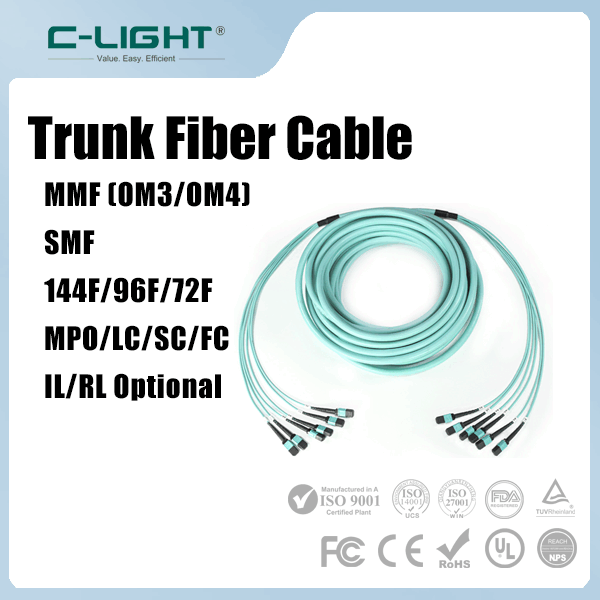
In high-density AI data centers, MPO/MTP trunk cables and fiber assemblies are commonly used to support multi-fiber connections. The cable construction should be selected according to pathway protection requirements, while the optical interface must match the transceiver design.
11. How to Choose Between Armored and Non-Armored Fiber
The most suitable cable is the one that meets the mechanical, environmental, optical, and regulatory requirements of the installation without introducing unnecessary cost or complexity.
| Installation Scenario | Typical Selection | Reason |
|---|---|---|
| Server-to-switch connections inside racks | Non-armored | Compact routing, flexibility, and easy maintenance |
| Indoor fiber distribution pathways | Non-armored or armored, depending on exposure | Selection depends on pathway protection requirements |
| Industrial production areas | Armored or specially reinforced cable | Additional mechanical protection may be required |
| Outdoor duct installation | Outdoor-rated armored or non-armored | Environmental and mechanical requirements determine the design |
| Direct-burial fiber routes | Direct-burial-rated construction | Requires appropriate moisture and mechanical protection |
| Exposed utility pathways | Armored where specified | Additional resistance to physical damage |
| High-density indoor optical distribution | Usually non-armored | Lower weight and easier cable management |
Before purchasing, request the cable datasheet and verify the actual armor material, fiber count, fiber type, jacket material, crush resistance, tensile strength, bending radius, temperature range, and installation rating.
12. Does Armored Fiber Affect Optical Transmission Performance?
Armor is primarily a mechanical protection feature. It does not inherently increase bandwidth, reduce optical attenuation, or improve the transmission distance of the fiber itself.
Both armored and non-armored cables can use the same optical fiber types, including OS2 single-mode fiber and OM-series multimode fiber. If their optical fiber specifications and connector quality are equivalent, their basic optical transmission characteristics can also be equivalent.
However, cable construction can indirectly affect optical performance. Excessive bending, crushing, pulling tension, or poor installation may cause additional attenuation or damage to the optical fibers.
For this reason, mechanical protection should be evaluated as part of the overall link design rather than treated as a substitute for optical performance specifications.
13. C-LIGHT Fiber Optic Connectivity Solutions
Reliable optical networks require more than suitable fiber cable construction. Transceivers, patch cords, connectors, adapters, and passive components must work together to meet the required optical performance and installation conditions.
C-LIGHT provides optical connectivity solutions for data centers, enterprise networks, telecommunications, and high-speed computing infrastructure. Relevant product categories include:
Fiber Optic Patch Cords: Single-mode and multimode fiber connections for equipment interconnection and optical distribution. View Fiber Optic Patch Cords.
MPO/MTP Fiber Solutions: Multi-fiber connectivity for high-density data center cabling and parallel optical transmission. View MPO/MTP Products.
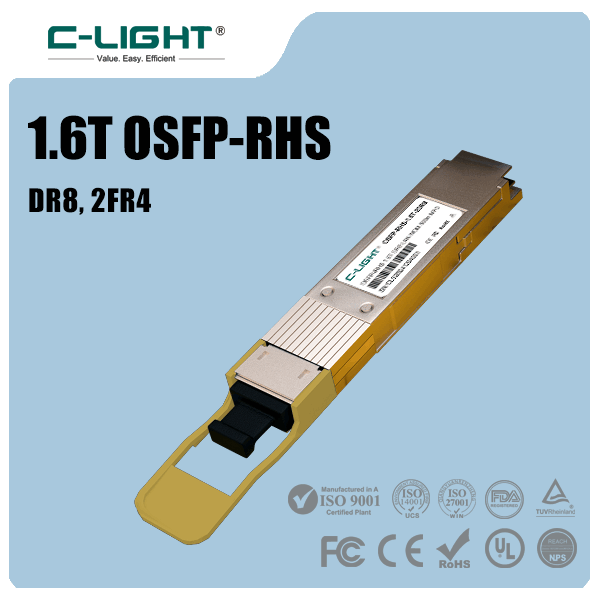
Optical Transceivers: Optical modules for 100G, 400G, 800G, and 1.6T network applications. View Optical Transceiver Products.
PLC Splitters: Passive optical splitting components for PON and fiber access networks. View PLC Splitter Products.
When planning an optical cabling system, customers should confirm the required fiber type, connector interface, cable construction, transmission distance, and installation environment. The correct combination of fiber assemblies and optical transceivers helps maintain stable connectivity across the complete network.
C-LIGHT can support optical connectivity requirements for data centers, enterprise networks, and telecommunications applications. Contact our team to discuss fiber interfaces, optical modules, and suitable connectivity solutions.
14. Conclusion
Armored and non-armored fiber optic cables serve different installation requirements. Armored fiber provides additional mechanical protection and is often suitable for exposed, industrial, or mechanically demanding pathways. Non-armored fiber is generally lighter, more flexible, and easier to install in protected indoor environments and high-density data center pathways.
The correct choice depends on mechanical exposure, moisture protection, fire requirements, cable routing, electrical considerations, and project specifications. Armor alone does not guarantee suitability for outdoor, underground, or industrial installation; the complete cable construction and relevant ratings must be verified.
By matching cable design to the actual deployment environment and selecting compatible optical components, network designers can build fiber infrastructure that is easier to maintain and more reliable over its intended service life.
 >

 >
 >
 >
 >
 >
 >
 >