TEL:+86 132 6656 7067


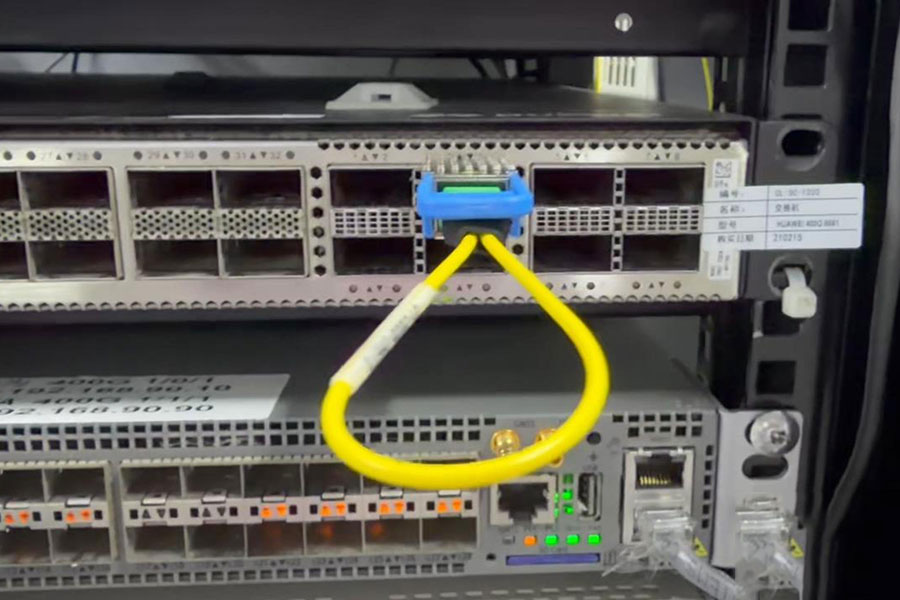
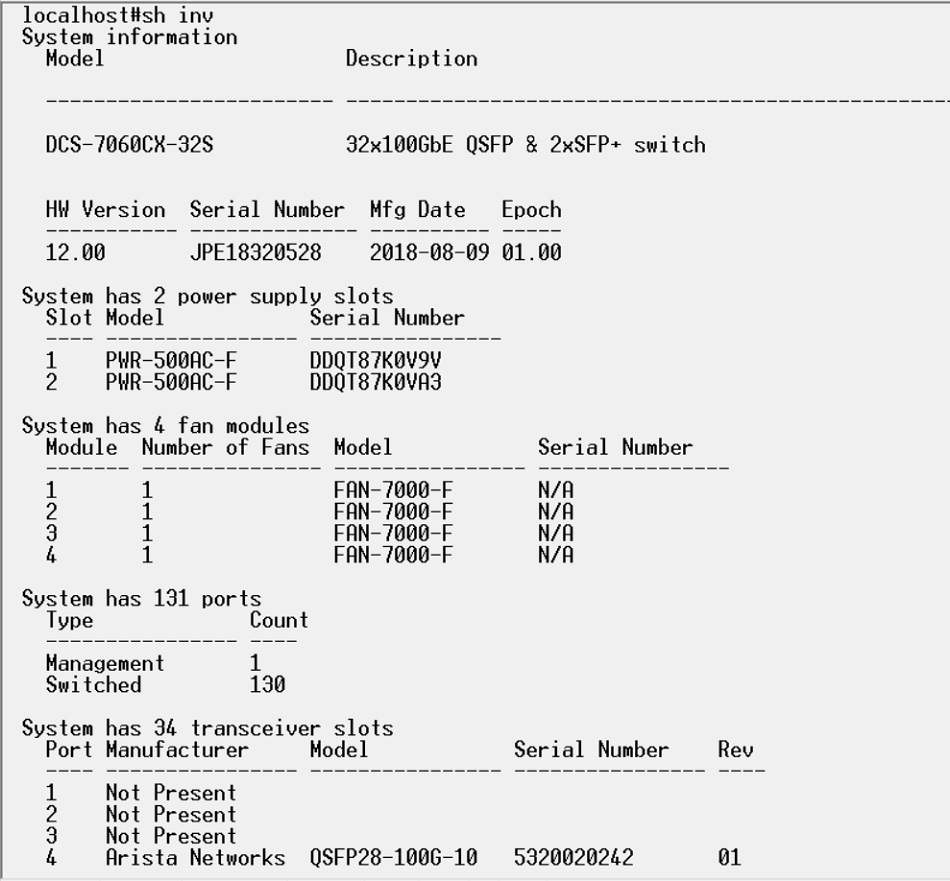
Model number of Testing Switch:arista 7060
Module’s Part number:QSFP28-100G-LR4 10 KM

Identification information of Module on the switch:
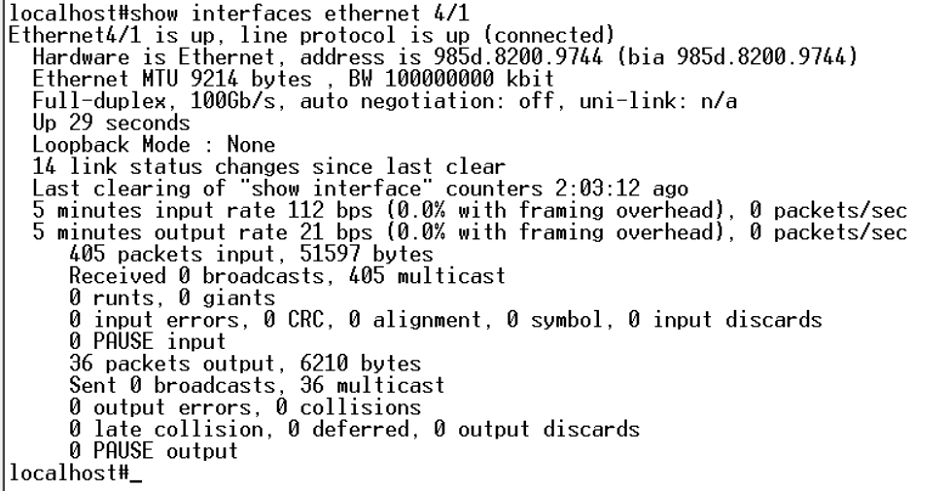
Interface's link information:
100G QSFP28 LR4 10km Optical Transceiver Testing FAQ
Q1: What is a 100G QSFP28 LR4 10km optical transceiver?
Answer: A 100G QSFP28 LR4 10km optical transceiver is a high-speed optical module designed for 100 Gigabit Ethernet communication over single-mode fiber.
The module uses:
QSFP28 form factor
100Gbps transmission rate
4 optical lanes
LAN-WDM technology
Up to 10km transmission distance
It is commonly used for:
Data Center Interconnect (DCI)
Enterprise backbone networks
Cloud infrastructure
Telecom access networks
The compact QSFP28 design provides high-density 100G connectivity while maintaining low power consumption and easy deployment.
Q2: Why is compatibility testing important for 100G optical transceivers?
Answer: Compatibility testing ensures that optical modules can operate correctly with different network equipment platforms.
During deployment, engineers need to verify:
Switch recognition
Module identification information
Link establishment
Transmission stability
Network performance
Multi-vendor compatibility is especially important because enterprise and data center networks often combine equipment from different manufacturers.
Testing helps customers reduce deployment risks and ensure reliable network operation.
Q3: Why was the 100G LR4 transceiver tested on the Arista 7060 switch?
Answer: The Arista 7060 series is a high-performance data center switch platform supporting high-speed Ethernet connectivity, including 100G interfaces.
Testing the C-LIGHT 100G QSFP28 LR4 module on an Arista 7060 switch verifies:
Hardware compatibility
Correct module recognition
Stable 100G link operation
Practical deployment reliability
Successful testing provides customers with confidence when integrating third-party optical modules into existing network environments.
Q4: How does a 100G QSFP28 LR4 optical module achieve 10km transmission?
Answer: A 100G QSFP28 LR4 module achieves 10km transmission through multiple advanced optical technologies.
The main technologies include:
Four-channel optical transmission
LAN-WDM wavelength multiplexing
Single-mode fiber communication
High-performance optical components
The four optical channels combine to provide a total 100Gbps data rate while maintaining reliable transmission over longer fiber distances.
This makes LR4 an ideal solution between short-range data center connections and long-distance optical links.
Q5: What tests are performed during 100G LR4 optical module validation?
Answer: A professional optical module validation process includes several important tests.
Module Identification Testing
Device recognition
EEPROM information verification
Vendor compatibility
Link Testing
100G link establishment
Data transmission stability
Interface status verification
Performance Testing
Optical power measurement
Signal quality evaluation
Long-term operating stability
These tests ensure the optical module meets practical deployment requirements before large-scale network installation.
Q6: What are the applications of 100G QSFP28 LR4 10km optical transceivers?
Answer: 100G QSFP28 LR4 modules are widely used in networks requiring reliable 10km optical connectivity.
Typical applications include:
Data Center Networks
Leaf-spine connections
Data center interconnects
High-speed uplinks
Enterprise Networks
Campus backbone
Core switching networks
Telecom Networks
Metro connectivity
Fiber access infrastructure
The 10km transmission capability provides a flexible solution for medium-distance 100G networking.
Q7: What is the difference between 100G LR4 and 100G ER4 optical transceivers?
Answer: The main difference between LR4 and ER4 is the supported transmission distance.
| Feature | 100G QSFP28 LR4 | 100G QSFP28 ER4 |
| Transmission Distance | Up to 10km | Up to 40km |
| Fiber Type | Single-mode Fiber | Single-mode Fiber |
| Application | Data center & metro links | Long-distance DCI |
| Network Position | Medium reach | Extended reach |
LR4 is commonly used for standard 10km optical connections, while ER4 is designed for longer-distance applications requiring higher optical budgets.
Q8: Why are 100G QSFP28 LR4 modules still important in modern networks?
Answer: Although 400G and 800G technologies are expanding rapidly, 100G QSFP28 LR4 remains an important optical connectivity solution.
Reasons include:
Large installed 100G network base
Cost-effective upgrades
Wide equipment compatibility
Reliable 10km transmission capability
100G LR4 continues supporting:
Enterprise networks
Cloud infrastructure
Data center interconnect
Telecom communication systems
It also provides a practical migration path toward future higher-speed networks.
 >
>

 >
>
 >
>
 >
>
 >
>
 >
>
 >
>
 >
>