TEL:+86 132 6656 7067



The optical transceiver market is undergoing a period of unprecedented growth, driven by the explosive expansion of artificial intelligence (AI) infrastructure, hyperscale data center deployments, and next-generation telecommunications networks. As the fundamental building block that converts electrical signals into optical signals for transmission over fiber optic cables, optical transceivers have become indispensable components in modern digital communications. This article examines the current state of the high-speed optical transceiver market, key growth drivers, emerging technologies, and competitive landscape, with particular attention to the role of C-LIGHT in this rapidly evolving industry.
1. Market Size and Growth Trajectory
The global optical transceiver market has demonstrated remarkable growth in recent years. According to Research and Markets, the market grew from $12.75 billion in 2025 to $14.85 billion in 2026, representing a compound annual growth rate (CAGR) of 16.4%, with projections indicating further expansion to $27.6 billion by 2030 at a CAGR of 16.8%. Global Market Insights valued the market at $13.4 billion in 2025, estimating it will reach $48.1 billion by 2035 at a CAGR of 13.5%. Other industry estimates place the 2026 global optical module market at approximately $16.7 billion, with year-over-year growth of 29%.
The high-speed segment—defined as 100G and above—represents the most dynamic portion of the market. According to TrendForce, the global shipment share of 800G and above optical transceiver modules will climb from 19.5% in 2024 to over 60% by 2026, positioning these modules as standard components in AI-focused data centers. By 2028, shipments of 800G-plus optical modules are expected to reach 94 million units, growing at a CAGR of approximately 34% from 2026 through 2028.
2. Key Growth Drivers
2.1 AI Infrastructure Expansion
The most significant driver of the high-speed optical transceiver market is the rapid buildout of AI computing infrastructure. Foreign investment firms have revised their total addressable market (TAM) forecasts for optical transceivers upward by 43% for 2026 and 46% for 2027, driven by increasing AI server shipments. The demand density for optical transceivers during AI inference phases can reach three to five times that of training phases, making inference a core engine of industry growth.
For 800G optical modules, 2026 demand is projected to exceed 40 million units, significantly exceeding earlier expectations. Major cloud providers are leading this demand: Meta’s requirements have been revised upward to at least 10 million units (and potentially 12 million), Google and Microsoft together require approximately 12 million units, and Amazon requires about 5.5 million units. Chinese cloud providers ByteDance, Alibaba, and Tencent are also emerging as significant buyers, with combined demand reaching several million units.
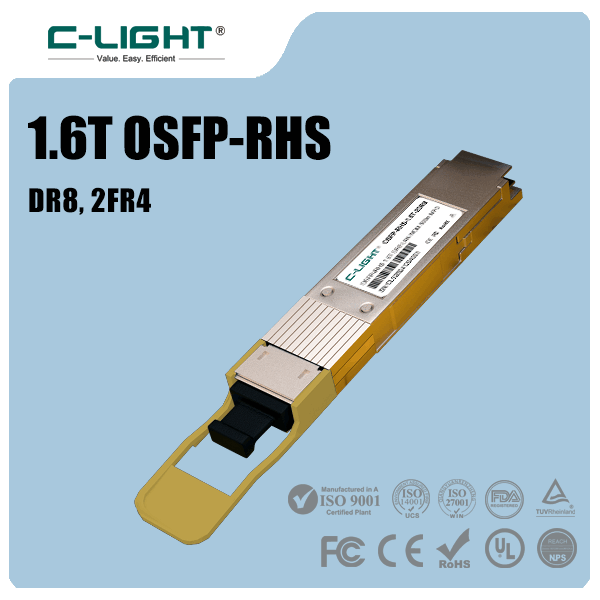
For 1.6T optical modules, 2026 marks the first year of commercial deployment. Demand is estimated between 8.6 million and 20 million units, with NVIDIA serving as the most aggressive driver—its 1.6T module demand alone accounts for over 80% of the global market share. In an AI server rack, a single GB200 server requires 162 1.6T optical modules to ensure data transmission efficiency.
2.2 Hyperscale Data Center Upgrades
Hyperscale data centers operated by cloud service providers are undergoing continuous upgrades from 400G to 800G and 1.6T connectivity. These upgrades are essential to support the exponentially growing bandwidth demands of cloud-native applications, content delivery platforms, and distributed computing environments. North America, with its concentration of cloud providers, accounted for 28.3% of the optical transceiver market in 2025, supported by large-scale hyperscale data center expansions and rapid AI infrastructure adoption.
2.3 Telecom Infrastructure Investment
Continued upgrades to telecom infrastructure, including 5G network deployment, metro network expansions, and submarine cable capacity enhancements, are driving demand for optical transceivers across various speed grades. The 10 to<100 gbps="" segment="" remains="" a="" significant="" market="" component="">
3. Market Structure and Competitive Landscape
3.1 Global Market Segmentation
The optical transceiver market exhibits a clear structure: lower-speed products (10–100 Gbps) serve as the market foundation, accounting for 37.6% of the market, while 400G and above high-speed products, though only 18.1% of the market by volume, represent the most valuable growth engine. The SFP family—encompassing SFP+, SFP28, and SFP56 modules—held a 35.7% share in 2025, benefiting from backward compatibility, affordability, and suitability for 1G to 25G applications.
Geographically, North America leads with 37.9% market share, driven by cloud giants such as Amazon, Google, and Microsoft. The Asia-Pacific region follows with 25.5%, representing the fastest-growing regional market, fueled by hyperscale data center deployments of 800G and 1.6G optical modules. Europe holds a 26.0% share, supported by mature telecom infrastructure and industrial applications.
3.2 Competitive Landscape
Chinese manufacturers have established a dominant position in the global optical module market, collectively accounting for approximately 70% of global supply. In the 800G optical module market, several players stand out:
InnoLight Technology (China): The global leader in 800G optical module shipments, with an estimated 35% market share in 2026. The company has deep partnerships with NVIDIA, Google, and other North American cloud providers, and its 800G silicon photonics modules have achieved yield rates exceeding 92% with power consumption below 14W per module.
Eoptolink Technology (China): A top-tier high-speed optical module manufacturer ranking among the global top five, with comprehensive product coverage from 100-meter short-reach SR8 to 80-kilometer long-reach ZR+ applications.
Coherent Corp. (USA): The second-largest global supplier and leader in the telecom market, particularly dominant in 400ZR/800ZR long-reach modules supporting 80km single-mode fiber transmission.
Eoptolink (China): The third-largest global supplier, known for cost-performance balance, with 800G LPO modules achieving 45% gross margins.
Other key players: Accelink Technologies, Hisense Broadband, Huawei Hisilicon, Lumentum Holdings, Broadcom, and Intel also maintain significant positions across various market segments.
4. Technology Trends
4.1 Silicon Photonics (SiPh)
Silicon photonics has emerged as the mainstream technology for high-speed optical modules, offering the advantages of lower power consumption and reduced costs. Silicon photonics technology integrates optical components onto silicon wafers using conventional semiconductor manufacturing processes, significantly reducing cost and power consumption. Huawei has released the world‘s first single-wavelength 1.6Tbps silicon photonics module, achieving 70% volume reduction and 40% power reduction using third-generation silicon photonics integration technology.
Silicon photonics currently accounts for 50–70% of the 800G/1.6T market, with InnoLight’s 800G silicon photonics modules achieving approximately 50% market share. The company‘s self-developed silicon photonics chips have reached 95% yield, reducing costs by 30% compared with traditional approaches. By 2030, the market share of optical transceivers incorporating integrated silicon photonic modulators is expected to grow from 43% in 2025 to 76%.
4.2 Linear Direct Optics (LPO)
Linear Direct Optics technology removes the DSP chip from the optical module, achieving dual optimization of power consumption and performance. Eoptolink’s 800G LPO modules achieve a 50% reduction in power consumption and have secured orders from major customers including Meta and Amazon, making them well-suited for AI data center requirements. LPO module revenue is expected to account for approximately 15% of the optical module market, becoming a significant growth segment.
4.3 Co-Packaged Optics (CPO)
Co-Packaged Optics represents the next frontier in optical interconnect technology. CPO integrates the optical engine directly with the switching ASIC in a single package, reducing the electrical signal transmission path from 15–30 centimeters to less than 1 centimeter, thereby reducing 800G optical module power consumption by over 85%.
The CPO market is expected to become a rapidly growing segment, with market value contributions projected to exceed $9 billion by 2030. However, large-scale CPO deployment is not expected until after 2027, as challenges remain in fiber-to-photonic IC alignment accuracy, thermal management, and reliability design.
4.4 DWDM Coherent Technology
Coherent optical transceivers utilizing dense wavelength division multiplexing (DWDM) technology have become essential for long-haul and metro transport applications. The trend toward disaggregated coherent optics, catalyzed by 400ZR pluggable standardization, is expected to continue through 2030, promoting vendor diversification and flexible network architectures.
5. C-LIGHT: A Comprehensive High-Speed Optical Transceiver Provider
Amid this dynamic market environment, C-LIGHT (Shenzhen C-Light Network Communication Co., Ltd.), founded in 2011 with 15 years of experience in fiber optic network products, has established itself as a comprehensive provider of high-speed optical transceivers and related connectivity solutions. The company’s products address a broad range of applications, including AI computing power infrastructure, data center networks, telecommunications FTTx broadband access, DWDM/CWDM wavelength division networks, 5G/6G mobile networks, and enterprise networks.
5.1 800G Product Portfolio
C-LIGHT offers an 800G QSFP-DD optical transceiver supporting transmission rates up to 800Gb/s over distances of 100m, 500m, and 2km, suitable for data center networks, cloud computing, AI, and 5G communications. The company also provides an 800G OSFP SR8 InfiniBand optical transceiver designed specifically for AI clusters and supercomputing centers, achieving 800Gbps transmission based on OSFP packaging and the InfiniBand NDR protocol. Complementing these offerings are 800G DAC cables for ultra-high-speed short-reach connectivity.
5.2 400G Solutions
C-LIGHT’s 400G QSFP-DD FR4 optical transceiver is a hot-pluggable coherent module designed for 400GbE applications over 2km single-mode fiber. The company also provides a 400G ZR QSFP-DD Coherent 120km transceiver, a pivotal component driving high-speed, long-distance optical networks. These modules are particularly relevant for data center interconnect (DCI) applications.
5.3 DWDM Coherent Transceivers
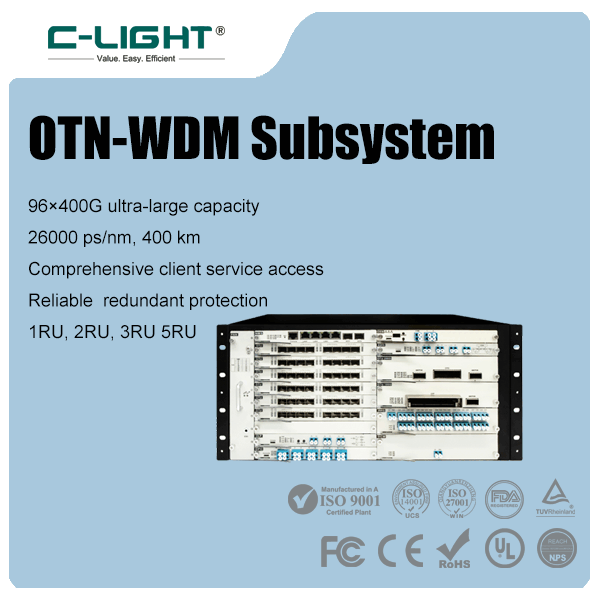
C-LIGHT provides a full portfolio of DWDM DCO Coherent Transceiver products, covering rates from 800G DCO, 400G DCO, 200G DCO, and 100G DCO. This integrated wavelength division solution combines high-capacity transmission with intelligent control, enabling dynamic software-based adjustment of optical signals and allowing multiple high-speed channels to be transmitted simultaneously over a single fiber for ultra-long-haul, large-bandwidth data transport. Transmission distances range from 120km to 2000km, with wavelengths operating in the C-BAND DWDM tunable range.
5.4 100G and Below Offerings
Beyond ultra-high-speed products, C-LIGHT maintains a comprehensive portfolio spanning 100G QSFP28 LR4 LAN WDM 10km optical transceivers, 100G ZR4 80km solutions, 25G BiDi SFP28 transceivers, 10G SFP+ modules, and 1G SFP products. The 25G BiDi SFP28 10km transceiver, for example, employs single-fiber bidirectional (BiDi) technology that can effectively save 50% of fiber resources, reducing network deployment costs while supporting data rates from 24.3G to 26.5 Gb/s.
5.5 Complementary Products
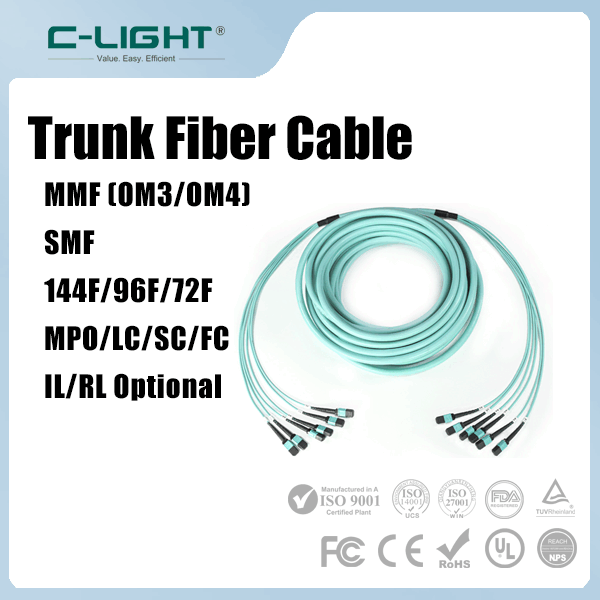
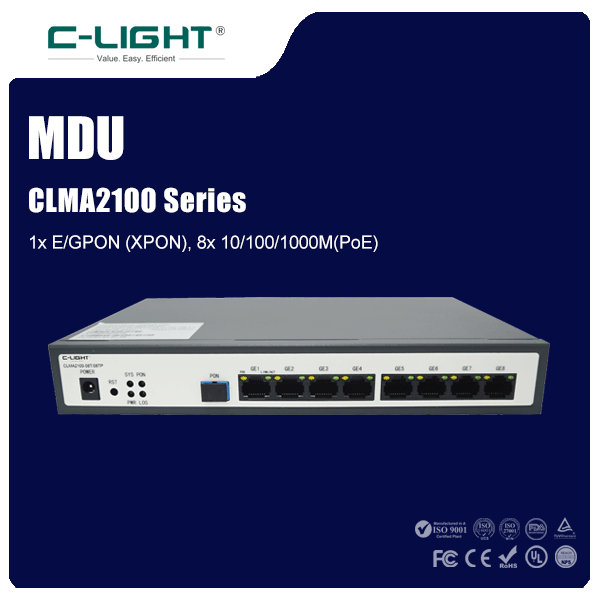
C-LIGHT also offers active optical cables (AOC), direct attach cables (DAC), optical communication jumpers, connectors, and industrial-grade switches and media converters. The company’s industrial PoE products operate reliably from -40°C to 75°C, addressing harsh environment applications.
5.6 Quality and Supply Chain Advantages
With over 15 years of manufacturing experience, C-LIGHT maintains rigorous quality control processes, including 100% product testing, three-step quality control management, and comprehensive MES monitoring. The company’s mainstream products maintain permanent rolling inventory, enabling 90% of products to be shipped within 2 to 3 days. All modules come with a three-year warranty and long-term technical support.
6. Outlook and Challenges
Looking ahead, the global optical transceiver market is poised for sustained growth. By 2028, the market is expected to exceed $21 billion, with average annual growth rates remaining above 13%. The transition from 800G to 1.6T and eventually to 3.2T will continue to drive product innovation and market expansion.
However, several challenges remain. Supply chain constraints affecting upstream components, including electro-absorption modulated lasers (EML) and continuous-wave (CW) lasers, continue to impact delivery schedules. The ongoing technology transition from pluggable modules to near-packaged optics (NPO) and co-packaged optics (CPO) introduces uncertainty regarding actual shipment performance. Additionally, the technology conversion pace will significantly influence manufacturers’ actual shipment volumes.
As TrendForce concludes, data traffic between racks and across clusters will continue to rise as compute density scales. Consequently, advances in—and supply of—high-speed optical modules, lasers, and other optical components will become a decisive factor, alongside GPUs and memory, in determining the pace and cost of future compute expansion.
Conclusion
The high-speed optical transceiver market is experiencing a transformative period driven by AI infrastructure expansion, hyperscale data center upgrades, and telecom network investments. The market’s trajectory from 800G to 1.6T and beyond represents not merely a technical evolution but a fundamental enabler of the AI-driven digital economy. With Chinese manufacturers accounting for approximately 70% of global supply and major players competing across silicon photonics, LPO, and CPO technologies, the competitive landscape remains dynamic. Companies like C-LIGHT, with their comprehensive product portfolios spanning from 10G to 800G, DWDM coherent solutions, and complementary connectivity products, are well-positioned to address the diverse requirements of this rapidly expanding market. As bandwidth demands continue their relentless growth, high-speed optical transceivers will remain essential components powering the world’s digital infrastructure.
 >
>

 >
>
 >
>
 >
>
 >
>
 >
>
 >
>
 >
>