TEL:+86 132 6656 7067


In the realm of 10G interconnectivity within data centers and enterprise networks, network engineers face a classic cost conundrum: Should one use OEM DAC copper cables or third-party compatible solutions? Should one use DAC direct-attach or a combination of optical transceivers and fiber patch cords?
This article focuses on the C-LIGHT 10G SFP+ DAC high-speed copper cable, compatible with the Aruba J9281D, and provides an in-depth analysis from a procurement cost perspective. It not only answers the question "How much does it cost?" but also delves into "Where and how much can you save?"
I. What is J9281D?
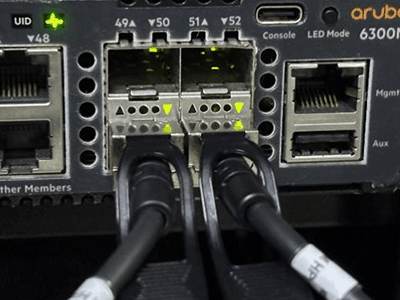
The J9281D is the official 10G SFP+ to SFP+ Direct Attach Copper (DAC) cable from HPE Aruba Networking. It is 1 meter in length, utilizes a passive twin-axial copper structure, and supports data rates ranging from 1.25 to 10.31 Gbps, making it suitable for 10G Ethernet and Gigabit Ethernet connections. It is widely used for short-distance interconnects between Aruba switches, servers, and storage devices, serving as a standard configuration for high-speed links within the same rack.
The J9281D features extremely low power consumption (< 0.15w), minimal latency, and plug-and-play functionality.
II. Cost Breakdown: OEM vs. Compatible – How Big is the Price Difference?
2.1 Market Price of OEM J9281D
According to public pricing from Australian IT distributor IP Trading, the HPE Aruba OEM J9281D 1m DAC copper cable is priced at 134.61 AUD (approximately 94 USD). On the US eBay platform, new J9281D products are listed for around 141.49 USD. Even accounting for price fluctuations across different channels and regions, the unit price for OEM J9281D typically falls within the 88-150 USD range.
2.2 The Price Advantage of Compatible Solutions
Third-party compatible DACs are significantly more budget-friendly. For instance, the Aruba-compatible SFP+ DAC offered by Blue Cable Co is priced at just 35.75 AUD (approximately 25 USD), which is only about 26.6% of the OEM J9281D price of 134.61 AUD—a savings of over 73%.
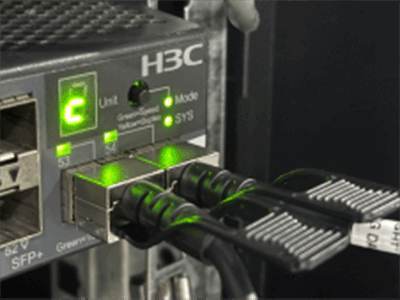
C-LIGHT offers HP Aruba-compatible DACs (equivalent to J9281B/C/D), available in various lengths from 1 to 7 meters, at prices far below the OEM cost. Brands like OPTCORE also market HPE Aruba J9281D-compatible DACs, emphasizing "identical functionality at a more affordable price."
Overall, third-party compatible DAC copper cables typically deliver procurement cost savings of 40% to 80% compared to OEM products.
 |  |
2.3 The "Brand Tax": Where Does the Price Difference Originate?
The high cost of OEM products stems largely from the "brand premium"—often referred to within the industry as the "brand tax." OEM modules undergo exclusive certification and testing by the equipment vendor and come with comprehensive official technical support and warranty. However, this also means users are locked into a single-vendor ecosystem, incurring procurement costs that can be several times or even nearly ten times higher.
Compatible modules ensure interoperability with OEM equipment through reverse engineering and rigorous third-party testing. They match OEM performance specifications while bypassing the original vendor's pricing structure, thereby entering the market at a much more competitive price point. For budget-sensitive procurement projects, this cost differential can significantly influence the overall financial structure.
III. Scenario Comparison: DAC vs. Optical Transceivers – What is the Deployment Cost Difference?
Evaluating the cost of a DAC cable in isolation is incomplete; a true cost comparison requires a full link analysis against the "transceiver + fiber patch cord" alternative.
3.1 Cost Composition of the Optical Transceiver Solution
Consider the short-range multimode SR transceiver type J9150D. OEM units cost approximately 100-400 USD each, while compatible modules range from 20-55 USD each. Fiber patch cords cost around 10 USD or more per cable. Establishing a single 10G link requires two optical transceivers (one at each end) and one fiber patch cord. The total cost comparison is summarized below. (Costs would be even higher if using single-mode long-reach transceivers).
| Solution | Components per Link | Cost per Link | Cost Comparison |
| OEM J9150D Solution | 2 Modules + 1 Patch Cord | 2 x 100 + 10 = 210 USD | 75% more than Compatible |
| Compatible J9150D Solution | 2 Modules + 1 Patch Cord | 2 x 20 + 10 = 50 USD | 75% less than OEM |
| OEM J9281D Solution | 1 J9281D Cable | 100 USD | 75% more than Compatible |
| Compatible J9281D Solution | 1 Compatible J9281D Cable | 25 USD | 75% less than OEM |
3.2 The "One-Cable Solution" of DAC
DAC copper cables come with SFP+ connectors integrated at both ends, enabling true plug-and-play without the need for separate transceivers or fiber patch cords. Using the compatible solution priced at approximately 25 USD per cable, the procurement cost per link is roughly one-quarter that of the optical transceiver solution.
3.3 Cost Differential in Large-Scale Deployments
Consider a medium-sized data center deploying 200 short-range 10G links:
- OEM J9150D Transceiver Solution: 200 links × 210 USD/link = 42,000 USD
- OEM J9281D DAC Solution: 200 links × 100 USD/link = 20,000 USD
- Compatible DAC Solution: 200 links × 25 USD/link = 5,000 USD
The compatible DAC solution saves approximately 37,000 USD (88%) compared to the OEM transceiver solution and 15,000 USD (73%) compared to the OEM DAC solution. As deployment scales to thousands of links, the cost disparity becomes highly significant.
IV. Hidden Costs: Where Are the Savings Beyond Procurement?
4.1 Energy Consumption Costs
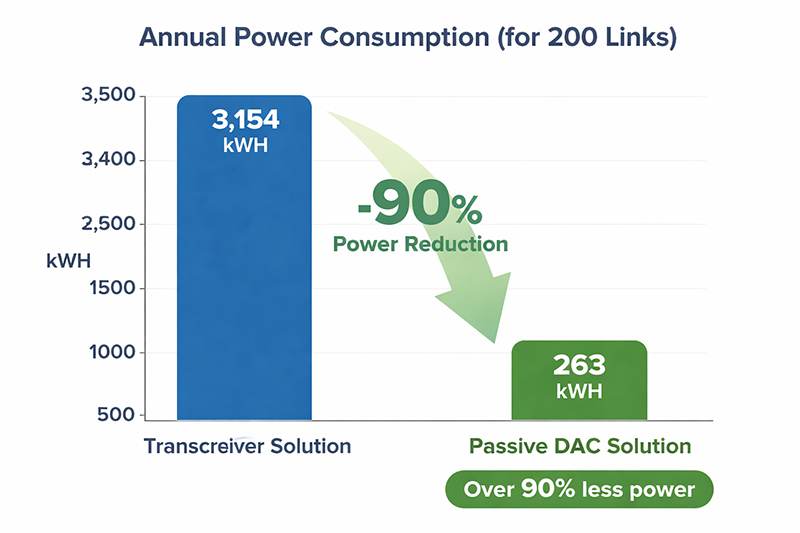
DAC copper cables, especially passive ones, consume virtually no power. A 10G SFP+ passive DAC consumes less than 0.15W. In contrast, optical transceivers require power for electro-optical conversion, typically consuming 0.9W or more. Calculating annual power usage for 200 links operating 24/7:
- Transceiver Solution Annual Power: 200 links × 2 units × 0.9W × 8760 hours ≈ 3,154 kWh
- Passive DAC Solution Annual Power: 200 links × 0.15W × 8760 hours ≈ 263 kWh (Using 90% less power)
On energy consumption alone, the DAC solution can reduce electricity costs by over 90% annually. For large data centers, this represents a substantial financial advantage.
4.2 Deployment and Maintenance Costs
DAC copper cables are plug-and-play, eliminating the need for fiber splicing, optical power meters, and managing an inventory of optical modules. Operations teams require no additional procurement or maintenance of fiber testing equipment, drastically reducing cabling time and labor costs. Real-world deployment cases indicate that DAC solutions can be deployed up to three times faster than fiber-based alternatives.
4.3 Failure Replacement Costs
DAC cables feature an integrated design; while damage at one end necessitates replacing the entire cable, their mechanical reliability under normal operating conditions (without frequent bending) is sufficient to support years of stable operation in data centers. Feedback from users in financial cloud data centers indicates that C-LIGHT DAC cables have operated continuously for three years "without a single failure, replacement, or service call." In contrast, fiber-based solutions involve more complex maintenance procedures—a broken fiber requires professional splicing or full patch cord replacement.
V. Procurement Recommendations and Risk Reminders
5.1 Choosing a Compatible Solution
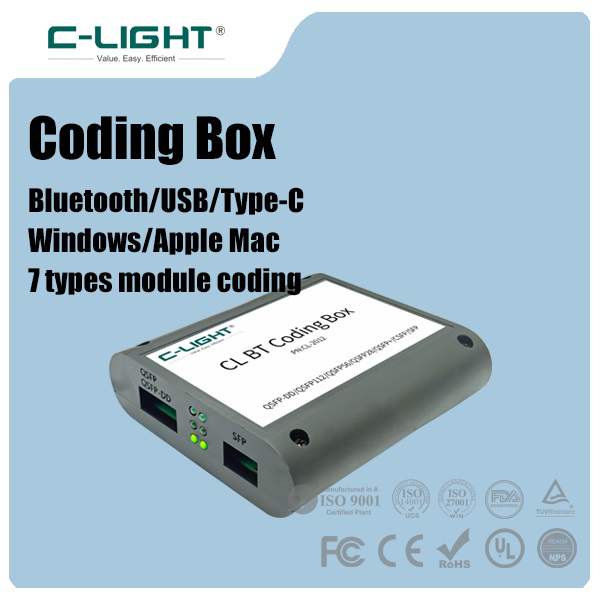
C-LIGHT, as a reputable source manufacturer, provides customers with the following assurances:
- Lifetime warranty and compatibility guarantee.
- Provision of compatibility test reports: 100% confirmation that compatible products have passed testing on listed Aruba equipment models.
- No Minimum Order Quantity (MOQ), with support for small-batch sample purchases to validate compatibility and stability in real-world environments.
5.2 Applicability Assessment
DAC copper cables are most suitable for short-distance connections (≤7 meters) within the same rack or between adjacent racks. For distances exceeding 7 meters, it is advisable to consider Active Optical Cables (AOC, 7-100 meters) or optical transceiver solutions (100+ meters). Brands like C-LIGHT offer various length specifications (1m, 2m, 3m, 5m, etc.) for precise selection based on actual rack spacing requirements.
VI. Conclusion: Maximizing Value for Every Dollar Spent
From a procurement cost perspective, the C-LIGHT 10G SFP+ DAC high-speed copper cable compatible with Aruba J9281D is unequivocally the most cost-effective choice for short-distance 10G interconnects. Compared to OEM J9281D, the compatible solution saves over 75% in procurement costs. Compared to an optical transceiver plus fiber patch cord setup, the per-link cost can be reduced by roughly two-thirds, while simultaneously offering hidden cost advantages such as lower power consumption, faster deployment, and simplified maintenance.
For IT procurement decision-makers, rather than paying a hefty "brand tax," it is far more prudent to allocate the saved budget to areas of greater value. Ultimately, the metric that matters in the data center is not the brand label, but the Total Cost of Ownership (TCO) and operational efficiency.
 >
>

 >
>
 >
>
 >
>
 >
>
 >
>
 >
>
 >
>