TEL:+86 132 6656 7067



I. Market Overview: Optical Component Market Hits Record High
In 2025, the global optical communications industry stood at a historic inflection point. Over the past two decades, the industry grew steadily driven by the “twin engines” of telecom networks and data centers. Today, AI computing power has become the most decisive growth driver. According to the latest “Global Optical Communications Market Status Analysis and Forecast (2026)” report from ICC Industry Research Institute, the global optical component market reached $26.25 billion in 2025, a year-on-year increase of 50%, setting a new record. The core driver of this growth is the surge in capital expenditures by cloud service providers — the combined capex of ten major global cloud vendors reached $466 billion in 2025, up 64% year-on-year, with the vast majority directed toward AI infrastructure. By 2030, the global optical component market is expected to grow to $56 billion, representing a compound annual growth rate (CAGR) of approximately 16.4%.
From a broader statistical perspective, the global optical module market is also maintaining rapid growth. According to a report by 360iResearch, the global optical module market was valued at $26.53 billion in 2025 and is projected to reach $30.01 billion in 2026, with a CAGR of about 14.13%, reaching $66.94 billion by 2032. LightCounting’s latest forecast, released in March 2026, is even more optimistic, predicting that the global optical module market will maintain a high growth rate of about 60% in 2026 and approach nearly $60 billion by 2031, corresponding to a CAGR of over 20% from 2025 to 2031.
II. Market Drivers: AI Computing Reshapes Demand Logic
The urgent demand for high-speed interconnect in AI large model training and inference is accelerating the transition of optical module speeds from 800G to 1.6T. 800G optical modules began deployment in 2023, ramping up to approximately 7.5 million units in 2024, and demand is expected to reach 18 million units in 2025. According to the latest report from market research firm Cignal AI, driven by AI-powered data center and transport network construction, revenue from the data center optical module market is expected to exceed $18 billion in 2025, while coherent optical module revenue will reach nearly $6 billion.
In the third quarter of 2025, shipments of 400G and higher-speed data center optical modules exceeded 10 million units for the first time, generating over $5 billion in revenue. In that quarter, shipment expectations for 800G modules were revised upward to exceed 20 million units, with manufacturers generally reporting no signs of slowing demand. 1.6T optical modules began deployment in 2025 with about 2.7 million units, and 2026 will see rapid volume growth, with shipments expected to exceed 5 million units. LightCounting predicts that the global data center optical module market could reach $22.8 billion in 2026, of which high-speed modules (800G and 1.6T) together could reach approximately $14.6 billion.
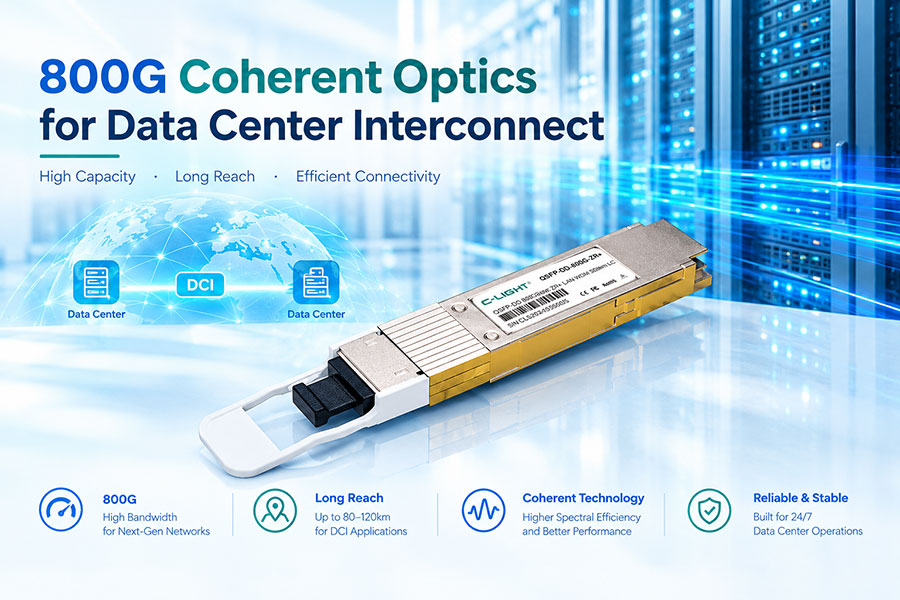
In the telecom sector, pluggable coherent optical modules and 1.2T+ products are driving a new multi‑year wave of bandwidth expansion. Telecom coherent bandwidth grew over 40% in 2025 and will accelerate further in 2026, supported by large‑scale deployment of 400ZR, 800ZR, and 1.2T+ modules to power AI‑driven metro and long‑haul network construction. By 2026, pluggable coherent optical modules are expected to carry over 60% of telecom bandwidth.
III. Technology Evolution: Silicon Photonics, LPO, and CPO in Parallel
Currently, optical module technology is rapidly evolving toward higher speed, higher integration, and lower power consumption. Three technology paths are particularly noteworthy:
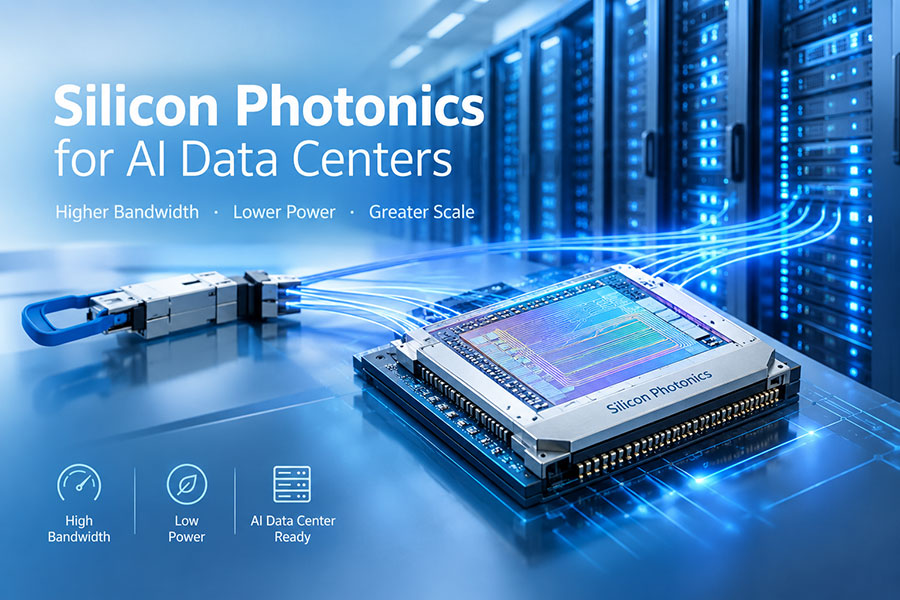
Silicon photonics has grown from an alternative to a dominant choice. In 800G optical modules, silicon photonics accounts for nearly 50% of the market, and its share is expected to continue rising in both 800G and 1.6T products. Leveraging low power consumption and low cost, silicon photonics has become a core direction for high‑speed optical modules.
LPO technology removes the digital signal processor (DSP) from pluggable optical modules, significantly reducing module power consumption. Data shows that compared with traditional DSP‑based solutions, the power consumption of an 800G DR8 LPO module can be reduced by 50%, and end‑to‑end latency drops from 100ns (typical of DSP‑based solutions) to under 10ns, perfectly meeting the real‑time requirements of AI training.
CPO technology is regarded by the industry as the “ultimate solution.” Its core concept is to package the optical engine together with the switching chip, greatly shortening the electrical signal transmission distance, thereby reducing power consumption and increasing bandwidth density. 2026 is seen as the watershed year for CPO to move from concept to mass production. TSMC’s integrated silicon photonics platform COUPE is expected to enter mass production in 2026, and NVIDIA’s Rubin architecture has also clearly adopted the CPO technology path.
In addition, other cutting‑edge technologies such as optical circuit switching (OCS) and coherent optics are also maturing rapidly. Optical communications are evolving from traditional transmission pipes to a key infrastructure for the intelligent economy. Over the next 3‑5 years, manufacturers with core chip capabilities and leadership in next‑generation technologies will continue to hold the competitive high ground.
IV. Competitive Landscape: Chinese Manufacturers Lead Globally
In the optical module segment, Chinese manufacturers have taken a dominant position globally. According to LightCounting’s 2024 ranking of the world’s top 10 optical module vendors, Innolight has led for several consecutive years, Eoptolink jumped to third, Huawei remained firmly in fourth, and Accelink, Hisense Broadband, Huagong Zhengyuan, and Source Photonics ranked sixth, seventh, eighth, and tenth, respectively. In 2025, the global share of Chinese本土 manufacturers rose from 55.6% to 63.2%.
The current market landscape shows a clear “duopoly” trend, with Innolight and Eoptolink capturing the most critical market share. Innolight achieved operating revenue of RMB 38.24 billion in 2025, a year‑on‑year increase of 60.25%, with net profit attributable to shareholders of RMB 10.797 billion, up 108.78% year‑on‑year. In the first quarter of 2026, Innolight’s performance continued its explosive growth, with revenue of RMB 19.496 billion, a year‑on‑year increase of 192.12%.
Tight supply of upstream high‑speed optical chips is becoming a significant constraint on industry growth. EML chip shortages are expected to persist through 2026‑2027, making supply chain management a core competitive capability. Leading companies are further consolidating their market positions through scaled delivery, technological innovation, and supply chain integration.
V. C-LIGHT Brand: Focusing on High‑Speed Optical Modules, Preparing for Next‑Generation Technologies
In this fast‑growing market, Shenzhen C-LIGHT Network Communication Co., Ltd. (C-LIGHT) is steadily advancing with solid technical expertise and a rich product portfolio. Founded in 2011, C-LIGHT has 15 years of experience in manufacturing high‑end optical transmission products. The company is located in the Nanshan District of Shenzhen, with a factory area of 1,700 square meters and an R&D engineering team of over 50 people, with core team members coming from top international communication companies.
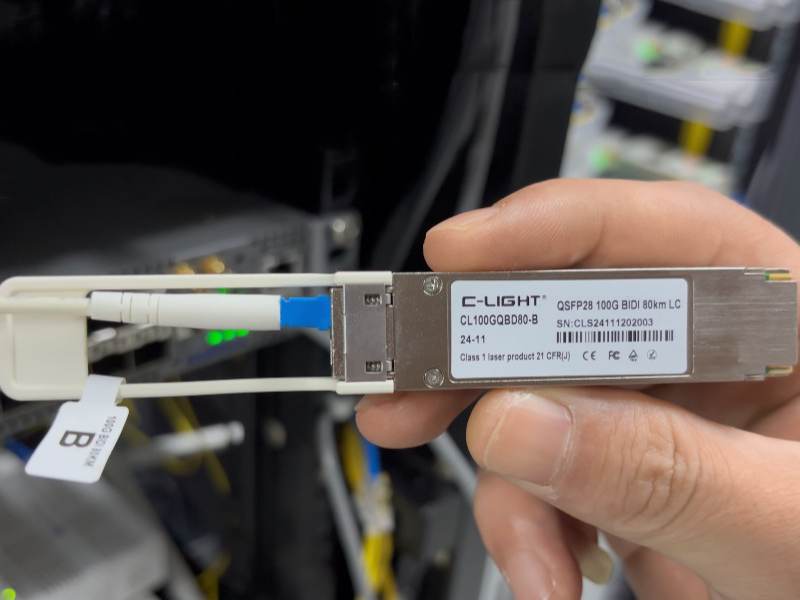
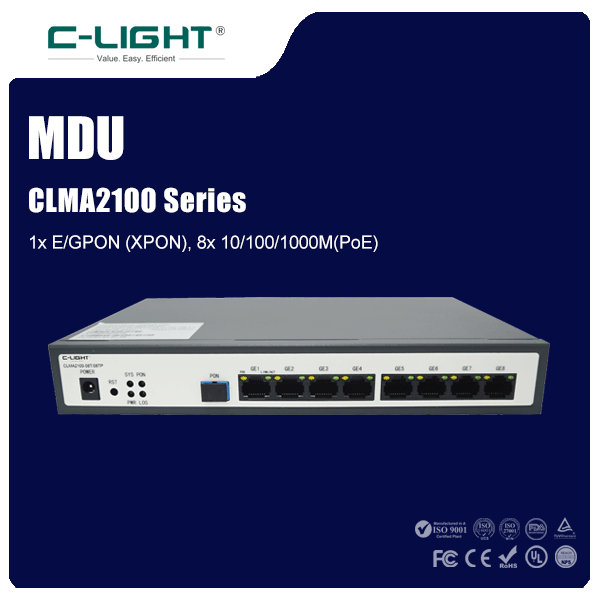
In terms of product portfolio, C-LIGHT has developed and produced over 1,000 optical module solutions, covering eight major categories including 800G, 400G, 200G, 100G, 50G, 25G, and 10G. Main product types include high‑speed optical modules such as 800G, 2x400G, 400G, and 4x100G, as well as interconnect cables such as AOC (Active Optical Cables), ACC, and DAC. The company also offers DWDM/CWDM active and passive products, fiber jumpers, connectors, and other supporting products. C-LIGHT’s products are widely used in AI computing, data center networks, telecom FTTx broadband access/aggregation networks, DWDM wavelength‑division networks, industrial optical fiber networks, 5G/6G mobile networks, and enterprise networks.
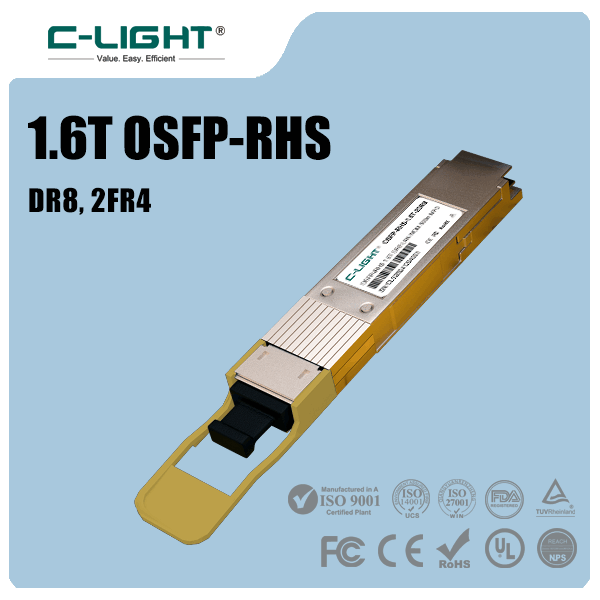
Notably, C-LIGHT has already taken the lead in deploying next‑generation 1.6T products. In January 2026, C-LIGHT launched its 1.6T-DR8 500m OSFP-RHS transceiver, a high‑speed optical module designed specifically for next‑generation AI data centers, precisely capturing the market window of the first year of 1.6T optical module commercialization. In the field of coherent optical communications, C-LIGHT has introduced a 100G DCO ZR coherent optical module based on the QSFP28 form factor, providing telecom operators and enterprise users with a cost‑effective, low‑power, plug‑and‑play long‑haul transmission solution. In addition, C-LIGHT has deployed ELSFP (External Laser Source) pluggable laser sources, delivering stable, high‑power continuous wave optical power for CPO switches, keeping pace with CPO technology frontiers.
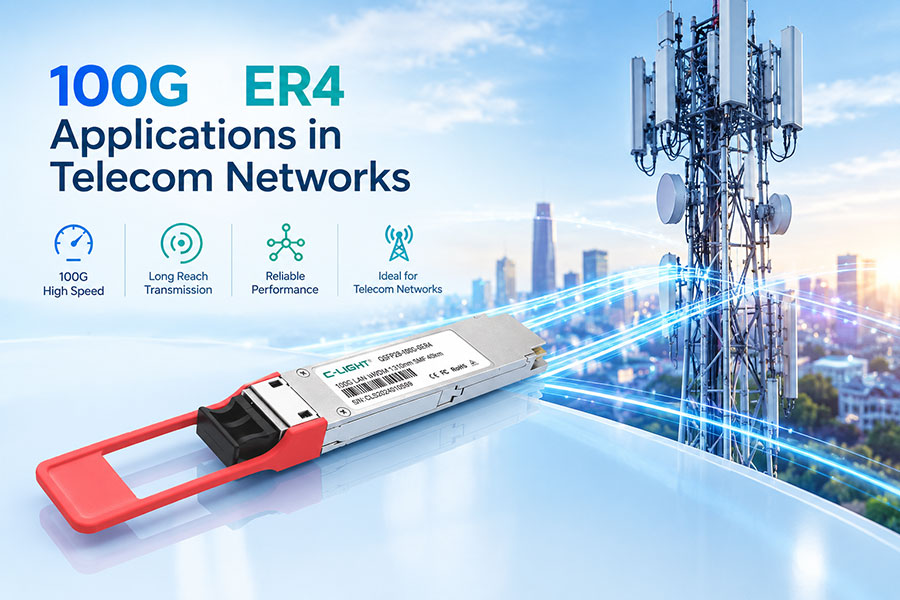
In the areas of long‑haul transmission and 5G fronthaul, C-LIGHT also offers a complete product line. Its 100G QSFP28 ER4 40km transceiver uses LAN‑WDM technology to achieve 40km transmission at 1310nm wavelengths. The 25G BiDi SFP28 10km optical module, leveraging single‑fiber bidirectional transmission technology, provides a flexible and efficient solution for 5G fronthaul and data center interconnection. The company also offers multi‑rate DWDM industrial‑grade modules that support adaptive rates from 1G/2.5G/4G/8G/10G/12G, providing diverse options for wavelength‑division network deployment.
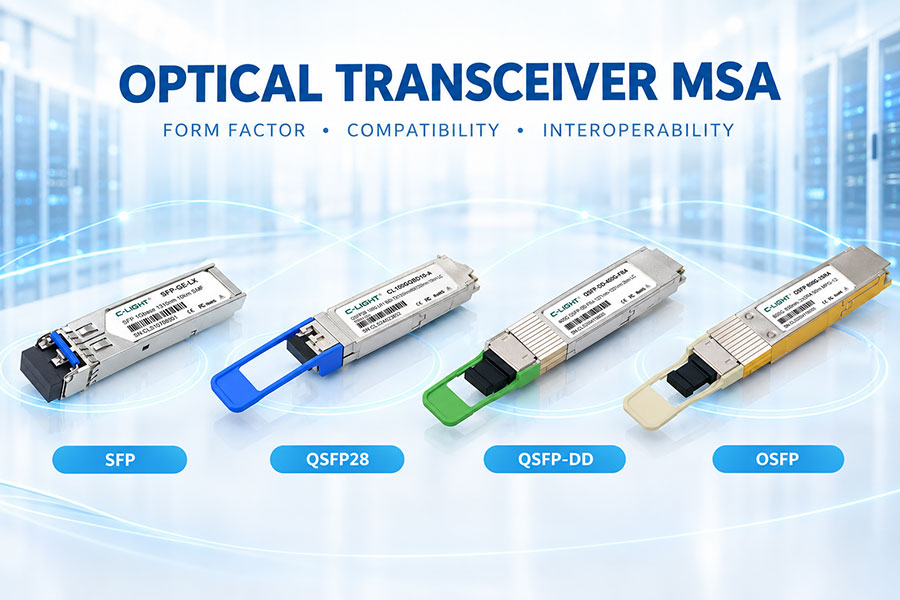
C-LIGHT products are compatible with mainstream fiber optic switch brands worldwide, including Cisco, HPE, H3C, Huawei, ZTE, Ruijie, and more than 100 other brands, ensuring good interoperability and ease of deployment. The company has a daily production capacity of over 8,000 units, maintains rolling inventory for mainstream products, and can ship 90% of products within 2‑3 days. It also supports both factory delivery and third‑party delivery in Hong Kong, with a mature and efficient logistics system.
As AI computing power demand continues to grow and optical module generations accelerate, C-LIGHT, with its deep technical accumulation, rich product line, and flexible service capabilities, is well positioned to capture greater opportunities in the high‑speed optical module market. The company’s products reach customers in over 100 countries and regions across five continents. With significant advantages in supporting high‑end customer projects and providing customized special products, C-LIGHT’s future development prospects are highly promising.
 >
>

 >
>
 >
>
 >
>
 >
>
 >
>
 >
>
 >
>