TEL:+86 132 6656 7067


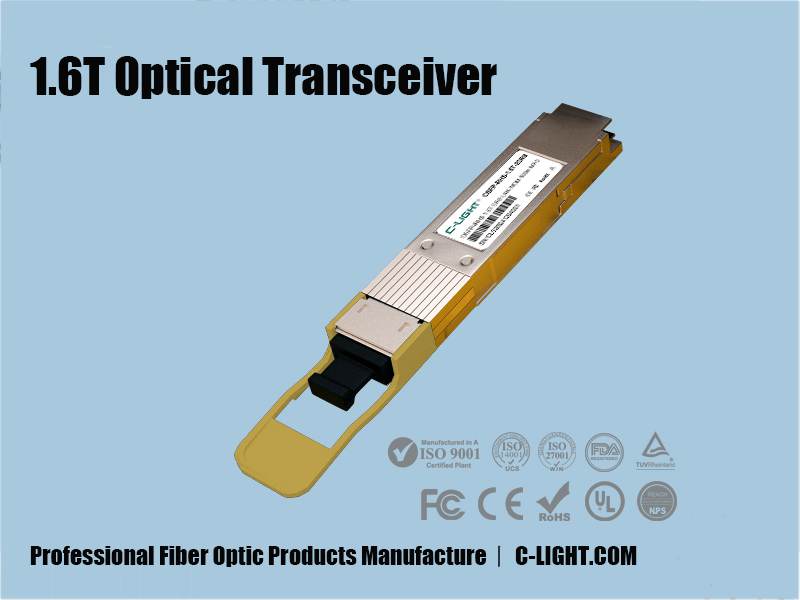
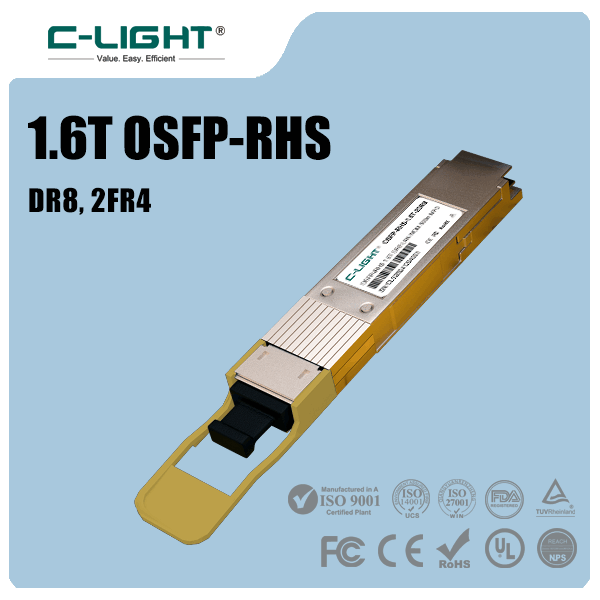
Against the backdrop of exponential growth in AI computing demand, data center interconnect bandwidth is undergoing a quiet yet critical upgrade. Between 2024 and 2025, as hyperscale data center operators worldwide accelerate the deployment of next-generation AI clusters, 1.6 Tbps (1.6 terabits per second) optical modules have officially moved from lab prototypes to mass commercial deployment. This milestone not only signifies a breakthrough in overcoming speed bottlenecks in optical communications but also redefines supply chain dynamics, technological leadership, and investment logic for computing infrastructure from a global perspective.
I. The Global Demand Engine: AI Clusters Driving Generational Leaps in Data Rates
From a global market perspective, the mass adoption of 1.6T optical modules represents not a gradual evolution but a generational leap driven by AI training and inference requirements. Major cloud service providers in North America (such as Amazon, Google, Microsoft, and Meta) began volume purchases of 1.6T optical modules in the second half of 2024 for their next-generation AI cluster interconnects. These hyperscale data centers are transitioning from traditional 400G and 800G architectures to high-density networks based on 51.2T and even 102.4T switching chips, with 1.6T optical modules becoming a critical component enabling this bandwidth upgrade.
According to market research firms, global demand for 1.6T optical modules is expected to exceed 3 million units in 2025, with over 80% concentrated in the deployment of core AI clusters in North America. In terms of demand structure, single-mode optical modules—particularly 800G upgraded versions based on silicon photonics and EML solutions—dominate, with short-reach SR8 and DR8 specifications becoming mainstream. Although China is also experiencing rapid growth in total computing power, the commercial pace of 1.6T within its domestic supply chain lags slightly behind North America, reflecting regional disparities in AI infrastructure investment cycles.
II. The Globalized Supply Chain: Technological Barriers and Production Capacity Distribution
On the supply side, the mass commercialization of 1.6T optical modules relies heavily on a globally distributed division of labor. Key optical and electrical chips remain dominated by manufacturers in the United States and Japan: U.S. companies hold a leading position in high-speed DSPs (digital signal processors) and laser chips, while Japanese manufacturers maintain advantages in EML (electro-absorption modulated laser) chips and high-end materials. European companies provide critical support in silicon photonics integration processes and packaging equipment.
From a production capacity perspective, while a significant portion of global optical module packaging and testing capacity is concentrated in Asia, the technological barriers and capacity allocation in core segments remain controlled by non-Chinese brands. These include U.S.-based companies such as Coherent and Marvell, as well as semiconductor firms in Europe and Japan, which form the “upstream control points” of the 1.6T supply chain. Notably, China, as the world’s largest optical module manufacturing base, accounts for approximately 60% of global optical module packaging capacity. However, in this 1.6T generation, the self-sufficiency rate for high-end chips remains limited, creating a unique landscape characterized by “high output, high demand, but externalized core components.”
III. Key Milestones and Challenges in Mass Commercialization
The mass commercialization of 1.6T optical modules did not happen overnight. In the third quarter of 2024, leading manufacturers began small-volume shipments, and by the first quarter of 2025, major suppliers had achieved a monthly production capacity exceeding 100,000 units. Key breakthroughs enabling this scale include:
Chip Process Upgrades: Widespread adoption of DSP chips built on 5nm and below process nodes brought power consumption and signal integrity up to commercial standards.
Packaging Process Maturity: While CPO (co-packaged optics) based on silicon photonics is not yet fully mature, pluggable solutions have passed reliability validation and become the current mainstream choice.
Standardization Progress: IEEE and optical module MSA (multi-source agreement) organizations completed key definitions for 1.6T-related standards in 2024, reducing interoperability barriers among multiple vendors.
However, mass commercialization still faces challenges. On one hand, the power consumption of 1.6T modules has increased by approximately 30%-40% compared to 800G, imposing higher demands on data center cooling and energy efficiency design. On the other hand, the supply capacity for upstream high-end chips remains tight, with only a handful of global manufacturers capable of consistently supplying 100G and above EML lasers or thin-film lithium niobate chips. This concentration in the supply chain poses a potential risk.
IV. Global Implications and Outlook
Examined from a global perspective, the mass commercialization of 1.6T optical modules is generating multiple impacts:
Reshaping Computing Cost Structures: Although the initial unit price of 1.6T modules is roughly double that of 800G, their advantages in cost per unit of bandwidth, port density, and fiber utilization are driving continuous optimization of total cost of ownership (TCO) for AI clusters.
Intensifying Regional Supply Chain Differentiation: The division of labor across regions in the optical module industry chain is becoming more pronounced. North America leads in standard definition and core chip design, Asia (particularly China) undertakes large-scale packaging and manufacturing, while Europe and Japan maintain influence in key materials and high-end equipment.
Accelerating Technology Roadmap Competition: The coexistence of pluggable 1.6T solutions with next-generation technologies such as CPO and LPO (linear-drive pluggable optics) means that choices made by different vendors and cloud service providers will shape the technological landscape over the next three to five years.
V. China’s Role: A Dual Hub of Demand and Production Capacity
Within this global narrative, China plays a dual role as both a “demand hub” and a “production capacity hub.” On the demand side, while China’s domestic AI computing build-out started slightly later, it is growing rapidly. In 2025, China’s demand for 1.6T optical modules is expected to account for 20%–25% of the global total, primarily driven by the construction of intelligent computing centers by leading internet companies and telecom operators.
On the supply side, Chinese manufacturers hold a significant share in the packaging and testing segments of the 1.6T optical module supply chain, with some leading companies already achieving volume shipments. However, in core components such as high-speed DSPs and high-end laser chips, they remain heavily dependent on imports. This pattern of “high output with externalized core components” makes China both an indispensable link in the global 1.6T supply chain and a participant with external dependencies in the high-value segments of the value chain.
The mass commercialization of 1.6T optical modules epitomizes the generational upgrade of AI-driven computing infrastructure. It reflects both the efficiency advantages of globalized division of labor in cutting-edge technology and exposes the risks of concentration at critical nodes in the supply chain. For the global ICT industry, the successful commercial deployment of this generation of products signifies not just another leap in network bandwidth but also heralds a systemic restructuring of AI cluster deployment density, energy efficiency, and cost structures in the coming years. In this technology cycle, the ability to build resilience in core areas such as high-speed optical chips, advanced packaging, and standard-setting will determine the positions of different regions and companies in the next phase of the computing race.
 >
>

 >
>
 >
>
 >
>
 >
>
 >
>
 >
>
 >
>