C-LIGHT telephone TEL:+86 132 6656 7067    
Language
C-LIGHT search
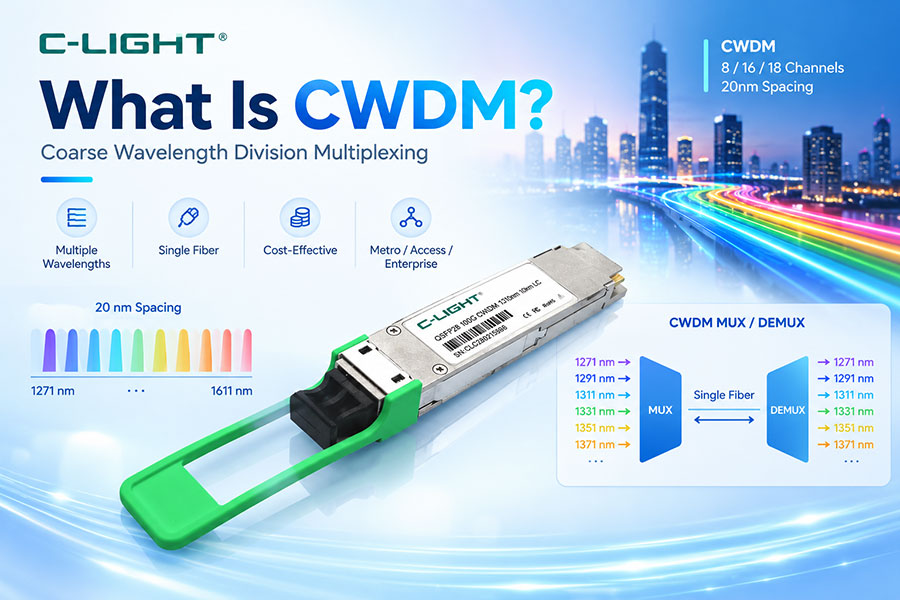
What Is CWDM?>
By C-LIGHT Marketing
CWDM (Coarse Wavelength Division Multiplexing) combines multiple optical wavelengths on a single fiber to increase capacity, using wide 20 nm channel spacing for cost-effective metro, access, and enterprise networks.
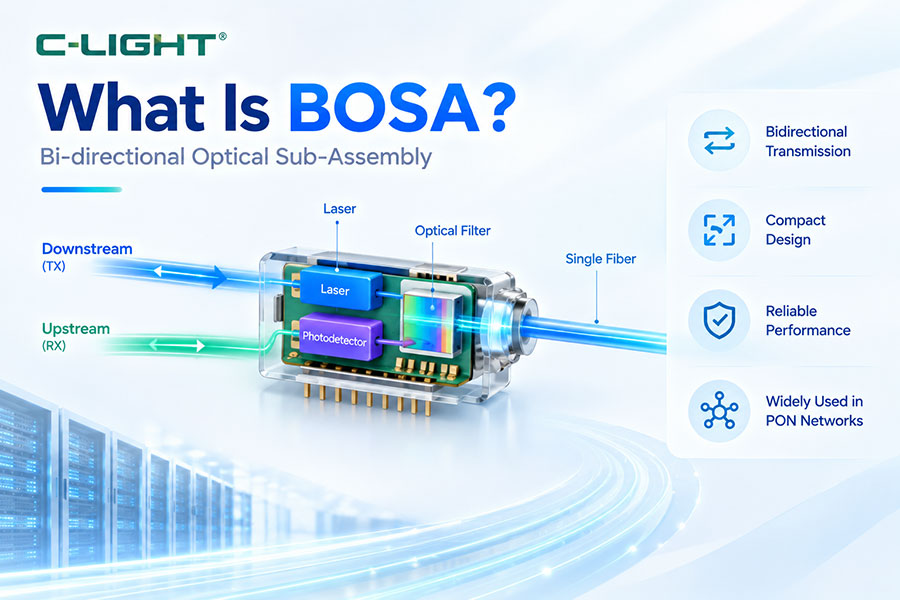
What Is BOSA?>
By C-LIGHT Marketing
BOSA (Bi-directional Optical Sub-Assembly) combines optical transmit and receive functions in one compact assembly for bidirectional communication over a single fiber, widely used in PON and optical access networks.
What Is FEC?>
By C-LIGHT Marketing
FEC (Forward Error Correction) is a key technology in high-speed optical networks that corrects transmission errors without retransmission, improving link reliability for 100G, 400G, 800G, and 1.6T systems.
What Is a DAC Cable?>
By C-LIGHT Marketing
DAC (Direct Attach Copper) cable is a high-speed copper interconnect used for short-distance connections between switches, servers, GPUs, and other data center equipment, offering low latency, low power consumption, and cost-effective connectivity.
What Is ROSA?>
By C-LIGHT Marketing
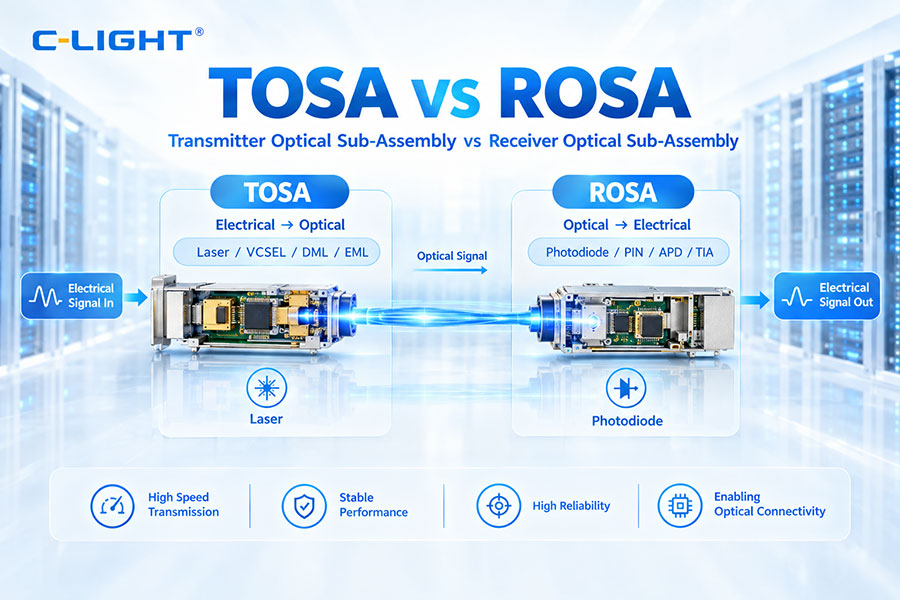
ROSA (Receiver Optical Sub-Assembly) is the receive-side optical assembly in an optical transceiver, converting incoming optical signals from fiber into electrical signals for high-speed data processing.
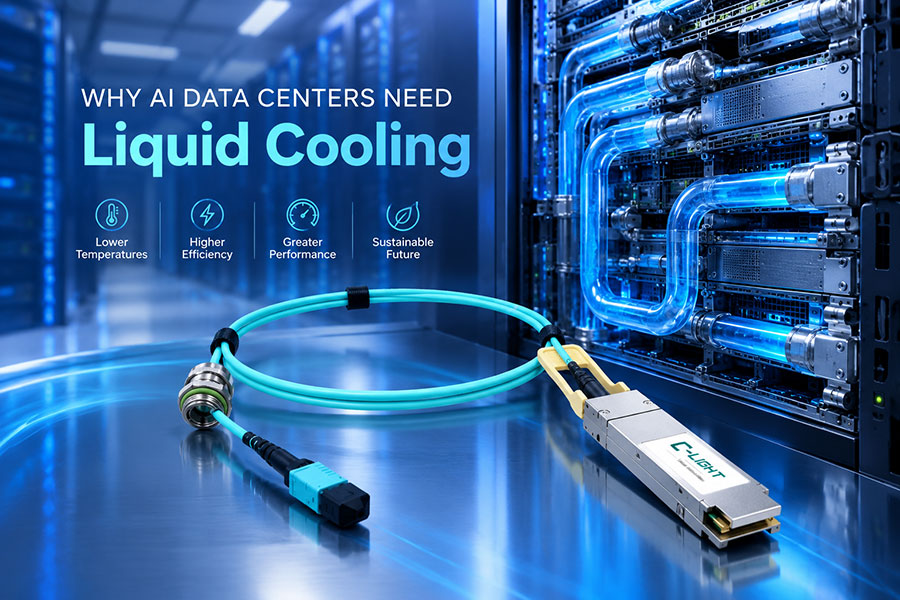
Why AI Data Centers Need Liquid Cooling>
By C-LIGHT Marketing
liquid cooling for AI data centers, AI data center liquid cooling, liquid cooling, direct-to-chip cooling, cold plate cooling, immersion cooling, AI GPU cooling, data center cooling, high-density AI data center, GPU cluster cooling, liquid cooling system, 800G AI data center, 1.6T AI data center
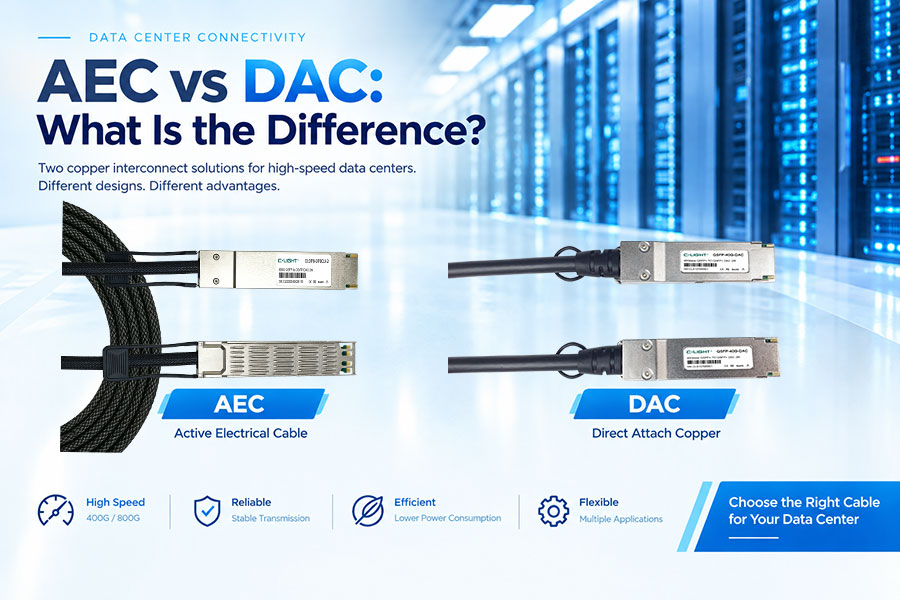
AEC vs DAC: What Is the Difference>
By C-LIGHT Marketing
AEC and DAC provide reliable high-speed connectivity for data centers, with different designs for short-reach copper applications, power requirements, and signal performance.
When Should You Use DAC, AOC or AEC>
By C-LIGHT Marketing
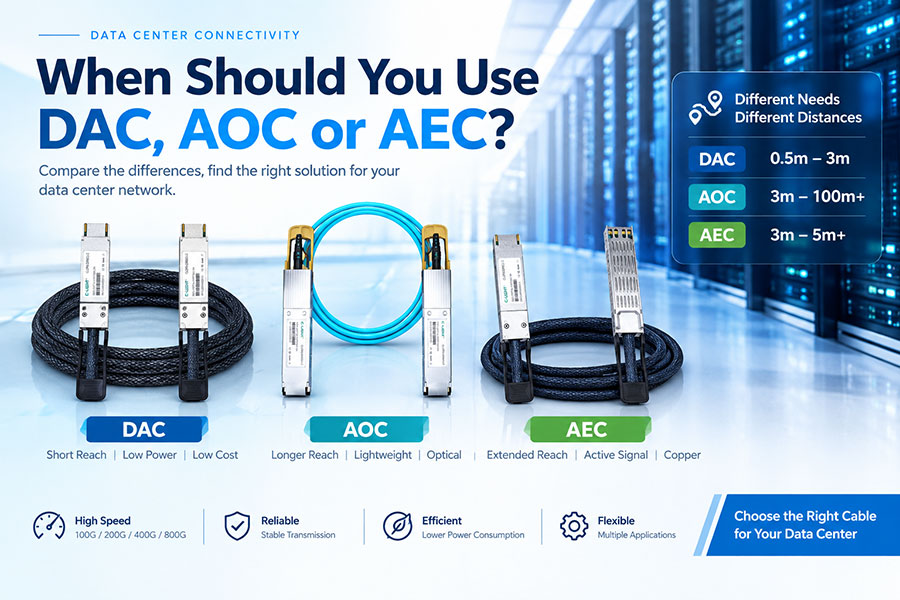
DAC, AOC, and AEC are high-speed interconnect solutions for data center networks, with different advantages in reach, power consumption, signal integrity, cable design, and deployment.

Call
Top