TEL:+86 132 6656 7067


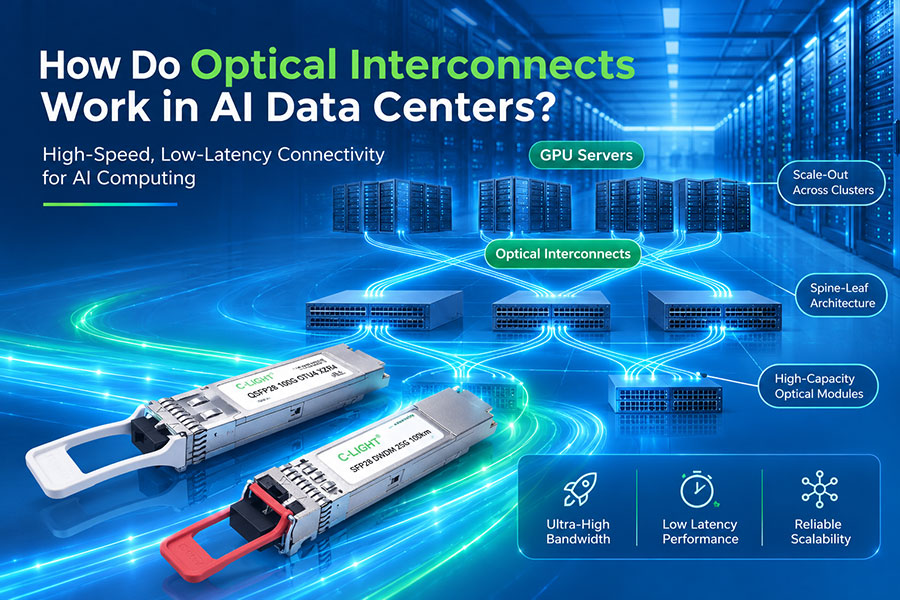
1. The Power Challenge in Modern AI Data Centers
Artificial Intelligence workloads are scaling at an unprecedented pace. Modern GPU clusters used for:
Large Language Model (LLM) training
Distributed inference pipelines
Mixture of Experts (MoE) routing
High-performance AI simulation systems
are generating massive east-west traffic inside data centers.
As AI systems evolve toward 400G and 800G networks, power consumption has become a critical bottleneck. In some hyperscale environments, optical interconnects can account for a significant portion of total rack power.
This has led to growing interest in low-power optical architectures such as LPO (Linear Pluggable Optics).
2. What Is LPO (Linear Pluggable Optics)?
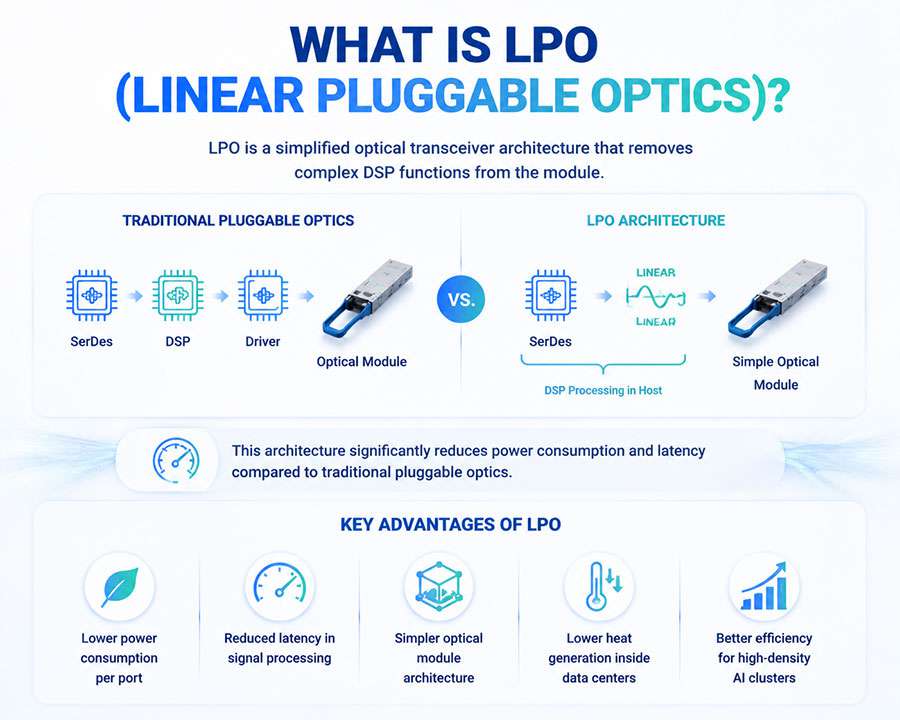
LPO is a simplified optical transceiver architecture that removes complex digital signal processing (DSP) functions from the module.
Instead of heavy onboard signal processing, LPO relies on:
Linear electrical interface
Host-side DSP processing
Simplified optical module design
This architecture significantly reduces power consumption and latency compared to traditional pluggable optics.
Key Advantages of LPO:
Lower power consumption per port
Reduced latency in signal processing
Simpler optical module architecture
Lower heat generation inside data centers
Better efficiency for high-density AI clusters
3. Why AI Data Centers Care About LPO
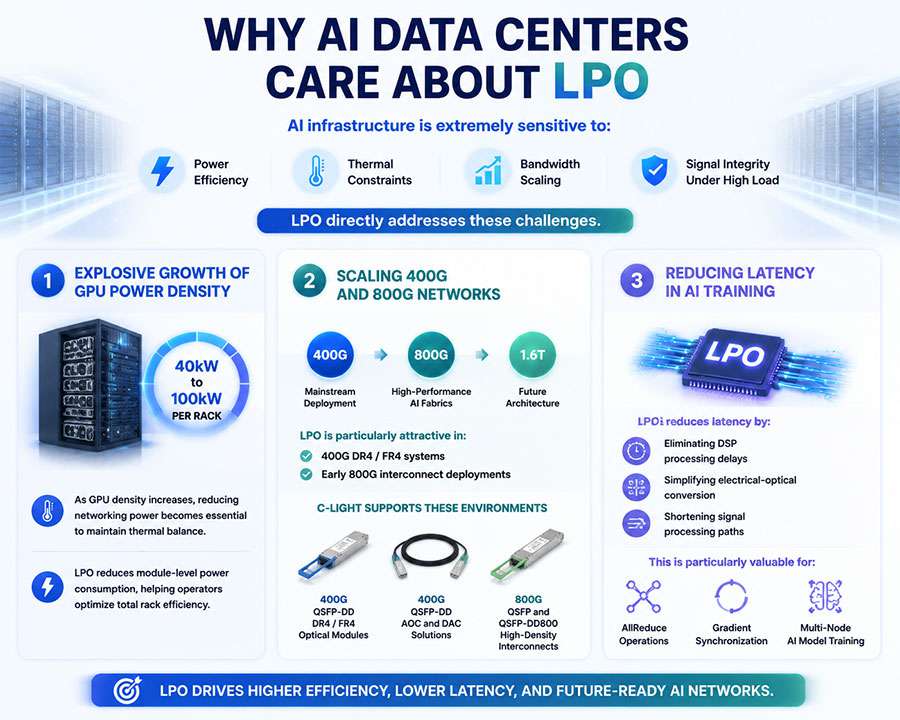
AI infrastructure is extremely sensitive to:
Power efficiency
Thermal constraints
Bandwidth scaling
Signal integrity under high load
LPO directly addresses these challenges.
3.1 Explosive Growth of GPU Power Density
Modern AI racks often exceed:
40kW to 100kW per rack
As GPU density increases, reducing networking power becomes essential to maintain thermal balance.
LPO reduces module-level power consumption, helping operators optimize total rack efficiency.
3.2 Scaling 400G and 800G Networks
AI clusters are rapidly transitioning:
400G → mainstream deployment
800G → high-performance AI fabrics
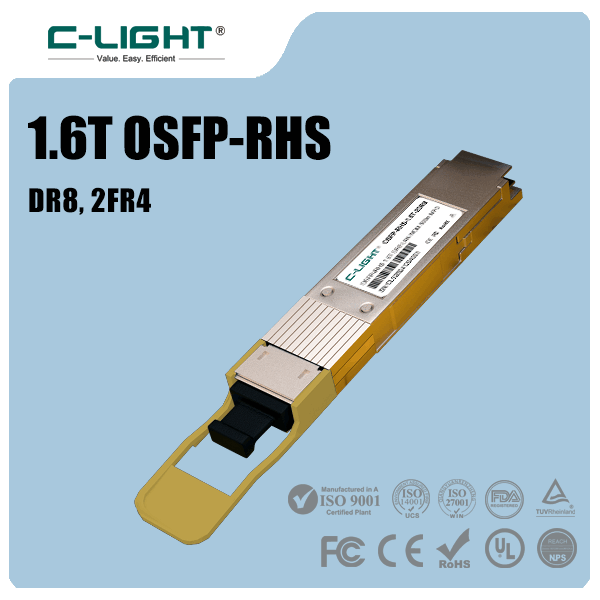
1.6T → future architecture
LPO is particularly attractive in:
400G DR4 / FR4 systems
Early 800G interconnect deployments
C-LIGHT supports these environments with:
400G QSFP-DD DR4 / FR4 optical modules
400G QSFP-DD AOC and DAC solutions
800G OSFP and QSFP-DD800 high-density interconnects
3.3 Reducing Latency in AI Training
In distributed AI training, every nanosecond matters.
LPO reduces latency by:
Eliminating DSP processing delays
Simplifying electrical-optical conversion
Shortening signal processing paths
This is particularly valuable for:
AllReduce operations
Gradient synchronization
Multi-node AI model training
4. LPO vs Traditional Optical Modules
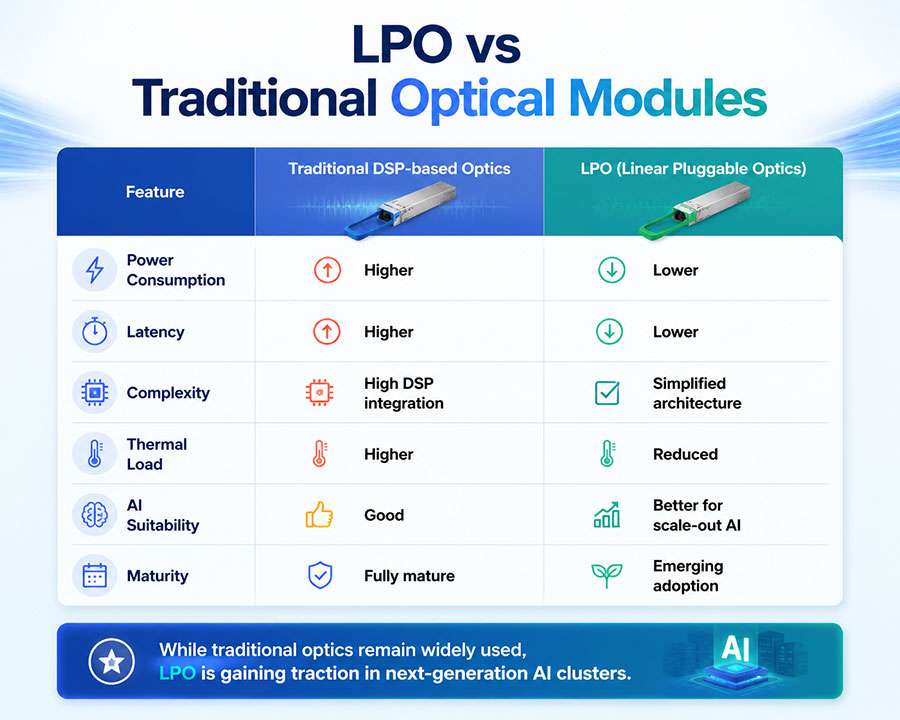
While traditional optics remain widely used, LPO is gaining traction in next-generation AI clusters.
5. Where LPO Fits in AI Data Center Architecture
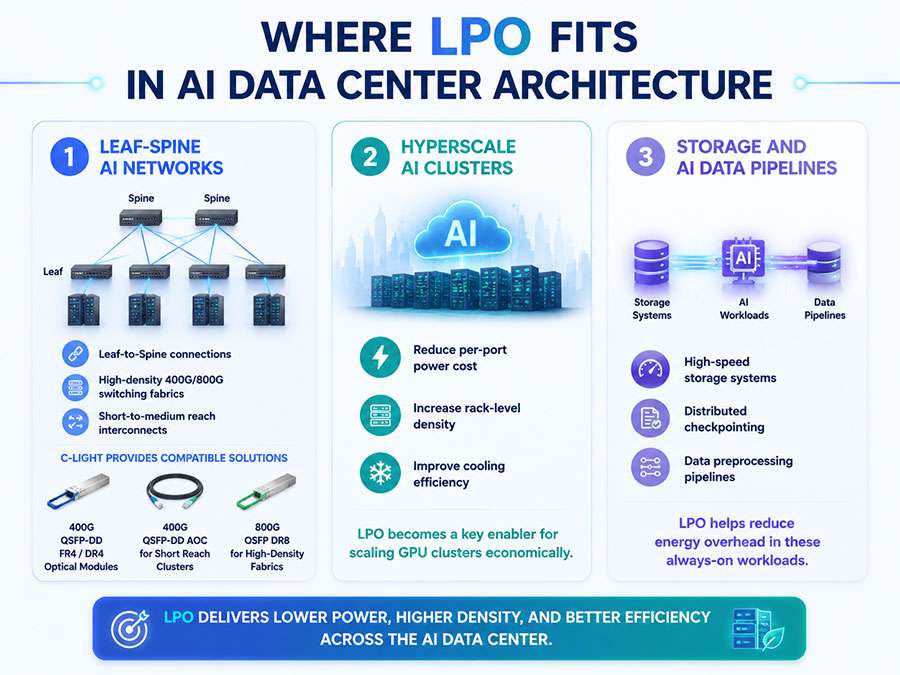
5.1 Leaf-Spine AI Networks
LPO is particularly well-suited for:
Leaf-to-Spine connections
High-density 400G/800G switching fabrics
Short-to-medium reach interconnects
C-LIGHT provides compatible solutions:
400G QSFP-DD FR4 / DR4 optical modules
400G QSFP-DD AOC for short reach clusters
800G OSFP DR8 for high-density fabrics
5.2 Hyperscale AI Clusters
Large AI cloud providers adopt LPO to:
Reduce per-port power cost
Increase rack-level density
Improve cooling efficiency
LPO becomes a key enabler for scaling GPU clusters economically.
5.3 Storage and AI Data Pipelines
AI workloads require constant access to:
High-speed storage systems
Distributed checkpointing
Data preprocessing pipelines
LPO helps reduce energy overhead in these always-on workloads.
6. Industry Adoption Drivers for LPO
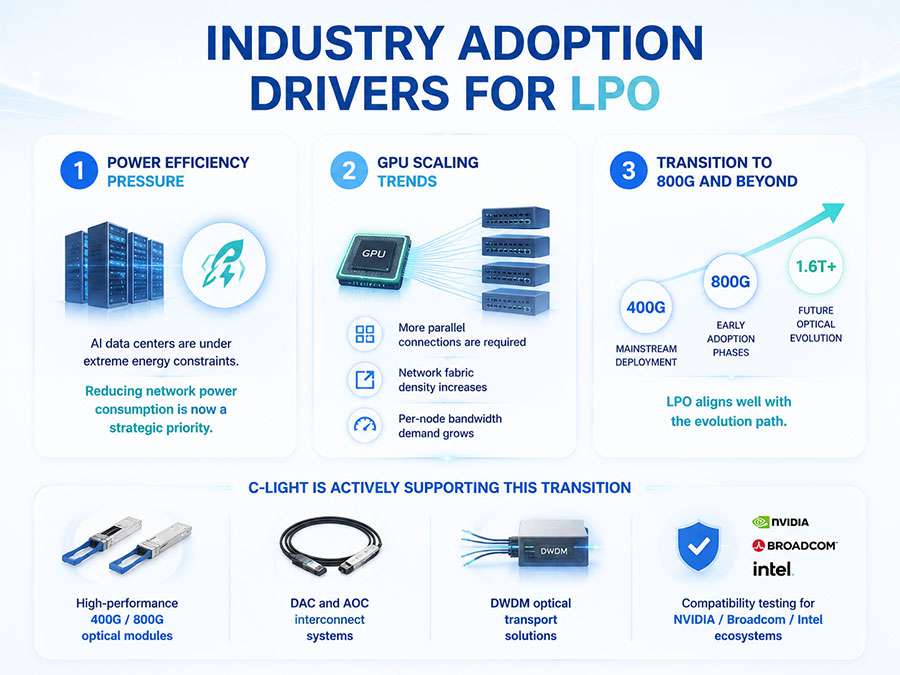
6.1 Power Efficiency Pressure
AI data centers are under extreme energy constraints. Reducing network power consumption is now a strategic priority.
6.2 GPU Scaling Trends
As GPUs evolve:
More parallel connections are required
Network fabric density increases
Per-node bandwidth demand grows
6.3 Transition to 800G and Beyond
LPO aligns well with:
400G mainstream deployment
800G early adoption phases
Future 1.6T optical evolution
C-LIGHT is actively supporting this transition with:
High-performance 400G/800G optical modules
DAC and AOC interconnect systems
DWDM optical transport solutions
Compatibility testing for NVIDIA / Broadcom / Intel ecosystems
7. Challenges of LPO Adoption
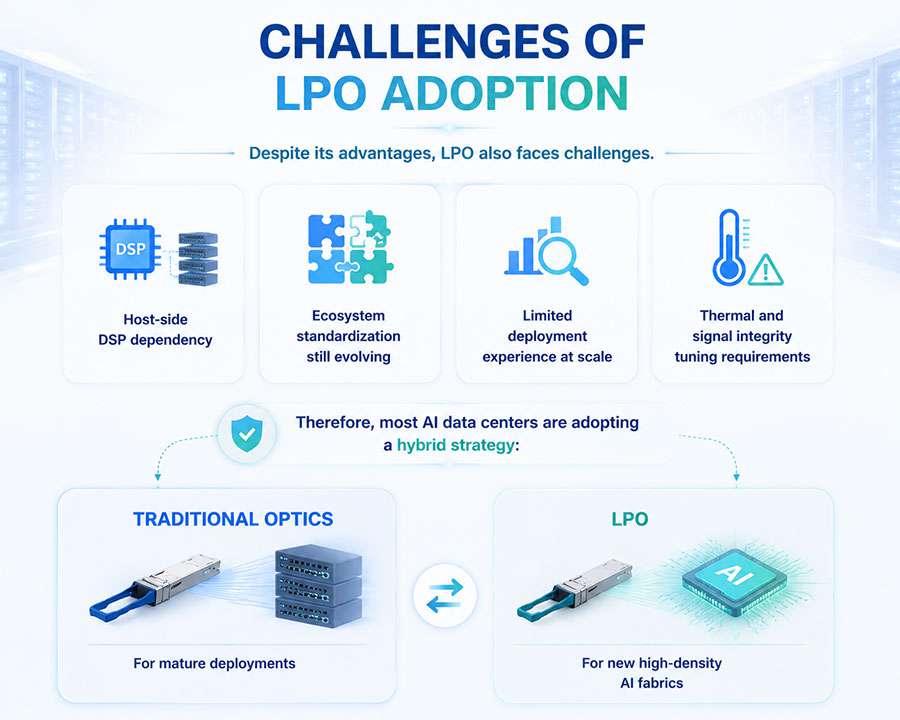
Despite its advantages, LPO also faces challenges:
Host-side DSP dependency
Ecosystem standardization still evolving
Limited deployment experience at scale
Thermal and signal integrity tuning requirements
Therefore, most AI data centers are adopting a hybrid strategy:
Traditional optics for mature deployments
LPO for new high-density AI fabrics
8. The Role of C-LIGHT in LPO-Era AI Networking
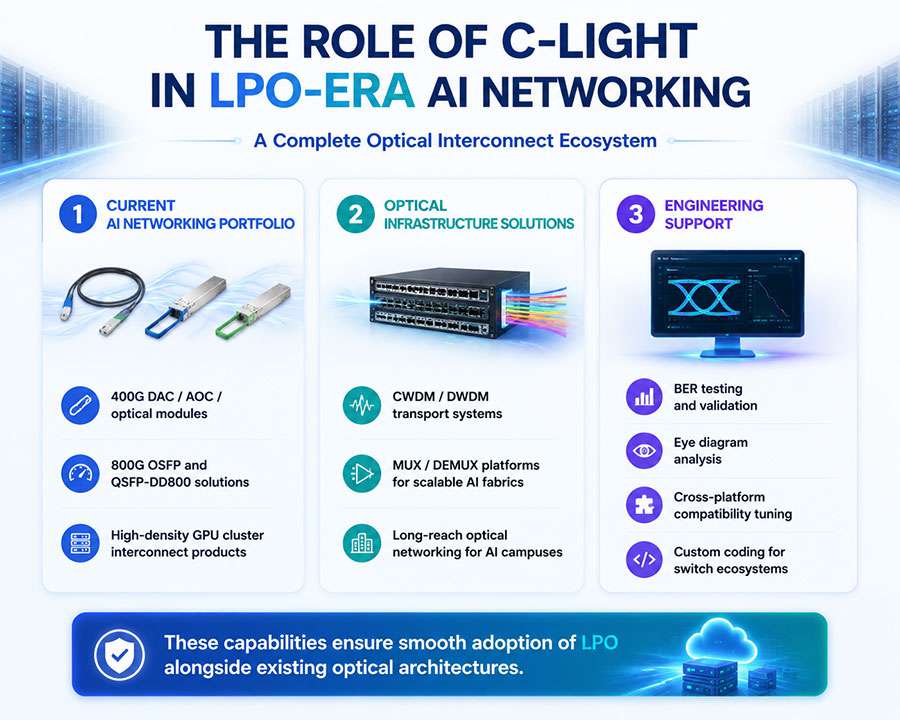
C-LIGHT provides a complete optical interconnect ecosystem that supports both traditional and next-generation architectures:
8.1 Current AI Networking Portfolio
800G OSFP and 800G QSFP-DD solutions
High-density GPU cluster interconnect products
8.2 Optical Infrastructure Solutions
CWDM / DWDM transport systems
MUX/DEMUX platforms for scalable AI fabrics
Long-reach optical networking for AI campuses
8.3 Engineering Support
BER testing and validation
Eye diagram analysis
Cross-platform compatibility tuning
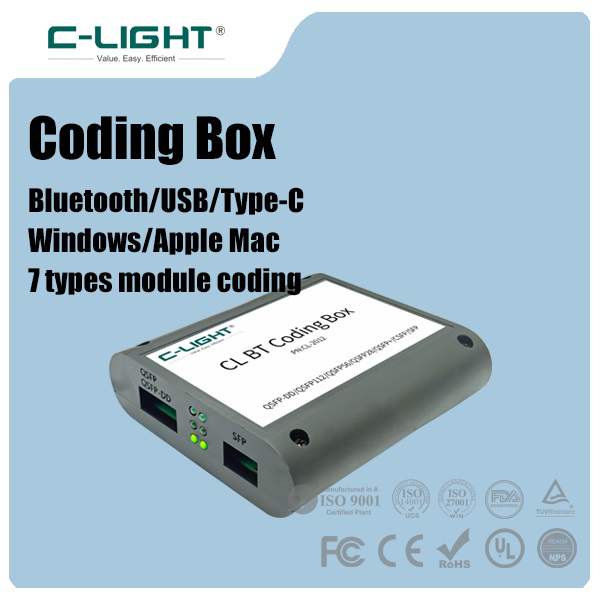
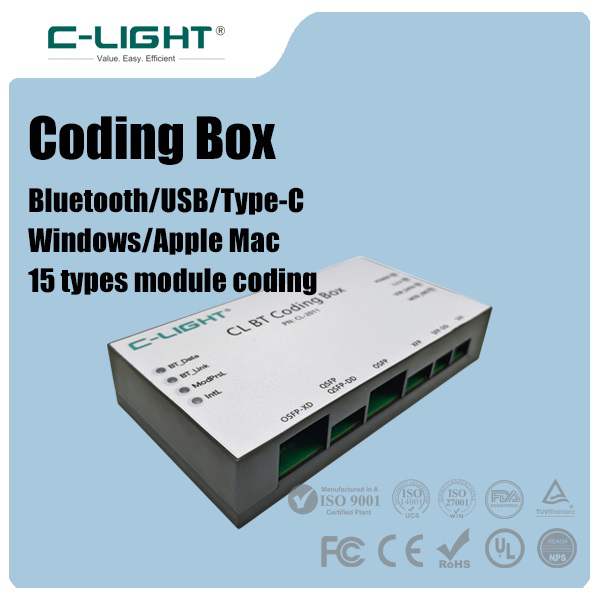
Custom coding for switch ecosystems
These capabilities ensure smooth adoption of LPO alongside existing optical architectures.
9. Conclusion
LPO is gaining attention in AI data centers because it directly addresses the most critical challenges in modern AI infrastructure:
Power consumption
Latency reduction
Scaling efficiency
Thermal limitations
While still evolving, LPO represents a significant step toward more efficient AI networking architectures.
In practice, the future AI data center will not rely on a single technology but a hybrid ecosystem of:
DAC for short-range connectivity
AOC for flexible clustering
Traditional optics for mature deployments
LPO for next-generation low-power AI fabrics
C-LIGHT supports this entire evolution with a full portfolio of 400G, 800G, DAC, AOC, and optical interconnect solutions—helping AI data centers build scalable, efficient, and future-ready infrastructures for the next era of artificial intelligence.
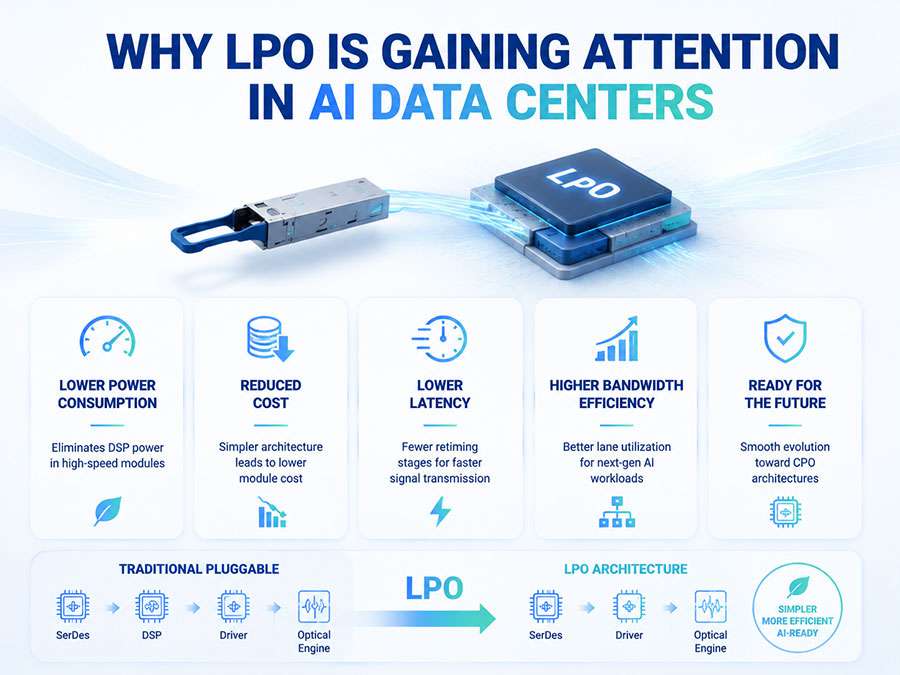
Why LPO Is Gaining Attention in AI Data Centers FAQ
Lower power consumption
Lower transmission latency
Reduced heat generation
Improved energy efficiency
Increasing optical module power consumption
Higher cooling requirements
Limited rack power budgets
Reduced deployment density
Linear electrical interfaces
Simplified module architecture
Host-side signal processing
| Feature | Traditional Optical Module | LPO Optical Module |
| Signal Processing | Internal DSP processing | Simplified linear architecture |
| Power Consumption | Higher | Lower |
| Latency | Higher | Lower |
| Module Complexity | More complex | Simplified |
| Main Application | General networks | AI and high-density networks |
Lower optical module power consumption
Reduced network latency
Lower cooling pressure
Higher rack-level efficiency
Better scalability for large GPU clusters
Large Language Model (LLM) training
Distributed AI computing
High-performance computing (HPC)
AI GPU cluster networking
High-performance switching fabrics
Leaf-spine network connections
400G and 800G optical interconnects
Hyperscale data center networks
Signal integrity management
Host device compatibility
Network architecture design
Ecosystem maturity
Link performance validation
400G AI networking deployment
800G high-density optical fabrics
Future 1.6T optical interconnect architectures
Higher bandwidth
Lower power consumption
Better thermal efficiency
Scalable architecture
 >
>

 >
>
 >
>
 >
>
 >
>
 >
>
 >
>
 >
>