TEL:+86 132 6656 7067


Jensen Huang elaborated on how the Rubin platform maximizes system performance through the extreme co-design of GPUs, CPUs, network chips, switches, and NVLink. In demonstrations, it showed efficiency in running complex AI models several times higher than current mainstream systems, while significantly reducing power consumption.
●The Computing Power Revolution
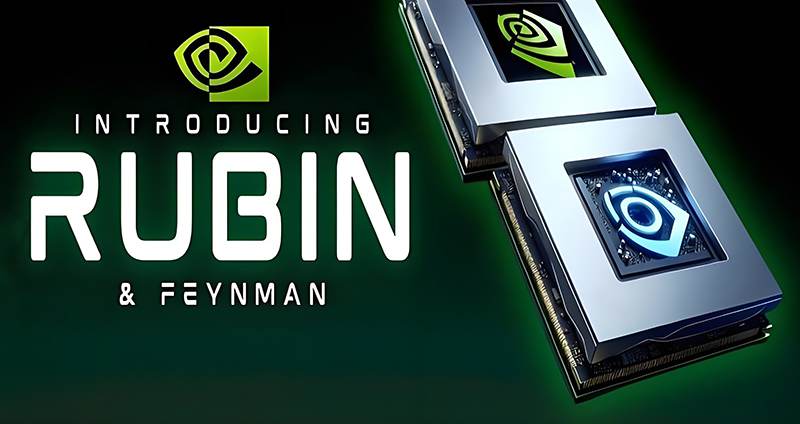
The 2026 International Consumer Electronics Show (CES) became a focal point for the tech world. NVIDIA CEO Jensen Huang unveiled the Rubin platform, a new AI computing platform whose core breakthrough is staggering—it achieves 50 petaFLOPS of computing power.
This figure not only represents a multi-fold improvement over the current Blackwell platform but also pushes AI inference performance to unprecedented heights.
According to data released on-site, the Rubin platform can reduce the cost of AI inference by up to 90% compared to existing solutions. This means the barrier for enterprises to deploy and run AI applications will be significantly lowered, accelerating the adoption and application of AI technology.
●Architectural Innovation
The Rubin platform is more than an upgrade of a single chip; it represents a synergistic innovation across six types of chips, including GPUs, CPUs, network chips, switches, and NVLink.
The platform utilizes next-generation Hopper architecture GPUs, paired with Vera CPUs based on the Arm architecture. These communicate efficiently via the next-generation NVLink 5 interconnect technology. This design triples the data transfer bandwidth between chips compared to current levels and reduces latency by 40%.
In his demonstration, Jensen Huang specifically highlighted the "Blackwell B2000 GPU" within the platform, which serves as the core engine enabling the 50 petaFLOPS of computing power. This chip utilizes TSMC's 3-nanometer process technology, achieving a 60% increase in transistor density over its predecessor.
●Market Response
The announcement of the Rubin platform immediately triggered a strong market reaction. NVIDIA's stock price rose by 8.2% following the news, marking its largest single-day gain in three months. Morgan Stanley subsequently released a report, raising its revenue forecast for NVIDIA to $300 billion for 2026.
Even more noteworthy is the swift response from industry giants. Major cloud service providers including Microsoft, Amazon AWS, Google Cloud, and Oracle have announced plans to begin deploying AI acceleration instances based on the Rubin platform in the second half of 2026.
Leading AI companies such as OpenAI, Anthropic, Meta, and xAI are among the first on the adoption list. These companies are facing growing demands for AI inference, and the Rubin platform's high-efficiency inference capabilities precisely meet their urgent needs.
●Industry Transformation
The launch of the Rubin platform marks the entry of AI computing into a new phase. As large-scale model training gradually stabilizes, the industry focus is shifting towards inference optimization, AI agents, and mixture-of-experts models. The Rubin platform is tailor-made for these emerging demands.
This shift has profound implications for the entire AI ecosystem. Developers and enterprises will be able to deploy and run complex AI models at lower costs, accelerating the transition of AI applications from the lab to the real world. Edge computing and industrial AI sectors will also benefit from this advancement.
Jensen Huang noted in his speech, "We are moving from the 'era of AI training' to the 'era of AI agents.'" The introduction of the Rubin platform provides the technological foundation for this transition, enabling AI systems to handle real-time tasks faster and more cost-effectively.
●Ecosystem Development
Alongside the Rubin platform launch, NVIDIA announced a series of ecosystem partnership initiatives. The company entered a strategic collaboration with Siemens to integrate the Rubin platform into industrial automation solutions and partnered with Lenovo to develop AI devices for edge computing.
On the software front, NVIDIA introduced the new CUDA 12.5 and an inference optimization toolkit, simplifying the process for developers to deploy AI applications on the Rubin platform. These tools are specifically optimized for inference tasks involving large language models.
Jensen Huang specifically mentioned the deep collaboration with OpenAI. In September 2025, the two companies announced a strategic partnership, planning to deploy at least 10 gigawatts of AI data center capacity. The Rubin platform will serve as the core computing engine for these data centers.
From cloud data centers to edge devices, from autonomous vehicles to industrial robots, from AI assistants to scientific simulations, every domain will feel the transformative wave brought by 50 petaFLOPS of computing power. With the first Rubin platforms scheduled to ship in the second half of 2026, a new era in global AI computing has officially begun.
 >
>

 >
>
 >
>
 >
>
 >
>
 >
>
 >
>
 >
>