TEL:+86 132 6656 7067


In 2026, driven by the explosive growth in demand for artificial intelligence and high-performance computing, the internal data transfer speed and efficiency of data centers have become a critical bottleneck limiting the full utilization of overall computing power. In this context, four high-speed cable technologies—AOC (Active Optical Cable), DAC (Direct Attach Copper Cable), AEC (Active Electrical Cable), and ACC (Active Copper Cable)—are increasingly vital as the "data arteries" connecting servers, switches, and GPU clusters. This article aims to systematically analyze the principles, core differences, production processes, selection strategies, and their application in cutting-edge computing platforms like those from NVIDIA.
Core Categorization and Differentiation: Clear Definition of the Four Technical Pathways of AOC, AEC, ACC and DAC:
The fundamental distinction among these four types of cables lies in the transmission medium and signal processing method. Together, they form a complete technological family or progression—ranging from pure electrical connections to hybrid electro-optical solutions, and ultimately to pure optical connections.
 |  |
 |  |
Comparative Analysis of Core Product Technologies:
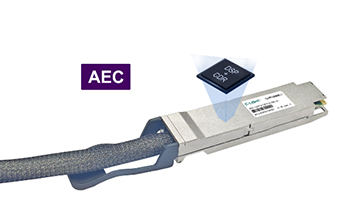
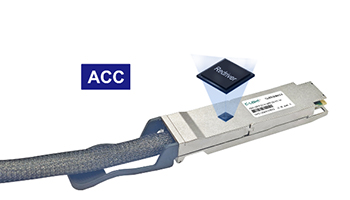
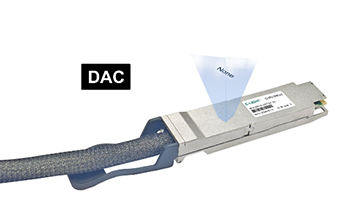
DAC, ACC, AEC: These belong to the "copper connection" camp. DAC is the most basic form, with unprocessed signals, significant attenuation, and the shortest distance. ACC uses a Redriver chip to perform analog amplification of the attenuated signal, but it also amplifies noise. AEC, through a more advanced Retimer chip, performs "Clock and Data Recovery." It can not only amplify but also reshape a clean, complete signal, making it the highest-performance solution among copper cables.
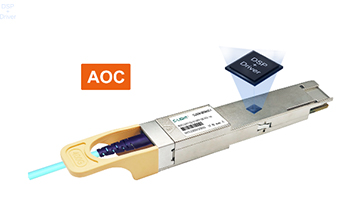
AOC: Belongs to the "optical connection" camp. It integrates complete optical-electrical conversion modules (laser and detector) at both ends, transmitting optical signals via fiber optics. This completely eliminates the distance limitations and electromagnetic interference issues of copper cables, but it also comes with correspondingly higher cost and power consumption.
Relevant information
Core Production Process Comparison: High-Speed Copper Cables and Photoelectric Integration
Differences Between Interconnect Cables and Pluggable Optical Modules, and Selection Strategy
Relationship with NVIDIA Computing Applications and Product Type Analysis
 >
>

 >
>
 >
>
 >
>
 >
>
 >
>
 >
>
 >
>