C-LIGHT telephone TEL:+86 132 6656 7067    
Language
C-LIGHT search
Generic vs Vendor-Specific Optical Module>
By C-LIGHT Marketing 丨
Generic and vendor-specific optical modules offer different approaches to network compatibility, purchasing flexibility, and technical support.
QSFP-DD vs OSFP Port Density>
By C-LIGHT Marketing 丨
QSFP-DD and OSFP enable high-density 400G and 800G connectivity, but differ in module dimensions, cooling design, and backward compatibility.
OSFP vs OSFP-RHS Port Density>
By C-LIGHT Marketing 丨
OSFP and OSFP-RHS differ in mechanical height, thermal integration, and front-panel layout.
Scale-Up vs Scale-Out vs Scale-Across Networks>
By C-LIGHT Marketing 丨
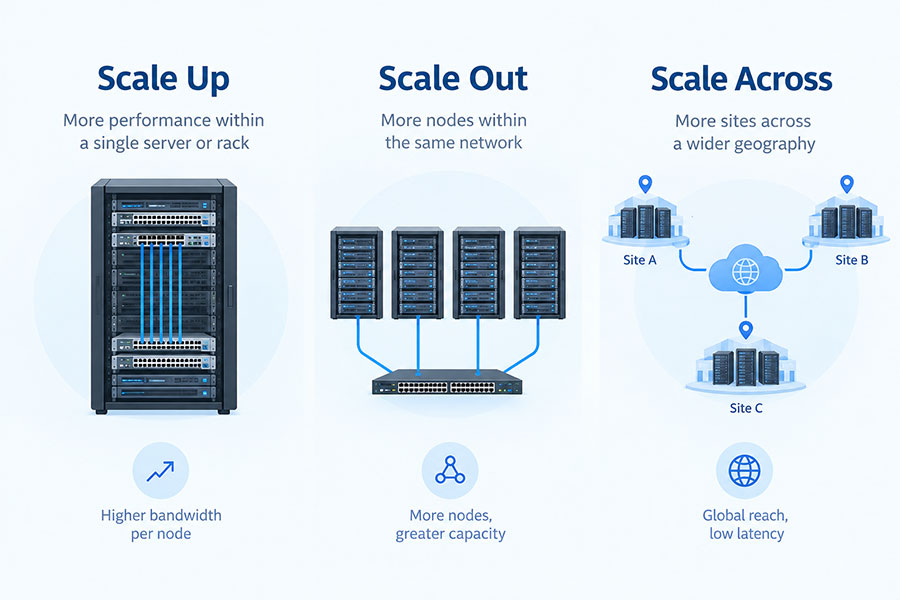
Scale-up, scale-out, and scale-across are the three interconnection layers of AI infrastructure. Compare their bandwidth, latency, protocols, reach, and economics—from NVLink within a rack to Ethernet and InfiniBand fabrics, and to optical links between AI data centers.
DWDM vs Coherent Optics>
By C-LIGHT Marketing 丨
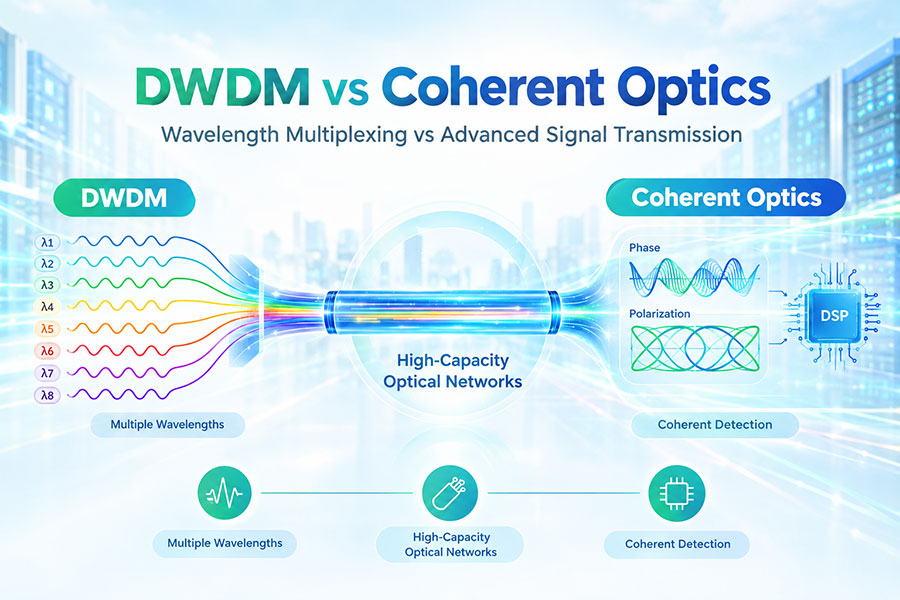
DWDM and coherent optics address different aspects of optical transmission, with differences in wavelength multiplexing, modulation, detection, reach, spectral efficiency, DSP, power, and network applications.
ROADM vs OADM>
By C-LIGHT Marketing 丨
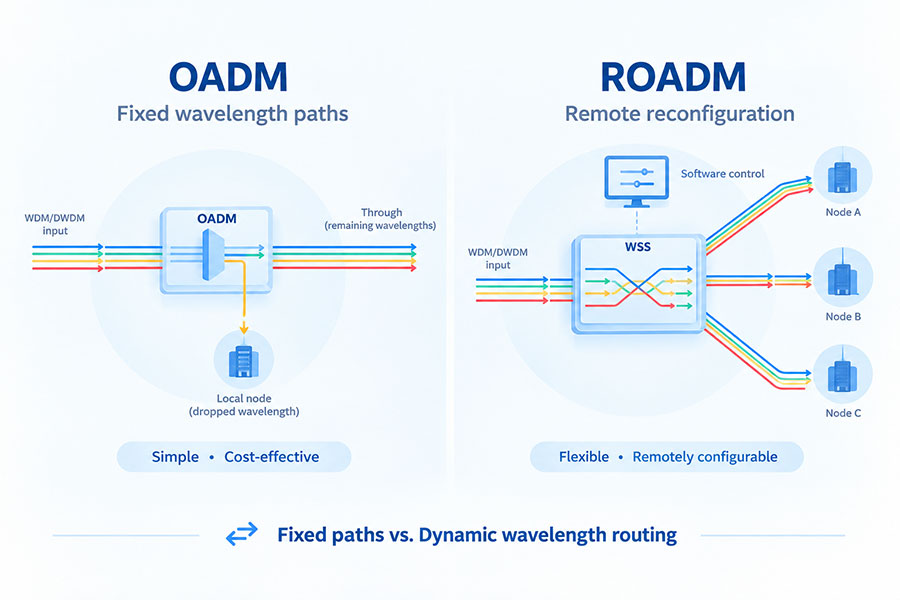
ROADM and OADM provide wavelength add and drop functions in WDM networks, with major differences in reconfigurability, wavelength routing, network direction, automation, scalability, and applications.
SN vs CS>
By C-LIGHT Marketing 丨
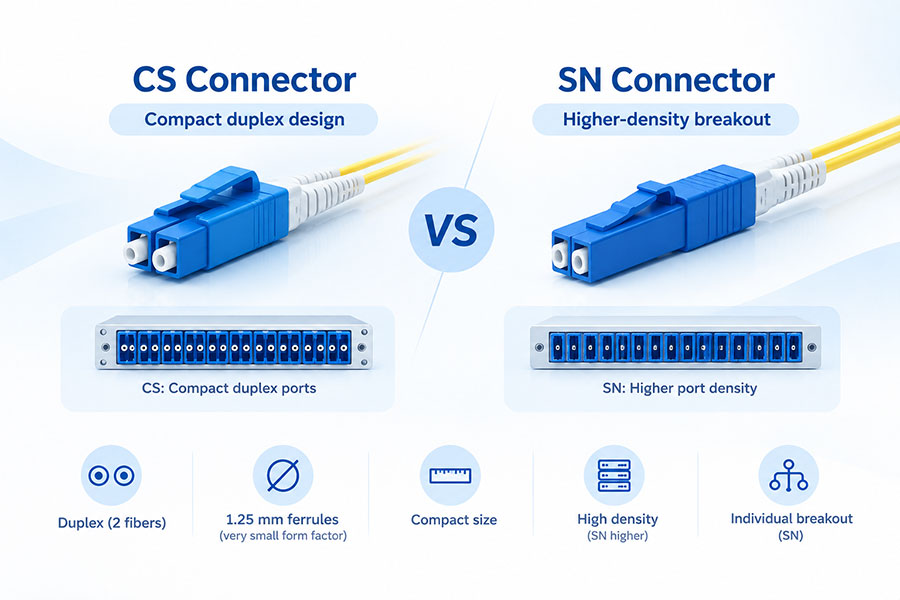
SN and CS are compact duplex fiber connectors for high-density optical networks, with differences in connector design, packing density, polarity, breakout architecture, Base-2 and Base-8 connectivity, and data center applications.
MDC vs CS>
By C-LIGHT Marketing 丨
MDC and CS are high-density duplex fiber connectors with different mechanical designs, connector density, polarity options, breakout architectures, and data center applications for 400G, 800G, and higher-speed networks.

Call
Top