TEL:+86 132 6656 7067


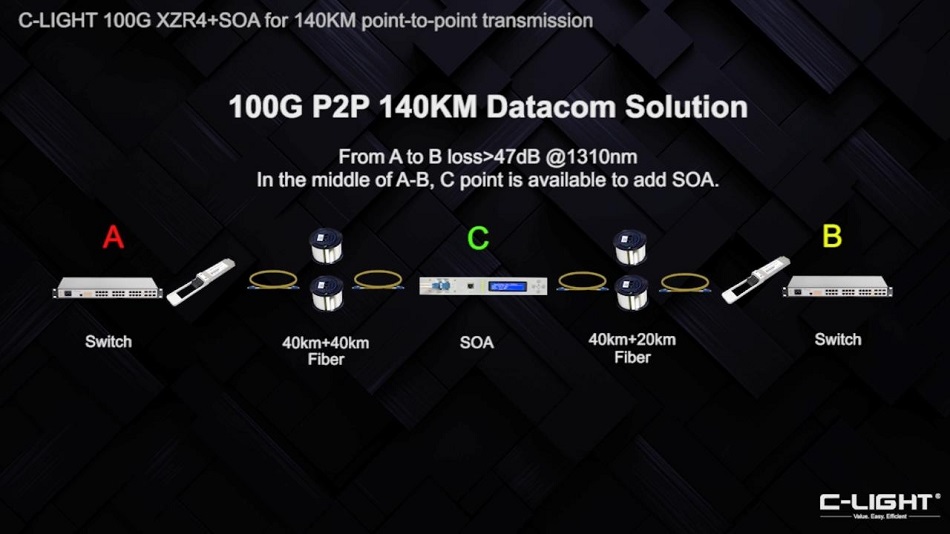
This blog is offered by C-LIGHT as a solution for 100G point-to-point transmission covering 140 kilometers.
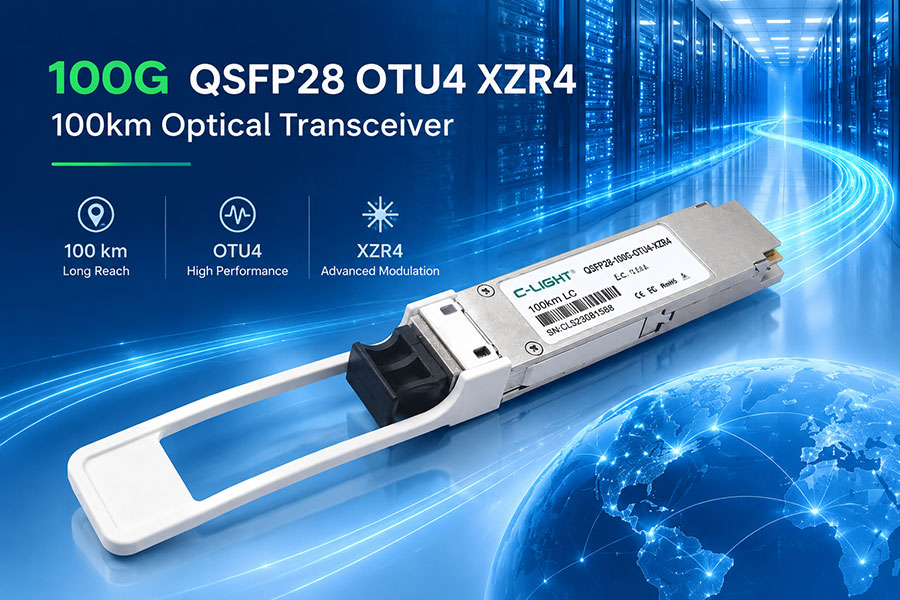
C-LIGHT adopts a self-made 100G QSFP28 XZR4 100km optical transceiver and adds an SOA amplifier at a distance of 80KM from point A, providing a total link budget of 47dB and achieving 100G P2P 140KM datacom from point A to point B.
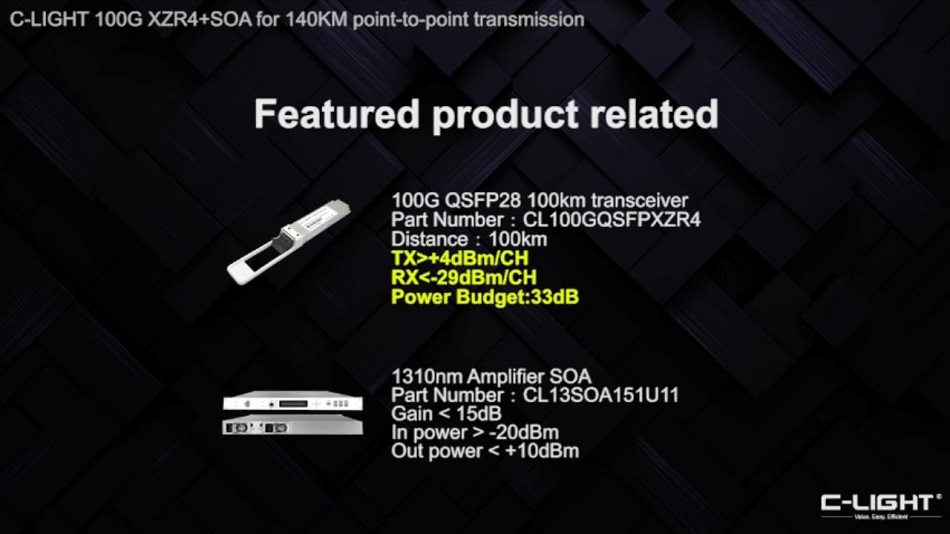
In this solution, the 100G QSFP28 100km XZR4 transceiver of C-LIGHT can provide a transmit optical power of over +4dBm per channel and ensure a sensitivity of -29dBm per channel. The link budget for each channel is greater than 33dB. Combined with a 15dB gain SOA, this solution can provide a total link budget of over 48dB per channel.
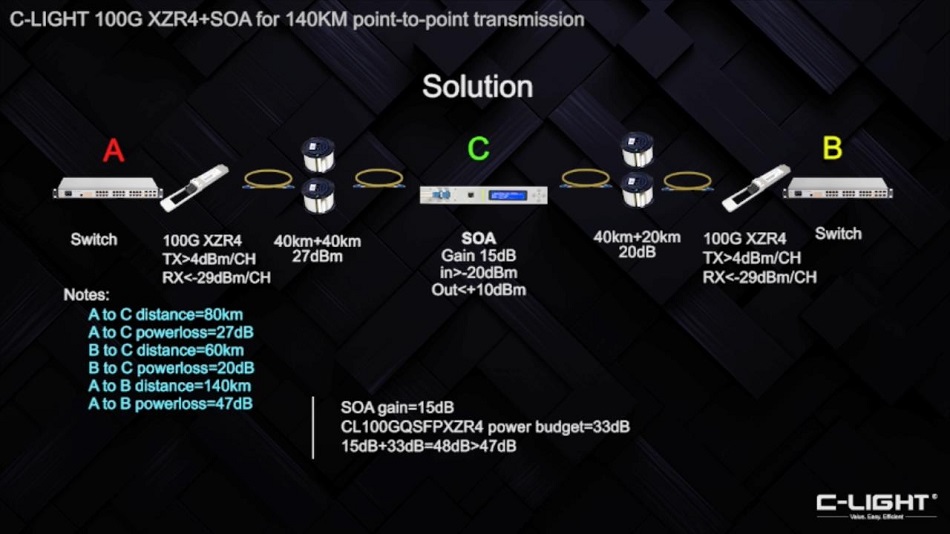
Here are link loss and link budget data for each part of the program for your reference.
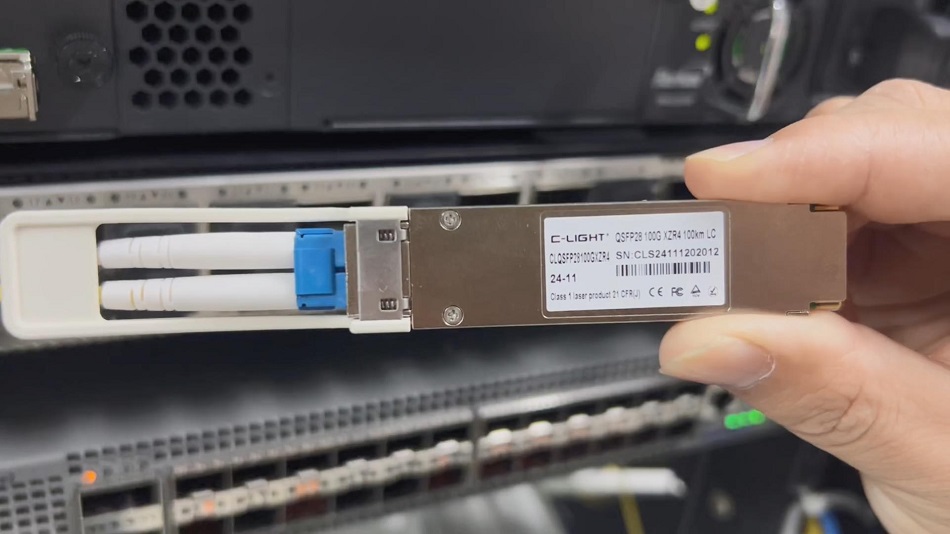
Now let's see how well this program is implemented.
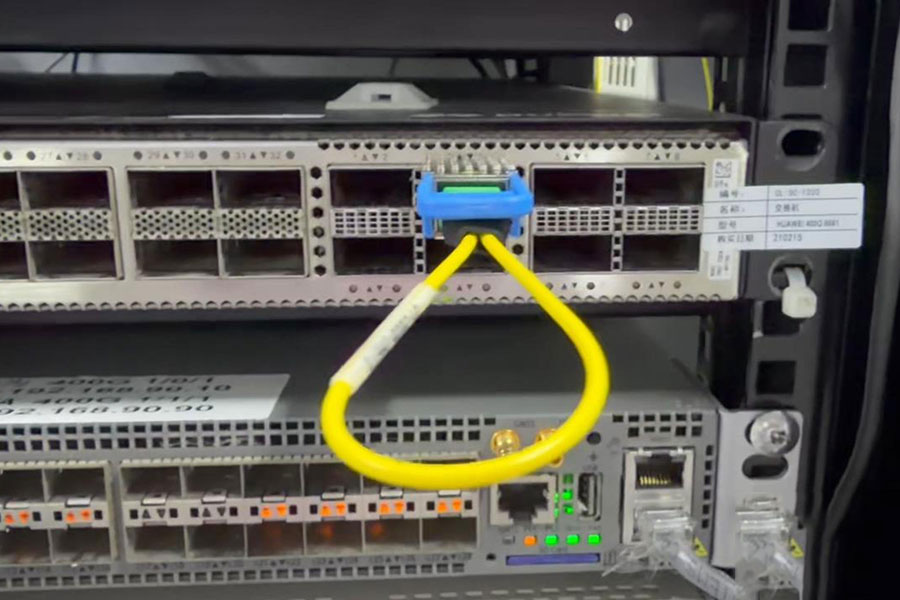
C-LIGHT chose Nokia 7250 and HW 8000 series switches to verify the effectiveness of this solution
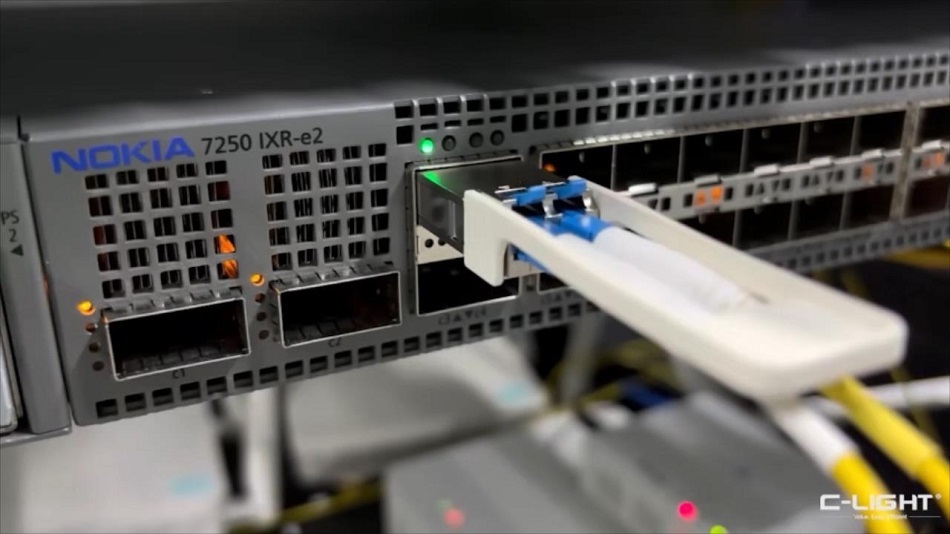
You can see the Nokia 7250 switch link up
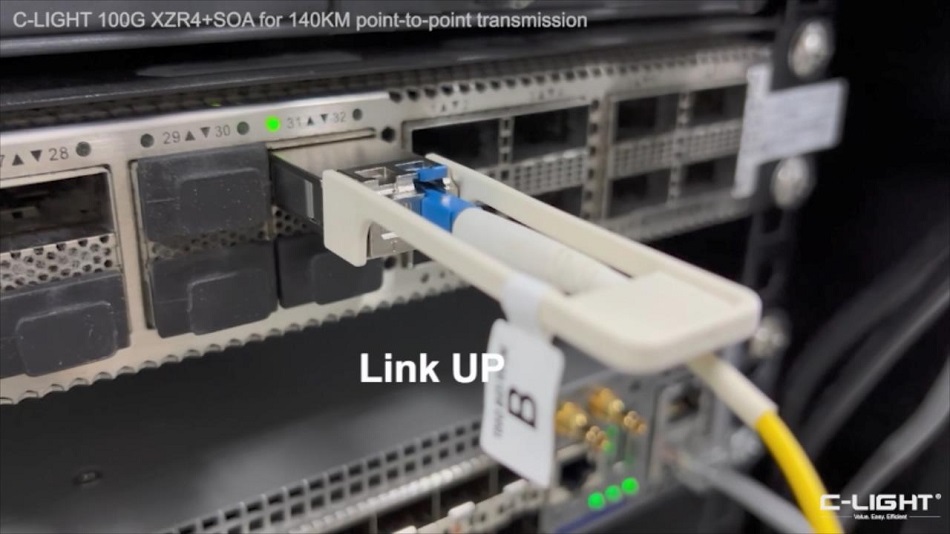
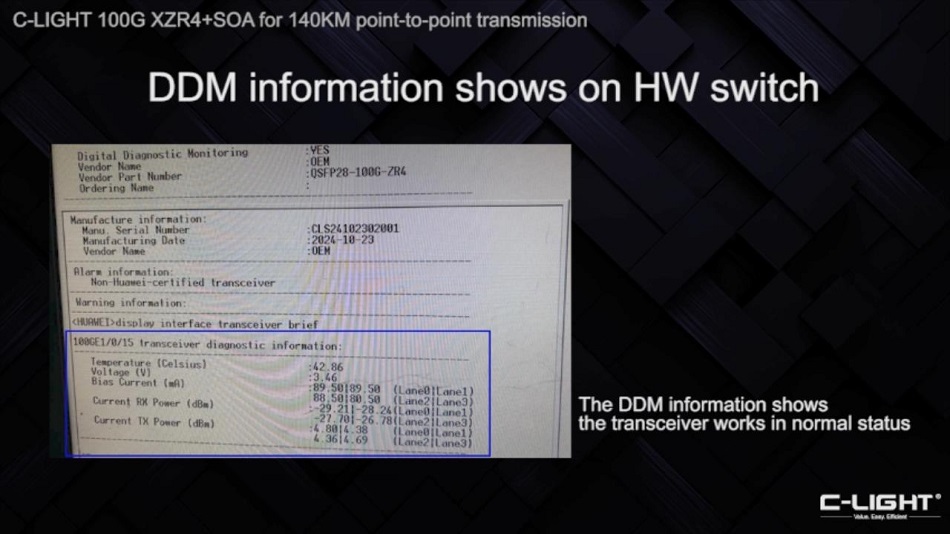
Receive and transmit power on both switches is within normal limits.
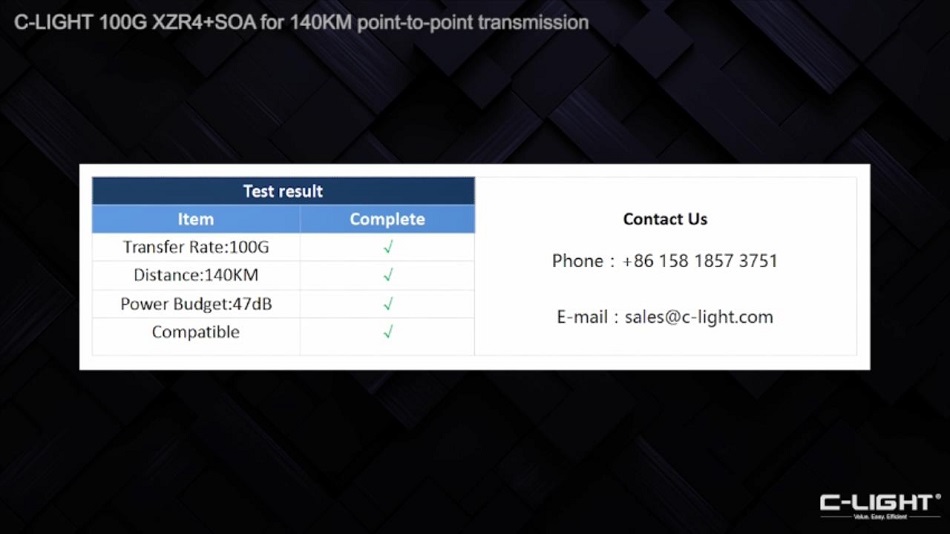
If you are interested in this solution or similar applications, please feel free to contact us!
100G XZR4+SOA 140km Optical Transceiver FAQ
Q1: What is a 100G XZR4+SOA optical transmission solution?
A 100G XZR4+SOA optical transmission solution is a long-distance optical interconnect solution designed to achieve 140km 100G point-to-point transmission over single-mode fiber.
The solution combines:
100G QSFP28 XZR4 optical transceiver
SOA (Semiconductor Optical Amplifier)
Single-mode fiber transmission
By integrating optical amplification technology into the transmission link, the solution extends the reach beyond the standard XZR4 optical module capability.
It is designed for applications including:
Data Center Interconnect (DCI)
Metro core networks
Long-distance Ethernet links
Telecom backbone networks
Q2: How does the 100G XZR4+SOA 140km solution work?
The 100G XZR4+SOA solution extends transmission distance by improving the optical link budget through additional signal amplification.
The working process includes:
The 100G QSFP28 XZR4 module converts electrical signals into optical signals.
The optical signal travels through single-mode fiber.
An SOA amplifier placed approximately 80km from the transmitter increases the optical signal power.
The amplified optical signal continues transmission to the receiving endpoint.
The additional optical gain compensates for fiber transmission loss and enables reliable 140km point-to-point 100G communication.
Q3: What are the advantages of the 100G XZR4+SOA solution?
The 100G XZR4+SOA solution provides multiple advantages for long-distance optical networking applications.
Extended Transmission Distance
Supports up to 140km 100G point-to-point transmission over single-mode fiber.
High Link Budget
Provides more than 47dB total link budget capability for extended-reach optical links.
Lower Deployment Complexity
Avoids complicated optical regeneration systems while maintaining reliable transmission performance.
Cost Efficiency
Uses QSFP28 optical modules instead of larger transport networking equipment.
Network Flexibility
Supports different long-distance Ethernet deployment scenarios.
This makes XZR4+SOA an efficient solution for extending 100G connectivity beyond traditional data center distances.
Q4: What is the difference between 100G XZR4 and 100G XZR4+SOA?
The main difference between 100G XZR4 and XZR4+SOA is the addition of an optical amplification stage.
| Feature | 100G XZR4 | 100G XZR4+SOA |
| Transmission Distance | Around 100km class | Up to 140km |
| Optical Amplification | No | SOA amplifier added |
| Link Budget | Standard | Enhanced |
| Application | Long-distance DCI | Ultra-long-distance point-to-point links |
The SOA amplifier increases optical power margin, allowing signals to travel farther while maintaining reliable transmission quality.
Q5: Why is SOA technology important for 100G long-distance transmission?
SOA (Semiconductor Optical Amplifier) technology plays an important role in extending optical transmission distance for high-speed networks.
During long-distance fiber transmission:
Optical signals gradually lose power.
Signal quality decreases over fiber distance.
Receiver sensitivity becomes increasingly important.
An SOA amplifier helps improve transmission performance by:
Increasing optical signal power
Improving link margin
Compensating for fiber attenuation
This allows optical networks to achieve longer transmission distances without deploying complex optical regeneration systems.
Q6: What are the applications of 100G XZR4+SOA 140km transmission?
The 100G XZR4+SOA solution is designed for applications requiring ultra-long-distance 100G optical connectivity.
Typical applications include:
Data Center Interconnect (DCI)
Connecting geographically separated data centers
Supporting cloud infrastructure expansion
Metro Core Networks
Long-distance city network connections
Telecom Networks
Carrier Ethernet transport
Optical backbone links
Enterprise Private Networks
High-bandwidth remote site connectivity
The solution provides an effective balance between transmission distance, cost, and deployment simplicity.
Q7: How does 100G XZR4+SOA compare with coherent optical solutions?
100G XZR4+SOA and coherent optical solutions are designed for different transmission requirements.
| Feature | XZR4+SOA | Coherent Optical Solution |
| Technology | Direct detection + SOA amplification | Coherent DSP technology |
| Distance | Up to 140km class | Longer distance capability |
| Complexity | Lower | Higher |
| Power Consumption | Lower | Higher |
| Application | DCI and metro links | Long-haul backbone networks |
For 80km–140km applications, XZR4+SOA provides an efficient solution with simpler deployment and lower system complexity compared with coherent optical systems.
Q8: How do you choose a 100G long-distance optical solution?
Selecting the right 100G long-distance optical solution requires evaluating transmission distance, network architecture, link budget, and equipment compatibility.
1. Transmission Distance
Choose according to:
10km
40km
80km
100km
140km requirements
2. Network Architecture
Consider:
Data center interconnect
Metro networks
Telecom backbone networks
3. Link Budget
Evaluate:
Fiber attenuation
Connector loss
Optical margin
4. Equipment Compatibility
Confirm compatibility with:
Switch platforms
Routers
Optical transport systems
For 140km 100G point-to-point links, XZR4+SOA provides an optimized solution between traditional ZR4 modules and higher-cost coherent optical systems.
 >
>

 >
>
 >
>
 >
>
 >
>
 >
>
 >
>
 >
>